Author: Cyndy Otto

  • Seller Net Proceeds Explained:  How Much Will You Keep?

    Seller Net Proceeds Explained: How Much Will You Keep?

    How much money will you actually keep when you sell your home? Your seller net proceeds are the amount remaining after your mortgage payoff, closing costs, commissions, taxes, and other applicable expenses are deducted from the sale price. For homeowners selling in Myrtle Beach, SC, or along the Carolina coast, understanding these costs before listing can help you set realistic expectations and plan your next move.

    What Are Seller Net Proceeds?

    Seller net proceeds are the funds a seller receives after all sale-related debts, fees, and credits are deducted from the purchase price. Think of it as the difference between the number on the contract and the number that is truly yours after closing.

    A seller’s estimated net proceeds are usually calculated from the purchase price, then reduced by the mortgage payoff, real estate commission, attorney or settlement charges, taxes, recording or transfer-related fees, homeowner association balances, and any buyer concessions or repair credits. If the seller has no mortgage, the calculation is simpler, but there are still costs to account for.

    The final figure is confirmed shortly before closing on the settlement statement. Until then, it is an estimate. That is not a flaw in the process. Some charges, such as a mortgage payoff with daily interest or a tax proration, cannot be finalized until the actual closing date is known.

    Why the List Price Is Not Your Take-Home Amount

    It is easy to mentally connect a $500,000 sale price with a $500,000 windfall. In reality, the sale price is the starting point. Your net proceeds depend on both the terms of the offer and the financial details attached to your property.

    For example, one buyer may offer $500,000 with no requested credits and a flexible closing date. Another may offer $510,000 but ask for $10,000 toward closing costs, request repairs after the inspection, and need a closing date that adds another month of mortgage interest and HOA dues. The higher offer is not automatically the better offer.

    This is why reviewing a net sheet alongside every serious offer is so useful. It lets you compare offers based on what they are likely to put in your pocket, not just the headline number. Price matters, of course, but clean terms can carry real value.

    The Costs That Commonly Reduce Your Proceeds

    Every transaction has its own details, but these are the expenses most sellers should expect to see on an estimated settlement statement.

    Mortgage Payoff and Other Liens

    If you have a mortgage, your lender must be paid in full at closing. The payoff is not always the same as the balance shown on a monthly statement because it includes interest accrued through the payoff date and may include small administrative fees.

    Any other lien attached to the property also needs to be resolved. This could include a home equity loan, a line of credit, unpaid contractor lien, judgment, or tax lien. Finding these early gives everyone time to address them before they threaten the closing schedule.

    Real Estate Commission

    The listing agreement establishes the commission and how it will be handled. It is generally paid from the seller’s proceeds at closing, so it does not usually require an out-of-pocket payment before the sale is complete.

    Commission is one part of the cost of marketing, negotiating, coordinating inspections and appraisal details, managing deadlines, and helping a transaction reach the finish line. Sellers should be clear on the agreed terms from the beginning rather than making assumptions based on a neighbor’s sale or an online estimate.

    Attorney, Settlement, and Recording Charges

    Closing practices vary by state. In North Carolina, real estate closings are typically handled through an attorney, while South Carolina transactions also involve an attorney-led closing process. The seller may have legal, settlement, deed-preparation, courier, wire, or recording-related charges depending on the transaction and local custom.

    These costs are often modest compared with the mortgage payoff or commission, but they still belong on the estimate. They are especially relevant when proceeds will be tight.

    Property Taxes, HOA Dues, and Utilities

    Property taxes are commonly prorated between buyer and seller based on the closing date. In a coastal market, homeowners may also have HOA dues, condo assessments, transfer fees, resale certificate costs, or pending special assessments to consider.

    A seller of a condo in Myrtle Beach, North Myrtle Beach, or Ocean Isle Beach should pay close attention to association documentation. An upcoming assessment for exterior work, roof replacement, elevator repairs, or insurance costs can affect negotiations and the final proceeds. The same is true for unpaid water, sewer, or other utility balances that must be settled before ownership changes hands.

    If you’re selling a property in an HOA community, understanding association fees is another important part of estimating your closing costs. Our Myrtle Beach HOA Fees Explained article covers costs homeowners should understand.

    State Taxes and Transaction Fees

    North Carolina and South Carolina have different state-level charges connected to recording a deed. North Carolina’s excise tax is commonly calculated at $1 per $500 of the sale price. South Carolina has deed recording fees that are also based on the consideration paid, though the calculation differs.

    Who customarily pays a particular charge can vary by location and contract terms. A good estimate should reflect the property location and the specific agreement, not a generic calculator from another state.

    Buyer Credits, Repairs, and Concessions

    After inspections, a buyer may ask for repairs, a closing-cost credit, or a price reduction. Sellers have choices. You can agree to the request, offer a smaller credit, make the repair, decline it, or negotiate another solution. The right answer depends on the home’s condition, the strength of the offer, market activity, and your timing.

    A credit can sometimes be more practical than coordinating repairs while packing for a move. On the other hand, a large credit can materially change seller net proceeds. Seeing the dollar impact before responding helps keep the conversation grounded.

    A Simple Seller Net Proceeds Example

    Imagine a home sells for $450,000. The seller has a $180,000 mortgage payoff. Commission and related brokerage costs total $24,750. Estimated attorney, deed, tax, HOA, and settlement charges total $4,500. The seller also agrees to a $3,000 buyer credit after inspection.

    The estimated math looks like this:

    • Sale price: $450,000
    • Mortgage payoff: -$180,000
    • Commission and brokerage costs: -$24,750
    • Closing, tax, HOA, and settlement charges: -$4,500
    • Buyer credit: -$3,000
    • Estimated seller proceeds: $237,750

    This is only an illustration, not a quote. A different loan payoff, closing date, commission agreement, or HOA balance would change the result. Still, the example shows why a seller should not make moving or purchase decisions using the sale price alone.

    How to Get a More Accurate Estimate Before Listing

    The best time to discuss net proceeds is before the home goes active. Start by gathering your latest mortgage statement, information on any home equity loan, your most recent property tax bill, and HOA or condo association details. If you know of an assessment, unpaid balance, solar lease, or lien, bring it up early. Surprises are much easier to manage before a contract is in place.

    It also helps to think through your next step. Are you buying another home immediately? Paying cash for a smaller place? Using proceeds for a down payment on a new construction home? Your expected net can shape the price range and timing that make sense for the next move.

    An initial net sheet should be updated when an offer arrives and again as the closing date approaches. That gives you a clear view of how credits, repairs, dates, and changing payoff figures affect the amount you will receive.

    When Net Proceeds May Be Negative

    Sometimes a seller owes more than the property will likely net after all costs. This can happen when values have changed, a home was purchased recently with a small down payment, or liens and fees are significant. It does not automatically mean selling is impossible, but it does mean the seller may need to bring funds to closing or explore options with the lender.

    This is a situation where early, honest planning matters most. Waiting until an offer is accepted can limit your choices and create unnecessary stress. A careful estimate helps identify the issue before you are emotionally committed to a move.

    Before you choose a list price, accept an offer, or begin shopping for your next shoreline home, ask to see the estimated proceeds in plain language. Cyndy Otto can help sellers in Brunswick, Horry, and Georgetown Counties look beyond the sale price and make a move that fits both their lifestyle and their financial plans.

    Wondering How Much You’ll Keep When You Sell?

    Every home sale is different, and your estimated net proceeds depend on your selling price, mortgage balance, closing expenses, and other costs. Cyndy Otto can help you evaluate your property’s market value and understand the expenses to consider before listing.

    Connect with Cyndy Sells the Seashore to discuss selling your home along the Carolina coast.

  • How Buyers Evaluate Flood Zones Before an Offer

    How Buyers Evaluate Flood Zones Before an Offer

    A home can have the right porch, the right view, and the right beach-town feeling – then one flood-zone question changes the conversation. That is why understanding how buyers evaluate flood zones matters well before an offer is written. Flood risk is not automatically a reason to walk away from a property along the Carolina coast. It is one factor buyers weigh alongside price, condition, insurance, lifestyle, and their long-term plans for the home.

    For a primary residence, vacation place, retirement home, or rental investment, the goal is not to find a home with zero weather risk. Coastal living comes with water, and that is part of its appeal. The goal is to understand the property clearly enough to make a comfortable, informed decision.

    How Buyers Evaluate Flood Zones and Risk

    The first thing buyers often see is the flood zone shown on a listing, survey, insurance document, or flood map. Those designations are useful, but they do not tell the whole story. A flood zone is a mapping and insurance tool. It is not a guarantee that a house will flood, and it is not a promise that a house outside a higher-risk zone never will.

    Buyers usually start by asking whether the home is in a Special Flood Hazard Area. Properties in these higher-risk zones may require flood insurance when the buyer has a federally backed mortgage. The annual cost can affect the total monthly housing budget, so it deserves attention early rather than after inspections and negotiations are underway.

    Still, the zone alone is only the starting point. Two homes in the same zone can have very different risk profiles. One may sit noticeably higher, have a favorable elevation certificate, and have never taken on water. Another may have lower finished-floor elevation, poor drainage, or a history of claims. Smart buyers look at the home, not just the letter on a map.

    Elevation changes the picture

    Elevation is one of the most meaningful details in a coastal purchase. Buyers want to know how the lowest floor of the home compares with the base flood elevation for that location. An elevation certificate, when available, can help an insurance agent provide a more accurate flood insurance estimate.

    For raised beach homes, buyers should also understand what is below the living area. Enclosed spaces under an elevated home may have restrictions on how they can be used and improved. Storage, parking, vents, utilities, and finished space can all affect both compliance and risk. A charming ground-level room should be reviewed carefully before assuming it is suitable for daily living or a guest suite.

    Past water events deserve a direct question

    A property’s history often provides context that a map cannot. Buyers should ask about known flooding, water intrusion, drainage issues, prior insurance claims, and repairs made after storms. Seller disclosures can be helpful, but buyers should also look for physical clues during showings and inspections.

    Staining on lower walls, recently replaced flooring in a ground-level enclosure, rusted HVAC components, uneven landscaping, or a strong musty smell are all worth asking about. None of these signs proves a flood problem. They simply invite a closer look from the appropriate professional.

    A home that experienced water during an unusual storm is not necessarily a poor choice. What matters is how much water entered, where it entered, what was repaired, whether permits were required, and whether the home has performed well since. Honest details make it easier to evaluate the trade-off.

    Insurance Is Part of the Purchase Price

    Buyers do not evaluate a coastal home by sale price alone. They look at the full carrying cost: mortgage payment, property taxes, homeowners insurance, flood insurance, HOA dues when applicable, maintenance, and utilities. Flood coverage can be a significant line item, particularly near the ocean, marshes, rivers, and low-lying areas.

    It is wise to request an insurance quote as soon as a property becomes a serious contender. Do not rely on a neighbor’s policy, a past premium, or a rough online estimate. Insurance rates can vary based on the home’s elevation, construction, coverage choices, claims history, and the insurer’s current guidelines.

    Buyers should also ask what the policy covers and what it does not. Standard homeowners insurance generally does not cover damage from flooding. Flood insurance has its own limits, deductibles, and rules. Personal belongings, improvements below an elevated structure, and temporary housing costs may be treated differently than buyers expect.

    For an investment property, the insurance conversation is even more important. A rental may generate attractive income during peak season, but buyers need to account for weather-related closures, deductibles, maintenance after storms, and any local rental requirements. A well-priced home is only a good value when the ongoing costs fit the plan.

    Buyers Look Beyond the House

    Water moves through an entire neighborhood, not just one lot. During a showing, observant buyers look at the street, nearby ditches and swales, storm drains, ponds, retention areas, and the general slope of the land. They may visit after a heavy rain if timing allows.

    In communities from Ocean Isle Beach and Sunset Beach to Myrtle Beach, Murrells Inlet, and Pawleys Island, the water story can change quickly from one block to the next. Proximity to the ocean is only one piece. Tidal creeks, marshes, canals, rivers, drainage systems, and new development can all influence how an area handles rain and storm surge.

    Buyers should consider practical access, too. A home may remain dry while the road leading to it becomes difficult to use during a major weather event. That may not be a deal-breaker for a second home buyer who can be flexible, but it may matter greatly to someone commuting daily, caring for family, or relying on short-term rental turnovers.

    Community rules can affect future plans

    HOA documents, municipal requirements, and building regulations may shape what a buyer can do after closing. If a home needs repairs, additions, or substantial renovation, floodplain rules can influence design, materials, and cost. Buyers considering a pool, enclosed storage, a lower-level remodel, or a future addition should confirm what is permitted before making plans around it.

    This is also a good time to ask about storm preparation. Are there community procedures for debris removal? Are shutters already in place? Is the home built with impact-rated features, or would a buyer want to add them? These details do not eliminate flood risk, but they can make ownership more manageable.

    The Right Due Diligence Creates Better Decisions

    Flood-zone research works best when it is part of a larger due diligence process. A buyer’s agent can help identify the questions to ask, while an insurance professional, lender, surveyor, home inspector, and closing attorney each contribute important information. No single document should carry all the weight.

    Before finalizing an offer or moving beyond the due diligence period, buyers may want to review available flood maps, seller disclosures, insurance estimates, elevation information, permits for prior repairs, and inspection findings. If the property has a septic system, a crawl space, or lower-level mechanical equipment, those items deserve careful review as well.

    It also helps to be realistic about personal comfort. One buyer may happily accept a higher flood premium for a panoramic marsh view and a favorite stretch of beach. Another may prefer a home farther inland with lower ongoing costs and fewer weather concerns. Neither choice is wrong. The best home is the one that fits both the budget and the way its owner wants to live.

    A thoughtful coastal purchase leaves room for joy as well as preparation. When the flood-zone details are understood early, buyers can spend less time worrying about surprises and more time deciding whether that front porch, salty breeze, and new neighborhood truly feel like home.

  • Beach Home Demand Forecast for Coastal Carolina

    Beach Home Demand Forecast for Coastal Carolina

    A beach home can mean coffee on a screened porch in Ocean Isle Beach, a short golf cart ride to the sand in Surfside Beach, or a quieter retirement pace near Southport. That lifestyle remains a powerful draw, but a useful beach home demand forecast requires more than watching whether a listing gets a showing. Buyers and sellers need to look at affordability, inventory, insurance, property condition, and the distinct character of each coastal community.

    The outlook for coastal Carolina homes is best described as selective, not sleepy. Well-priced homes with appealing features can still attract serious attention. Properties that feel dated, carry difficult ownership costs, or enter the market above their realistic value may take longer to find the right buyer. The beach market is active, but buyers are doing more homework before they make an offer.

    Beach Home Demand Forecast: What Is Driving Buyers?

    Demand for homes near the coast continues to be supported by lifestyle changes that are larger than any one season. Retirees want a milder climate and access to golf, restaurants, healthcare, and recreation. Remote and hybrid workers may have more freedom to live where they want. Vacation-home shoppers are still drawn to the convenience of having a personal getaway, while investors look for locations with established rental appeal.

    Brunswick County and the Myrtle Beach metropolitan area offer a wide range of price points and settings, which helps keep the buyer pool broad. Someone looking for a condo near the oceanfront has different priorities than a family searching for a newer home in Conway, Longs, Shallotte, or Loris. A buyer considering Pawleys Island may value natural surroundings and a lower-key feel, while another may prefer the energy and amenities around Myrtle Beach or North Myrtle Beach.

    That variety matters because demand is rarely spread evenly across every home type. A move-in-ready primary residence in a convenient neighborhood can draw a different audience than a furnished second home with rental history. The question is not simply whether people want beach homes. It is whether a particular home fits what today’s buyer is prepared to pay for, maintain, insure, and enjoy.

    Affordability will shape the pace of sales

    Mortgage rates remain one of the biggest influences on demand. When financing costs rise, many buyers adjust their price range, increase their down payment, consider condos or townhomes, or postpone a purchase until their budget feels more comfortable. Cash buyers can be less affected by rates, but they still compare value carefully.

    For sellers, this creates a market where pricing strategy matters from day one. A home that is priced in line with its competition may receive stronger early attention. One that starts too high can sit long enough for buyers to wonder what they are missing, even when the property itself has plenty to offer.

    For buyers, the same environment can create opportunity. Fewer impulsive offers may allow more room for inspections, financing, and thoughtful negotiation. That does not mean every property will be negotiable. Homes that are clean, updated, and priced fairly can still move quickly, especially in desirable pockets near the water.

    Insurance and carrying costs are part of the decision

    Coastal buyers are increasingly asking detailed questions about homeowners insurance, wind and hail coverage, flood insurance, deductibles, HOA fees, and maintenance. These are not side notes. They are part of the monthly and annual cost of owning a beach home.

    A property farther from the ocean may have a different insurance profile than one in a flood-prone area, but every home should be reviewed individually. Buyers should obtain insurance estimates early rather than waiting until the contract period. For a vacation or investment property, they should also consider utilities, furnishing costs, property management, and the expense of maintaining a home when they are not in town.

    Sellers benefit from being prepared for these conversations. Having clear information about elevation, flood history when known, prior insurance costs, HOA documents, roof age, HVAC age, and recent improvements can make a listing easier to evaluate. Buyers do not expect a perfect home, but they appreciate fewer surprises.

    Inventory Will Keep Demand Local and Property-Specific

    A broad coastal market forecast can only tell part of the story. Inventory levels differ from town to town, neighborhood to neighborhood, and even street to street. Oceanfront condos, golf-course homes, new construction communities, historic cottages, and inland single-family homes do not compete in the same way.

    New construction remains an attractive option for buyers who want modern layouts, energy-efficient features, and fewer immediate repair projects. Still, an existing home can offer mature landscaping, an established neighborhood, a larger lot, or a location closer to the beach. The better choice depends on how a buyer plans to use the property.

    In communities such as Calabash, Sunset Beach, Holden Beach, Oak Island, Little River, Murrells Inlet, Garden City Beach, and Georgetown, local nuances can influence demand. Access to beaches, boating, dining, medical services, schools, golf, and major roads all affect how buyers see value. Even the drive time to an airport or a favorite family gathering spot may matter more than a few extra square feet.

    Condition will separate standouts from slow movers

    The homes likely to perform best are the ones that help buyers picture an easy first season at the coast. Fresh paint, clean outdoor spaces, well-maintained systems, neutral interiors, and clear photography can make a real difference. Beach buyers are often shopping from another state or narrowing their choices during a short visit. A property needs to communicate its value quickly.

    That does not mean sellers need to renovate every room. Some buyers actively seek a home they can personalize. But the price should reflect any needed work, and known issues should be addressed honestly. A dated kitchen may be manageable. A neglected roof, unclear moisture issue, or deferred exterior maintenance can cause buyers to step back because they know coastal repairs may require extra planning.

    What Buyers Should Watch in the Next 12 Months

    Buyers who wait for a single perfect signal may miss homes that fit their goals. Rates can change, inventory can shift, and the most appealing property in a preferred neighborhood may not come around again soon. A more practical approach is to decide what matters most: a primary home, a vacation retreat, a retirement plan, rental potential, or a blend of all four.

    Start with a complete budget that includes more than the purchase price. Then choose two or three preferred areas and identify the trade-offs you can accept. Being closer to the ocean may mean a smaller home, higher insurance, or more seasonal activity. Living a little inland may offer newer construction, more space, and easier year-round access.

    It also helps to distinguish between a home you love visiting and a home you will enjoy owning. Think about storage, parking, elevator access if needed, pet rules, rental restrictions, storm preparation, and how often you expect to use the property. Those everyday details often determine whether a coastal purchase feels like a dream or a burden.

    What Sellers Can Do While Demand Is Selective

    Sellers do not need a red-hot market to achieve a successful sale. They need a clear plan built around their home’s strongest advantages. The first step is understanding the actual competition, including active listings, recent sales, pending homes, and properties that expired without selling.

    Presentation should support the price. Coastal buyers respond to bright, tidy rooms, inviting patios and porches, and a property that feels cared for. If a home has rental history, water access, community amenities, a recent roof, or valuable improvements, those details should be easy to understand. If there are limitations, such as a smaller lot or older finishes, the price and marketing approach should acknowledge them rather than hoping buyers overlook them.

    Timing can help, but it is not everything. Spring and early summer often bring more visitors and active shoppers, while fall can attract serious buyers who want to settle in before the next season. A well-positioned home can sell in any month. The key is entering the market with realistic expectations and enough flexibility to respond to feedback.

    A beach home is never just a set of square-foot measurements. It is a place where people imagine changing their pace, gathering family, or finally waking up near the water. The best next step is to match that vision with the numbers, the neighborhood, and a plan that feels comfortable long after closing day.

  • Holden Beach Real Estate Review for Buyers

    Holden Beach Real Estate Review for Buyers

    A Holden Beach real estate review should start with a simple truth: this is not the place people choose for a high-rise, always-on beach scene. Holden Beach appeals to buyers who picture morning walks, wide sandy beaches, fishing afternoons, and a home that feels comfortably removed from the rush. That quieter rhythm is a major part of its value, but coastal ownership also comes with details that deserve a close look before falling in love with a view.

    For a primary residence, vacation home, retirement place, or rental investment, the right property depends on how you plan to use it. A beautiful oceanfront home can be a wonderful fit for one buyer and far more maintenance than another wants. The best decision comes from matching the home, location, carrying costs, and lifestyle to your actual plans.

    Holden Beach Real Estate Review: The Lifestyle

    Holden Beach is a small barrier island in Brunswick County known for its low-key, family-friendly character. The island is largely residential, with a relaxed setting that feels intentionally different from busier resort markets. Many buyers appreciate that the beach itself is the main attraction, rather than a long strip of nightlife, large-scale attractions, and dense commercial development.

    The location also gives homeowners options beyond the island. Shallotte provides practical conveniences such as grocery stores, medical services, restaurants, and everyday shopping. Nearby coastal communities offer more places to explore when you want a change of scenery without giving up the slower pace at home.

    That balance makes Holden Beach especially appealing to retirees, second-home owners, families who return year after year, and buyers seeking a place where they can truly unplug. It may be less ideal for someone who wants to walk to a wide selection of restaurants every evening or prefers a property in the center of a large entertainment district. Neither preference is wrong. They simply lead to different coastal communities.

    What Homes Are Available?

    The housing stock is mostly coastal single-family homes, including classic beach cottages, elevated homes with water views, newer construction, and larger properties designed for multigenerational vacations. Buyers will find homes on the oceanfront, second row, canal, marsh, and mainland-side areas close to the bridge.

    Oceanfront homes offer direct beach access and big views, but they usually come with a higher purchase price, greater exposure to wind and salt air, and potentially higher insurance and upkeep costs. Second-row homes can provide partial ocean views or easy beach access while reducing the direct exposure that comes with being on the front line.

    Canal and marsh properties have their own appeal. A canal home may suit a buyer who enjoys boating, kayaking, fishing, or simply watching the tides change from the porch. Marsh views can feel peaceful and private, often with beautiful sunsets and birdlife. However, waterfront access, dock condition, water depth, and navigation needs should be reviewed carefully. A dock is not automatically a guarantee that every boat or every boating schedule will work well there.

    For buyers who want more year-round convenience or a lower-maintenance option, mainland neighborhoods near Holden Beach can be worth comparing. The drive to the sand may be a little longer, but the trade-off can be newer homes, larger lots, different price points, or easier access to daily services.

    The Costs That Deserve a Closer Look

    The list price is only one part of the coastal-home budget. A careful Holden Beach real estate review includes the recurring costs that can shape whether a home remains comfortable to own over time.

    Insurance is one of the biggest considerations. Depending on the property, buyers may need homeowners insurance, wind and hail coverage, and flood insurance. Costs can vary significantly based on elevation, age, construction features, proximity to water, claims history, coverage choices, and the insurer. A home that appears similar to another property can carry a very different insurance estimate, so it is wise to obtain quotes early in the decision process rather than waiting until the final days of a contract.

    Maintenance matters, too. Salt air is hard on exterior paint, metal fixtures, HVAC equipment, decks, railings, windows, and outdoor hardware. Elevated homes add components such as stairs, pilings, enclosed storage areas, and sometimes lifts that need periodic attention. None of this should discourage the right buyer, but it should be part of a realistic ownership plan.

    Ask about the age and condition of the roof, HVAC systems, windows, siding, decks, and any exterior stairways. If there is a pool, dock, boat lift, or elevator, budget for its maintenance and inspection as well. A thorough home inspection, plus specialized inspections when appropriate, helps turn surprises into informed decisions.

    Flood Zones, Elevation, and Building Rules

    Coastal buyers should never treat flood-zone information as a footnote. Flood maps, elevation certificates, prior flood history, drainage patterns, and the home’s foundation type can all affect insurance, renovation plans, and peace of mind.

    An elevated home may offer advantages, but buyers should understand what is below the living area and whether that space is legally permitted for storage, parking, or another use. Enclosed ground-level areas in coastal properties often have restrictions. A room that looks finished may not be suitable as conditioned living space under local rules or flood requirements.

    If you are considering renovations, additions, or rebuilding after a future storm event, zoning and building requirements matter just as much as the current floor plan. Setbacks, height limits, lot coverage, dune protection, and permitting can affect what is possible. Before purchasing a home with a big renovation vision, take the time to confirm that vision is feasible.

    Is Holden Beach a Good Rental Investment?

    Holden Beach can be attractive for vacation-rental buyers because many visitors prefer its relaxed, family-oriented feel. Homes with convenient beach access, appealing outdoor spaces, water views, enough bedrooms for groups, and dependable parking often draw stronger interest than a property’s square footage alone might suggest.

    Still, rental income should be viewed as a business projection, not a promise. Seasonal demand, cleaning costs, management fees, furnishing expenses, utilities, insurance, repairs, and vacancy periods all affect the real return. A home that rents well in peak summer months may have a much different income pattern during the rest of the year.

    Buyers should also confirm current local rules, occupancy requirements, licensing expectations, and any applicable association restrictions. If rental income is needed to make the purchase work, use conservative estimates and leave room in the budget for storm preparation, repairs, and the occasional unexpected expense. A property can be both a lovely retreat and a sound investment, but those goals should be evaluated with clear numbers.

    What Sellers Should Know About Buyer Appeal

    For sellers, Holden Beach buyers are often looking for an emotional connection, but they are also paying close attention to practical details. Clean outdoor spaces, cared-for decks and railings, clear access to the beach or water, and well-documented maintenance can make a meaningful impression.

    If your home has been used as a rental, organized records are helpful. Buyers appreciate knowing about rental history, recent improvements, service schedules, insurance information, and any warranties that may transfer. Honest presentation matters. Coastal buyers understand that beach homes require care, and they tend to respond well when a property has been maintained thoughtfully rather than dressed up to hide deferred work.

    Pricing requires a local comparison, not just a glance at another home with a similar bedroom count. Ocean proximity, view corridor, lot placement, elevation, updates, rental performance, furnishings, parking, and condition can create major value differences between properties that initially look alike.

    A Smart Way to Shop

    Start by deciding what cannot be compromised. For some buyers, it is a direct ocean view. For others, it is a first-floor primary suite, a boat slip, a pool, rental flexibility, or being within a certain budget for insurance and maintenance. Knowing your priorities helps prevent a gorgeous porch from distracting you from a home that does not truly fit.

    Visit at different times when possible. Notice bridge traffic, parking, noise, sun exposure, and how the route feels to grocery stores, restaurants, and medical care. Look beyond staged interiors and picture arrival day in heavy rain, a windy winter weekend, or a busy summer Saturday.

    A coastal home should give you more than a postcard moment. It should support the way you want to spend your days, whether that means casting a line at sunrise, hosting family for a long weekend, or simply listening to the waves from a porch that feels like your own.

  • Townhome vs Single Family: Which Fits You Best?

    Townhome vs Single Family: Which Fits You Best?

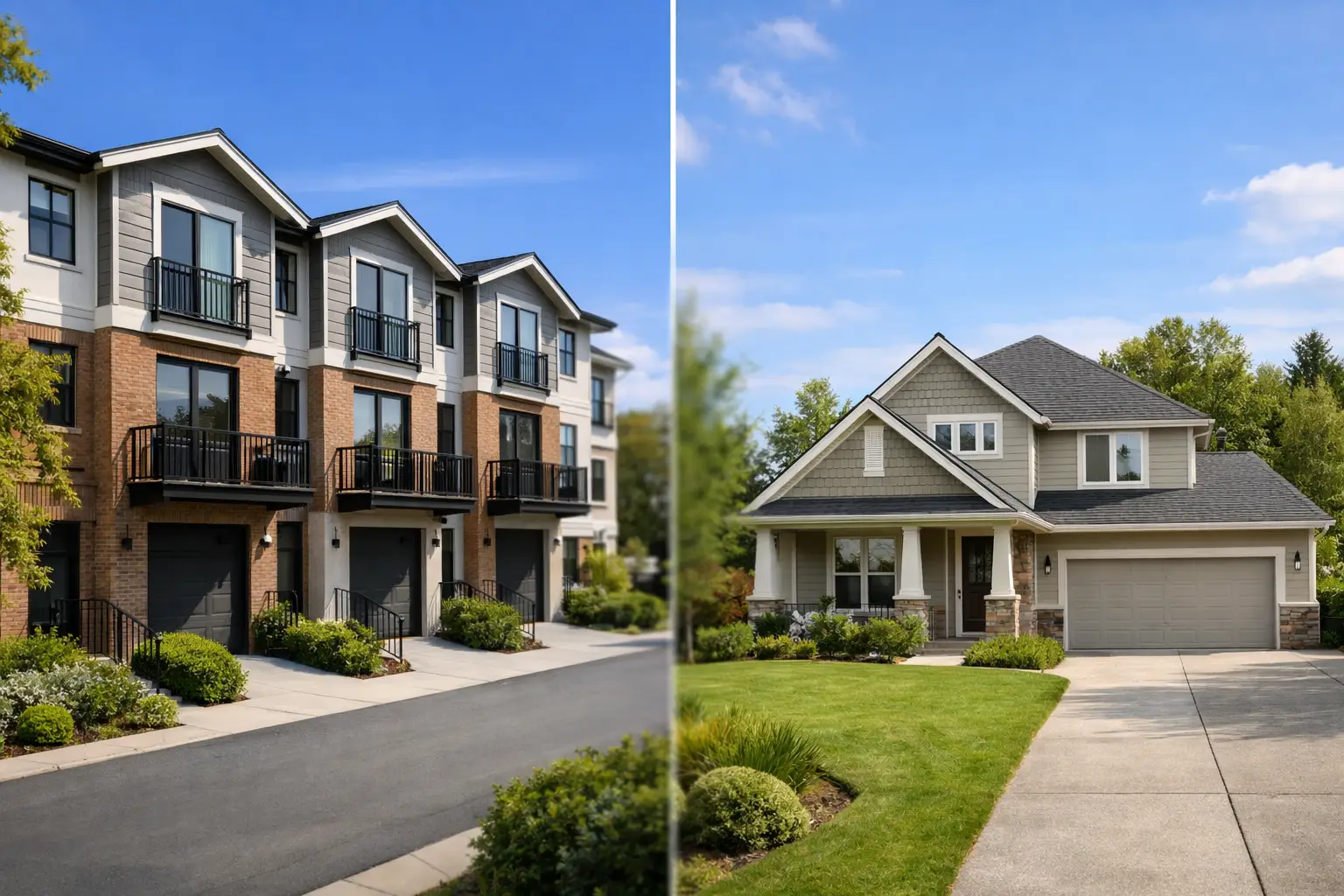
    A home near the Carolina coast can mean morning walks to the water, a screened porch for salty breezes, and a place that fits the way you actually want to live. But when the choices include a townhome vs single family home, the best fit is rarely about square footage alone. Maintenance, privacy, monthly costs, rental rules, and how often you plan to be there all deserve a place in the decision.

    For buyers considering Brunswick County, North Carolina, or the Myrtle Beach area, both property types can offer wonderful options. The key is looking past the listing photos and matching the home to your everyday needs, your budget, and your long-term plans.

    Townhome vs Single Family: The Core Difference

    A townhome is typically attached to one or more neighboring homes and often belongs to a homeowners association. You may own the interior, exterior structure, and the small parcel of land beneath it, although the specific ownership arrangement varies by community. Townhomes frequently have shared walls, compact outdoor areas, and community-managed amenities.

    A single-family home is generally a detached residence on its own lot. It usually provides more separation from neighbors, more freedom to personalize the property, and more responsibility for every part of the home and yard.

    Neither choice is automatically better. A townhome may be an easy, appealing fit for someone who wants to lock the door and head back home after a beach weekend. A single-family home can be the right call for a buyer who wants room for grandchildren, a garden, a boat trailer, or simply a little more quiet between homes.

    Maintenance: Convenience Has a Cost

    One of the biggest townhome advantages is reduced exterior upkeep. Depending on the community, an HOA may handle landscaping, irrigation, exterior painting, roof replacement, pest control, trash service, and common-area maintenance. That can be especially valuable for a vacation home owner or retiree who would rather spend Saturday at the beach than arranging lawn care.

    Still, “maintenance-free” does not mean “expense-free.” HOA dues pay for those services, and the amount can vary widely. In some communities, dues also support a pool, clubhouse, gates, sidewalks, master insurance coverage, or reserves for future repairs. Buyers should review exactly what the fee covers, how often it has increased, and whether the association has adequate reserves.

    With a single-family home, you control the schedule and the choices. Want native coastal landscaping instead of a traditional lawn? Prefer to replace the fence or repaint the front door a certain color? You will typically have more flexibility. You will also be responsible for the roof, driveway, exterior repairs, trees, drainage, lawn, and any surprise that comes with ownership.

    For a buyer who enjoys projects, that independence can feel rewarding. For someone buying from out of state or splitting time between two homes, it may feel like one more thing to manage.

    Privacy, Outdoor Space, and Everyday Living

    Single-family homes usually win on privacy. There are no shared walls, and lots tend to provide more space between you and the next household. That may matter if you work from home, have pets, enjoy outdoor entertaining, or want a backyard that feels like your own little retreat.

    Townhomes can still provide plenty of comfortable living space, particularly in newer coastal communities. Many have garages, patios, porches, and thoughtful layouts with primary suites on the first floor. The trade-off is proximity. You may hear more of your neighbors than you would in a detached home, and outdoor space is often smaller or more visible.

    Consider how you will use the home on an ordinary Tuesday, not only on closing day. If your perfect evening includes grilling for friends, letting a dog run in a fenced yard, or parking extra vehicles, a single-family home may suit you better. If your ideal is a clean, attractive home with less yard work and a community pool nearby, a townhome may feel just right.

    HOA Rules Can Shape Your Experience

    An HOA can protect a neighborhood’s appearance and make ownership simpler. It can also set rules that affect daily life. Before purchasing a townhome, buyers should read the covenants, conditions, and restrictions carefully. The same advice applies to single-family homes in planned communities.

    Pay close attention to rental policies, pet limits, parking requirements, exterior changes, fence rules, and the use of golf carts, trailers, boats, or recreational vehicles. In coastal markets, short-term rental rules are particularly important for buyers considering a second home or investment property. A community may permit rentals, limit rental lengths, require leases to be submitted, or prohibit short-term rentals altogether.

    It is also wise to ask about pending special assessments, insurance deductibles, recent board meeting notes, and major projects on the horizon. A low monthly HOA fee can look attractive until a roof replacement or storm-related repair creates an unexpected assessment.

    Costs Beyond the Purchase Price

    When comparing a townhome vs single family property, start with the full monthly and annual picture. Mortgage payment is only one piece. Property taxes, HOA dues, homeowner’s insurance, flood insurance if required or desired, utilities, maintenance, and possible rental management all affect affordability.

    Townhome insurance may cost less in some cases because the association carries a master policy for portions of the building. But buyers need to understand where that policy stops and where their own coverage begins. A townhome owner may need an HO-6 style policy that covers interior finishes, personal property, liability, and loss assessments. Coverage details are not one-size-fits-all, especially in a coastal area.

    A single-family homeowner usually needs coverage for the full structure as well as personal property and liability. Roof age, building materials, wind exposure, flood zone, elevation, and proximity to the water can all influence insurance options and premiums. An experienced insurance professional can help clarify those costs before you remove contingencies or finalize a budget.

    The most affordable listing is not always the least expensive home to own. A detached home with no HOA may be a better value if you are comfortable handling maintenance. A townhome with higher dues may be worth every dollar if those dues replace services you would otherwise pay for separately.

    Resale and Investment Considerations

    Both townhomes and single-family homes can be strong resale choices when they are well located, well maintained, and priced appropriately. Demand changes with the market, but lifestyle needs tend to remain consistent. Some buyers actively seek townhomes for their lower-maintenance appeal, while others will only consider a detached home with a yard.

    Location often carries more weight than the property type alone. A nicely maintained townhome near shopping, dining, golf, healthcare, and the beach can be highly desirable. So can a single-family home in a quiet neighborhood with usable outdoor space and easy access to coastal attractions.

    If rental income is part of the plan, do not rely on broad assumptions about what a property “should” earn. Review local regulations, HOA restrictions, seasonal demand, management costs, furnishing needs, cleaning, taxes, and insurance. A property that works beautifully as a personal vacation spot may not be the most practical short-term rental, and that is perfectly fine if personal enjoyment is the priority.

    Questions That Bring the Right Choice Into Focus

    Before narrowing your search, think through a few practical questions:

    • How often will you be at the property, and who will look after it when you are away?
    • Do you want a private yard, or would you gladly trade it for less exterior upkeep?
    • Are HOA dues comfortable within your long-term budget, including possible increases?
    • Will you need flexibility for pets, guests, parking, rentals, a boat, or future renovations?
    • Is this home meant to serve as a primary residence, a beach getaway, a retirement move, or an investment?

    Your answers may point clearly in one direction. They may also reveal that a particular community matters more than whether the property is attached or detached.

    A thoughtful home search should leave room for both possibilities. The right place may be a low-maintenance townhome that gives you more time for coastal living, or a single-family home where the backyard becomes everyone’s favorite gathering spot. Focus on the life you want the property to support, then let the right home make itself known.

  • How to Evaluate HOA Documents Before You Buy

    How to Evaluate HOA Documents Before You Buy

    A home can have the right porch, the right view, and a price that feels like a coastal find – then the HOA documents reveal a rule, expense, or pending repair that changes the picture. Knowing how to evaluate HOA documents before you make a final commitment helps you buy with clear eyes, whether you are looking for a primary home, a beach getaway, or an investment property.

    An HOA is not automatically a problem. Many associations protect neighborhood appearance, maintain shared amenities, and handle services owners would otherwise manage on their own. The question is whether this particular association fits the way you want to live and whether it is financially prepared for the property it oversees.

    How to Evaluate HOA Documents Without Guesswork

    HOA documents can feel like a stack of legal language, meeting notes, budgets, and rules written in tiny type. You do not need to become an association attorney to spot the details that deserve a closer look. Read the documents as a future owner: What will I pay? What am I allowed to do? What could change after closing?

    For a condo, townhome, or community with significant shared amenities, the association’s condition can have a direct effect on your monthly costs, insurance responsibilities, resale options, and everyday enjoyment. A single-family home in a modest neighborhood association may have fewer moving parts, but the rules still matter.

    Start with the governing documents

    The declaration of covenants, conditions, and restrictions, often called the CC&Rs, is the foundation. It explains what the HOA can regulate, what owners are responsible for, and what happens if rules are not followed. Bylaws describe how the association operates, including board elections, voting rights, meetings, and authority.

    Focus on the rules that touch your plans for the home. Check parking restrictions, pet limits, fence and exterior-change requirements, signs, boats, trailers, golf carts, and landscaping standards. In coastal communities, it is especially wise to ask about rules for hurricane shutters, exterior paint colors, roof materials, and storm-related repairs.

    If you hope to rent the property, read the rental provisions word for word. Some communities allow short-term rentals, some set minimum lease periods, and some limit the number of rentals or require board approval. A home that works beautifully as a vacation rental in one neighborhood may not be rentable at all in the community next door.

    Do not rely on a verbal answer from a seller, neighbor, or listing conversation. Rules can change, exceptions may be limited, and informal practices are not the same as written permission.

    Read the budget like it is part of the house

    The annual budget shows where HOA money comes from and where it goes. Look at the regular assessment, then look beyond it. A low monthly fee can be appealing, but it is not always a bargain if the association is underfunded or putting off maintenance.

    Review the major expense categories. In a condominium, these may include master insurance, exterior maintenance, roofing, elevators, landscaping, pools, pest control, utilities, and management fees. In a single-family community, the budget may center on entrances, roads, gates, landscaping, clubhouse facilities, or community pools.

    Ask whether the budget has a surplus or deficit. A one-time shortfall is not necessarily alarming, especially after a major storm or unexpected repair. A pattern of operating deficits, however, can point to fees that have not kept pace with actual costs.

    Also compare the current budget to the prior year. Large increases deserve an explanation. Insurance premiums, storm damage, labor, and construction costs have put pressure on many coastal associations. Higher dues may be reasonable if they reflect real expenses and responsible planning. The concern is not simply that fees rose – it is whether the increase is supported by a clear plan.

    Check reserves and upcoming capital projects

    Reserve funds are money set aside for major future repairs and replacements. Think roofs, paving, siding, elevators, seawalls, pools, docks, or clubhouse systems. Reserves are particularly important for condominiums because owners share responsibility for expensive building components.

    Look for a reserve study, if one is available, and compare it with the reserve balance. The study estimates the useful life and replacement cost of major items. It is not a guarantee, but it offers a helpful road map. If a roof is near the end of its expected life and reserves are thin, owners may face a special assessment or a meaningful increase in dues.

    A well-funded reserve account does not mean there will never be an assessment. Hurricanes, water intrusion, and sudden structural issues do not always follow a schedule. Still, an association that plans ahead generally gives buyers fewer unwelcome surprises.

    Find the Story Behind the Numbers

    Financial statements tell you what has happened. Meeting minutes often tell you what may happen next. Read recent board meeting minutes, ideally for the last six to twelve months, and watch for repeated discussion of repairs, contractor disputes, insurance claims, litigation, owner complaints, drainage problems, or rule changes.

    A mention of a repair is not an automatic reason to walk away. Every community needs maintenance. What matters is the scale of the work, the proposed funding source, and whether the board appears to be addressing the issue promptly.

    Pay close attention to phrases such as “special assessment,” “loan,” “deferred maintenance,” “engineer report,” “water intrusion,” and “insurance renewal.” These terms may signal a cost that is coming, even if the final amount has not yet been approved.

    Ask about special assessments and litigation

    Request information about current, approved, proposed, or recently paid special assessments. Find out the amount, purpose, payment schedule, and whether the seller will pay any assessment due before closing. The purchase contract and local practices can affect how this is handled, so clear written terms matter.

    Litigation also deserves careful review. An HOA may be involved in a claim against a contractor, developer, insurer, or owner. Sometimes litigation is a sensible effort to protect owners’ interests. Other times, it can create uncertainty, increase costs, or affect financing options. Ask what the lawsuit involves, the estimated exposure, and whether insurance may cover it.

    Review insurance with a coastal lens

    Insurance is one area where the details can make a major difference. For condos, determine what the master policy covers and what you will need to insure inside your unit. The association policy may cover the building exterior and common elements but leave you responsible for interior finishes, personal property, deductibles, or certain types of damage.

    Ask about wind, hail, flood, named-storm, and water-damage coverage. Coastal insurance can carry high deductibles, and associations may pass some costs to owners after a covered loss. Flood coverage is often separate from a standard policy. A property’s location near the water is part of its charm, but the insurance setup should be understood before the keys change hands.

    For single-family homes, HOA insurance is usually more limited, but shared amenities and common areas still need appropriate coverage. Review any owner responsibility for damage to private roads, bulkheads, ponds, or other community features.

    Match the HOA to Your Plans for the Property

    The best HOA for one buyer may be a poor fit for another. A retiree who values tidy common areas and quiet evenings may appreciate firm enforcement. A buyer who wants to park a boat, keep two large dogs, paint the front door a favorite color, or rent weekly may need a community with more flexibility.

    Consider the practical rhythm of ownership. Are there architectural review requirements for a screened porch, outdoor shower, or landscaping change? Are guests restricted from using the pool? Is there a transfer fee, capital contribution, or move-in fee? Does the HOA require certain vendors or maintenance standards?

    These questions are not picky. They are part of choosing a home that supports the life you are building.

    Look at owner delinquency and association management

    Ask how many owners are behind on their dues. A small number of late payments may be normal. A high delinquency rate can strain the budget and may make financing more difficult in some communities.

    It is also useful to know whether the association is professionally managed or self-managed. Neither model is automatically better. A well-run volunteer board can be thoughtful and cost-conscious, while professional management can bring systems and experience. Look for organized records, timely communication, and evidence that maintenance and finances are being handled consistently.

    Give Yourself Time to Review

    HOA documents should not be skimmed between packing boxes and inspection appointments. Set aside quiet time, mark questions, and compare the documents against how you intend to use the property. If something is unclear, ask for clarification in writing. When a legal interpretation is needed, speak with a qualified real estate attorney.

    For buyers considering communities in Brunswick County or along the Grand Strand, the mix of coastal weather, shared amenities, rental demand, and insurance costs makes document review especially valuable. A knowledgeable local real estate professional can help you identify the questions to ask, but the final goal is simple: no surprises after the moving truck leaves.

    The right home should feel good on showing day and still make sense after you have read the fine print. A careful HOA review gives you the confidence to enjoy the porch, the pool, the beach days, and the future you are buying into.

  • North Carolina Versus South Carolina: Coastal Living

    North Carolina Versus South Carolina: Coastal Living

    A state line can look small on a map, but when you are choosing a beach home, North Carolina versus South Carolina can feel like two very different versions of coastal life. One side may offer the quieter island rhythm you have pictured for retirement. The other may put restaurants, entertainment, golf, and a wider range of condominium communities close to your front door.

    For buyers considering Brunswick County, North Carolina, or Horry and Georgetown Counties in South Carolina, the right answer is rarely about which state is simply “better.” It is about the daily life you want, the kind of property that fits your plans, and the costs that come with owning near the water.

    Still exploring which coastal community is right for you? Our guide to 12 Best Coastal Towns Near Myrtle Beach offers a closer look at communities along the Carolina coast to help narrow your search

    North Carolina Versus South Carolina: The Feel of Each Coast

    The Brunswick County coast often appeals to buyers who want their beach time to feel relaxed and residential. Communities such as Calabash, Ocean Isle Beach, Sunset Beach, Shallotte, Holden Beach, Oak Island, and Southport offer distinct personalities, but many share an easygoing pace. You can find waterfront cottages, newer planned communities, golf-course homes, and neighborhoods where a morning walk can include marsh views, live oaks, and salt air.

    South Carolina’s Grand Strand and Waccamaw Neck offer more variety in pace and setting. Myrtle Beach and North Myrtle Beach provide active resort energy, plentiful dining, attractions, and a broad selection of condos and vacation-oriented properties. Conway, Longs, Loris, and Little River can offer more inland space while keeping the coast within reach. Farther south, Murrells Inlet, Garden City Beach, Surfside Beach, Pawleys Island, and Georgetown each bring their own mix of boating, dining, historic character, and beach access.

    Neither experience is one-size-fits-all. A buyer who wants peaceful evenings and low-density beaches may feel most at home in Sunset Beach or Holden Beach. Someone who expects visiting family to want entertainment, shopping, and easy dining choices may prefer the Myrtle Beach area. The best comparison is neighborhood by neighborhood, not state against state.

    Home Styles and What Your Budget May Buy

    Both states offer primary residences, second homes, retirement properties, and investment opportunities. Still, the inventory can look very different depending on how close you want to be to the ocean.

    In North Carolina, buyers often consider the trade-off between an island home and a mainland community. An island address can deliver beach access and coastal views, while mainland areas around Shallotte or Calabash may offer newer homes, larger lots, and a shorter drive to everyday services. Southport is especially appealing to buyers drawn to a walkable historic setting, waterfront scenery, and a town-centered lifestyle.

    In South Carolina, condominium choices are often more extensive in the busier beach markets. That can make the region attractive for buyers seeking lock-and-leave convenience, rental potential, or an ocean-view vacation property. Single-family communities are plentiful as well, especially inland from the beach and in areas such as Conway, Longs, and Carolina Forest near Myrtle Beach.

    Price is only the first number to examine. A lower purchase price can come with higher association dues, insurance costs, flood requirements, maintenance needs, or rental-management expenses. A newer home may reduce near-term repairs but could be located farther from the beach. An older cottage may have wonderful character and location, yet require a more careful inspection of its roof, systems, elevation, and storm history.

    Taxes, Insurance, and Ownership Costs

    The financial side of North Carolina versus South Carolina deserves a close look before you fall in love with a view. Property taxes, homeowners insurance, flood insurance, HOA fees, and utility costs can vary substantially by county, community, construction type, and proximity to the coast.

    North Carolina is often attractive to retirees because it does not tax Social Security benefits at the state level. South Carolina also offers tax considerations that may be favorable for many retirees, but individual circumstances matter. A conversation with a qualified tax professional is the right place to compare residency, income, retirement distributions, and property-tax questions for your household.

    Insurance should be reviewed early, not after the inspection period begins. Coastal properties may need separate wind, flood, or hazard coverage depending on the location and lender requirements. Elevation, roof age, construction materials, distance from water, and claims history can all affect availability and cost. Condo buyers should also understand what the master policy covers and what remains their personal responsibility inside the unit.

    For an investment property, add another layer: local rental rules, HOA restrictions, licensing requirements, occupancy patterns, furnishing costs, cleaning, management, and reserves for repairs. A vacation rental can be rewarding, but it is a business decision as much as a beach decision.

    Everyday Convenience Matters More Than Most Buyers Expect

    A home can be beautiful on a Saturday showing and still be inconvenient for year-round living. Before choosing a town, think about the routines that will shape your weeks: medical appointments, grocery trips, airport access, school needs, commuting, boating, golf, dining, and visits from friends and family.

    Brunswick County gives many residents a smaller-town coastal lifestyle while remaining within driving distance of larger services. Buyers who value a calmer home base often appreciate being near the beaches without living directly in the center of a resort corridor.

    South Carolina’s coastal communities can offer more immediate access to entertainment, medical services, retail, and dining, particularly near Myrtle Beach. That convenience can be a major benefit for full-time residents and vacation-home owners alike. It can also mean more traffic during peak seasons. If peace and quiet are priorities, a home just a few miles inland or in a smaller coastal community may feel very different from an oceanfront address.

    The most useful question is simple: What would Tuesday look like here? Visit at different times of day if you can. Drive the route from the property to the grocery store, beach access, favorite restaurant, and health care providers. The right location should work when it is raining, busy, and ordinary, not only when the sun is shining.

    Lifestyle: Quiet Beach Days or More Activity?

    This is where personal preference should lead the search. North Carolina’s southern coast often attracts buyers looking for uncrowded beach days, boating, golf, and a community feel that stays fairly low-key. South Carolina’s coast can offer all of that too, along with more choices for nightlife, shows, large-scale attractions, and resort amenities.

    Golf lovers have excellent options on both sides of the border. Boaters can find marinas, inlets, rivers, and Intracoastal Waterway access throughout the region. Food lovers may be drawn to Calabash seafood, Murrells Inlet’s waterfront restaurants, Georgetown’s historic downtown, or the growing local dining options across Brunswick County.

    A good real estate search makes room for these lifestyle details. A couple relocating for retirement may care most about social clubs, health care, and a one-level floor plan. A family purchasing a second home may want room for guests, easy beach parking, and rental flexibility. An investor may prioritize occupancy potential, operating costs, and association rules over a personal favorite coffee shop.

    Questions to Ask Before Choosing a Side of the Line

    As you compare homes, ask whether the property will be your primary residence, vacation getaway, retirement home, or rental. Then look beyond the listing photos. Confirm flood-zone information, insurance estimates, HOA documents, rental policies, utility providers, road access, and any planned development nearby.

    For condos, review the association’s budget, reserves, maintenance history, special assessments, and rules for owners and guests. For single-family homes, consider the age of major systems, drainage, outdoor maintenance, and whether you want the responsibility that comes with a pool, dock, seawall, or large yard.

    Working with a broker licensed in both Carolinas can make the comparison much easier because the search can follow your priorities instead of stopping at the state line. Cyndy Otto helps buyers look at the practical details along with the coastal charm, whether that means a peaceful Brunswick County home or a South Carolina property closer to the action.

    The right beach home should give you more than a pretty address. It should make your favorite kind of coastal day feel easy to live, again and again.

    Ready to Find Your Coastal Carolina Home?

    Whether you’re considering Brunswick County, NC, or the Myrtle Beach area of SC, Cyndy Otto can help you compare communities and find a home that fits your lifestyle and budget.

    Planning a Move to the Carolina Coast?

    Explore Cyndy’s Carolina Coast Relocation Guide for helpful information as you compare communities and prepare for your move to coastal North or South Carolina.

    Connect with Cyndy to discuss your coastal home search.


  • Remote Home Buying for Your Coastal Move

    Remote Home Buying for Your Coastal Move

    A beach-town home can look perfect in photos: sun on the porch, palms in the yard, and a quick drive to the water. But when you are buying from another state, the details outside the camera frame matter just as much. Remote home buying can be a smart, comfortable way to purchase in the Carolinas, provided you have a clear process and a local professional who is willing to look closely on your behalf.

    Many buyers begin their search while planning a retirement move, looking for a second home, or considering an investment property near the coast. They may only be able to visit for a weekend, or not at all before making an offer. That does not mean the purchase has to feel like a leap of faith. It means your research, communication, and local representation need to do more of the work.

    Start With the Life You Want to Live

    Before comparing square footage and bedroom counts, get specific about how you expect to use the home. A primary residence has different needs than a vacation getaway that will sit empty part of the year. An investment property brings another layer of questions, including rental rules, maintenance expectations, and insurance costs.

    Think about the everyday picture. Do you want to walk to restaurants and the beach, or would you rather have a quieter neighborhood with more space? Is a first-floor primary suite a priority? Would a community pool, golf access, marina, or low-maintenance yard make the home more enjoyable? A beautiful property that does not fit your routine can lose its charm quickly.

    Location choices along the coast are wonderfully varied. Ocean Isle Beach, Sunset Beach, and Calabash offer a different pace from Myrtle Beach or North Myrtle Beach. Pawleys Island and Murrells Inlet appeal to buyers looking for character, dining, and water-oriented living, while Conway and Shallotte can offer more inland convenience. Your agent can help translate a broad wish list into neighborhoods that genuinely match it.

    Build a Remote Home Buying Team You Trust

    Buying at a distance is not a one-person project. Your real estate agent becomes your local eyes and ears, but the transaction also depends on responsive lenders, inspectors, insurance professionals, attorneys, contractors, and, in some cases, property managers.

    Choose an agent who is comfortable conducting detailed live video tours rather than simply sending listing links. A useful virtual tour is not a highlight reel. It includes the street, nearby homes, views from the windows, storage spaces, ceilings, closets, exterior conditions, and the practical features buyers tend to miss online. Ask the agent to pause when something looks questionable and to give an honest impression of traffic, noise, odor, privacy, and the overall feel of the area.

    Clear communication makes a major difference. Decide early whether you prefer text updates, email recaps, scheduled calls, or video meetings. Share your non-negotiables and your deal breakers in writing. If you would not accept a busy road, a steep stair layout, an HOA restriction, or a home requiring major updates, say so before the search gets serious.

    Look Beyond the Listing Photos

    Listing photos are designed to show a home’s best side. They are valuable, but they cannot tell you whether the floor plan flows well, how much afternoon sun reaches the back patio, or whether a neighboring roof deck looks directly into the yard.

    During a virtual showing, ask for a slow, room-by-room walk-through. Request views with doors and blinds open, a look inside cabinets, and a video of the driveway, garage, utility area, and property boundaries when possible. For a condo or townhome, have your agent show the parking setup, elevators or stairs, common areas, building exterior, and the route from the unit to the beach or other amenities that influenced your decision.

    It also helps to ask about the pieces that are not glamorous. What is the condition of the roof? How old are the HVAC systems and water heater? Is there evidence of water staining, moisture, cracking, or deferred maintenance? No agent can replace a licensed inspection, but a careful pre-offer review can keep you from pursuing a property that clearly misses the mark.

    Make Coastal Due Diligence Part of the Plan

    Coastal living comes with benefits, and it also comes with responsibilities. Flood zones, wind and hail coverage, homeowners association rules, drainage, elevation, and proximity to water can all affect ownership costs and future resale appeal.

    Insurance deserves attention early, not after you are emotionally committed to the house. A lender may require certain coverage, but the real question is whether the ongoing premium fits your budget. Obtain insurance estimates during your due diligence period, especially for homes near the ocean, marsh, river, or Intracoastal Waterway. The least expensive purchase price is not always the least expensive home to own.

    For properties with an HOA, review the governing documents, budget, dues, rental restrictions, pet rules, and any current or planned assessments. A community may be beautifully maintained because it has healthy reserves and active management. Another may be facing costly repairs. These details are particularly meaningful for condos and for buyers who expect to rent the home occasionally.

    If a property has a dock, bulkhead, seawall, pool, or older additions, ask whether permits and maintenance records are available. A local inspector can identify concerns, and additional specialists may be appropriate depending on the home’s age and features.

    Use Inspections as Your Information Window

    A remote buyer should rarely treat the inspection period as a formality. It is your best opportunity to understand the home’s current condition and decide what you are comfortable taking on.

    Attend the inspection remotely if the inspector offers a video call, or request a detailed conversation after the report is complete. Ask which findings are cosmetic, which require routine maintenance, and which could become expensive or unsafe. An inspection report can look intimidating because it records nearly every observation. Your agent can help you focus on the issues that affect value, livability, financing, and risk.

    This is also the time to consider specialty inspections when warranted. Depending on the property, that may include a roof evaluation, HVAC review, moisture assessment, pest inspection, septic inspection, or structural opinion. Spending a little more for clarity can be far less costly than discovering a major issue after closing.

    Make Offers With Room for Real-Life Decisions

    A competitive market can create pressure to move fast, particularly when a well-priced coastal home attracts multiple buyers. Still, remote buyers should understand the protections and timelines in the contract before signing. An offer is not simply a price. It includes deposits, due diligence or inspection terms, financing terms, requested repairs, closing date, and the items that will remain with the home.

    North Carolina and South Carolina have different forms, practices, and transaction details. Your agent and closing attorney can explain the process that applies to the property you are purchasing. If a decision involves legal, tax, lending, or insurance advice, rely on the qualified professional in that field rather than making assumptions from a listing or a social media post.

    There are times when a buyer may choose to limit contingencies to strengthen an offer, but that choice should match their financial comfort and tolerance for risk. Waiving an inspection simply because another buyer might do so is not automatically a wise move. The right strategy depends on the property, the competition, your budget, and what you have learned through local research.

    Plan the Closing Before You Need It

    Many remote closings can be handled with secure digital communication, coordinated document signing, and advance planning. Your lender, attorney, and agent will provide instructions for the required documents and deadlines. Do not wait until the last week to ask how funds must be transferred or whether you need a specific form of identification.

    Wire fraud is a real concern in real estate. Always verify wiring instructions by calling a known, trusted phone number for the closing office. Do not use a number supplied in a suspicious email, and be cautious of any message that claims the instructions changed at the last minute.

    Before closing, schedule a final walk-through by video or have your agent attend on your behalf where permitted. Confirm that agreed-upon repairs are complete, included items are still in place, and the property is in the expected condition. If you are not arriving immediately, arrange for utilities, mail, key access, and any needed cleaning or maintenance ahead of time.

    A home purchase from afar is still a personal decision. The goal is not to eliminate every unknown – no home can promise that – but to replace guesswork with good information, honest local guidance, and enough time to make choices you can feel good about when you finally turn the key.

  • Can You Rent Out a Myrtle Beach Condo?  Rules Buyer Should Know

    Can You Rent Out a Myrtle Beach Condo? Rules Buyer Should Know

    Not every Myrtle Beach condo can be rented out—and that distinction can make or break a buyer’s plans. Some condominium communities allow short-term vacation rentals, others restrict owners to long-term leases, and some prohibit rentals altogether. Before purchasing a condo along the Grand Strand, buyers should understand the association’s rental restrictions, governing documents, and applicable local regulations.

    For buyers considering a condo in Brunswick County, North Carolina, or along the Grand Strand and Georgetown County, rental rules deserve the same attention as the view, monthly dues, and condition of the building. A property may be marketed as rental-friendly, but the governing documents tell the real story.

    Still deciding whether a condo is the right investment or lifestyle choice? Read our Condo vs. House in Myrtle Beach⁠ guide to compare the advantages and considerations of each.

    Do Condos Allow Rentals? It Depends on the Association

    A condominium association can usually regulate leasing within its community. Its authority comes from the declaration, bylaws, rules and regulations, and sometimes a separate rental policy. Those documents can determine whether owners may rent their units, how often, for how long, and under what conditions.

    Some communities are designed around vacation rentals and welcome weekly stays. Others are primarily residential and permit only longer leases. A few prohibit rentals entirely, except in limited situations such as a hardship lease approved by the board.

    The key point is simple: owning a condo does not automatically give an owner unrestricted freedom to rent it. When you purchase a unit, you also agree to follow the condominium association’s recorded restrictions.

    That distinction matters near the coast. Two condo buildings just minutes apart may have completely different rental policies. One may have a lively turnover of vacation guests each week, while another requires leases of six months or a year and aims for a quieter, owner-occupied atmosphere. Neither approach is automatically better. It depends on whether you are buying a personal getaway, retirement home, primary residence, or investment property.

    The Rental Rules Buyers Need to Read

    Before making an offer based on expected rental income, ask for the current association documents and read the rental provisions closely. A verbal statement from a seller, neighbor, or listing description is helpful background, but it is not the rule you will be required to follow.

    Minimum rental periods

    The minimum lease term is often the first major filter. A building that permits rentals of seven nights or more may work for short-term vacation guests. Another community may require a 30-day minimum, a 90-day minimum, or a lease of six months or longer.

    For example, a buyer planning to use a Myrtle Beach-area condo for occasional weekends and rent it during peak season has very different needs from a buyer seeking a year-round tenant. A 12-month rental requirement can still provide income, but it changes the numbers, the management needs, and how often you can enjoy the property yourself.

    Rental caps and waiting lists

    Some associations allow rentals but limit the percentage of units that may be leased at one time. This is called a rental cap. Once the community reaches that cap, a new owner may need to join a waiting list before renting.

    A rental cap may also affect financing and resale appeal. Lenders often review the owner-occupancy and investor concentration in a condominium project. The details vary by loan type and building, so buyers using financing should have their lender review the project early rather than waiting until the final days of the transaction.

    Registration, fees, and approval requirements

    Many associations require owners to register tenants, provide a copy of the lease, pay an administrative fee, or use a standardized rental form. Some require board approval before a tenant moves in. Others do not approve individual tenants but still require advance notice and emergency contact information.

    These procedures are not necessarily a red flag. They can help the association manage parking, security, pool access, elevators, and community amenities. Still, they are part of the operating cost and workload of owning a rental condo, especially if you live out of town.

    Limits on guests, pets, and amenities

    Rental policies often connect to other rules. There may be limits on the number of overnight occupants, restrictions on pets, rules for golf carts, parking passes, grills, balconies, or use of pools and fitness centers.

    A unit that sleeps eight on a rental website may be subject to an association occupancy limit that is lower. Likewise, an owner may be able to have a pet while renters cannot. If your income plan depends on attracting families, pet owners, or larger groups, these details can make a meaningful difference.

    Short-Term Rentals May Face More Than HOA Rules

    Association restrictions are only one layer. Local ordinances, zoning, licensing requirements, and tax rules may also apply to short-term rentals. Requirements can differ by municipality and can change over time.

    In coastal markets, communities may regulate vacation rentals through business licenses, occupancy standards, parking requirements, noise rules, or local accommodation taxes. A property may comply with its condo association’s rules and still need to meet city or county requirements before it is advertised for short stays.

    It is wise to confirm the current rules directly with the appropriate local offices and, when needed, a qualified attorney or tax professional. Rental regulations and association policies are not static. A rule that applied when the seller bought the unit may not be the rule in place when you take ownership.

    Why “Rental-Friendly” Does Not Tell the Whole Story

    “Rental-friendly” is a useful starting point, not a guarantee. It can mean the building permits weekly rentals. It can also mean rentals are allowed only after a waiting period, only through a certain management company, or only for leases over a stated minimum.

    Buyers should also ask how the building functions in practice. Is there an on-site rental program? Are outside property managers permitted? Does the association require a specific insurance policy? Are there recurring complaints about guest behavior, parking, or elevator use? A building with strong rental demand may have higher wear and tear, busier amenities, and management fees that deserve a clear place in your budget.

    On the other hand, a condo with longer-term rental restrictions may offer more predictable occupancy and a more residential feel. For some owners, that quiet consistency is exactly the point.

    Check the Financial Side Before You Count the Income

    Gross rental projections can be appealing, particularly for a well-located beach condo. But the amount collected from guests is not the amount an owner keeps. Build a realistic estimate that includes association dues, insurance, property taxes, utilities, furnishing and replacement costs, cleaning, repairs, management fees, platform fees, and vacancy periods.

    Also review the association’s financial health. Request the current budget, recent financial statements if available, reserve information, insurance details, meeting minutes, and any notice of pending special assessments. Older oceanfront buildings can face substantial maintenance needs, and a special assessment can quickly change the economics of a rental purchase.

    Ask whether association dues include items such as water, cable, internet, exterior insurance, pest control, or flood-related coverage. Coastal insurance costs and deductibles can be significant, so understanding what the master policy covers – and what must be insured separately inside your unit – is essential.

    A Smart Due-Diligence Conversation

    Before you commit, have a focused conversation with your real estate agent, lender, insurance professional, and the association or property manager. You want clear answers to practical questions: Are short-term rentals currently permitted? Is there a rental cap or waitlist? What is the minimum lease period? What fees and registration steps apply? Are rule changes under discussion?

    If rental flexibility is central to your purchase, make it a priority from the first property search. It is much easier to narrow the options to buildings that fit your plan than to fall in love with a unit and discover the rental policy does not.

    The best condo purchase is not just the one with the prettiest balcony. It is the one whose rules, costs, and lifestyle fit the way you actually want to use it – whether that means welcoming vacation guests, settling in for retirement, or simply keeping your own peaceful place by the shore.

    Buying a Condo in Myrtle Beach?

    Rental restrictions can vary significantly between condominium communities. Cyndy Otto can help you compare properties, review available association information, and identify questions to resolve before making a purchase.

    Exploring Coastal Living Beyond Your Condo Search?

    Choosing the right condo is only part of planning a move to the coast. Our Carolina Coast Relocation Guide offers additional information to help you explore communities, compare lifestyles, and prepare for your move.

    Connect with Cyndy Sells the Seashore to discuss your condo search along the Carolina coast.

  • Handling Multiple Offers on a Coastal Home

    Handling Multiple Offers on a Coastal Home

    A well-priced beach-area home can draw multiple offers quickly, especially when it has the features buyers come here hoping to find: a screened porch, water views, a short drive to the sand, or room for visiting family. That excitement can turn complicated in a hurry. The highest number on paper is not always the offer that gets you to closing with the least stress.

    For sellers in Brunswick County and along the Grand Strand, the best response to multiple offers is not to rush. It is to compare each offer as a complete package, understand where the risk lives, and choose the buyer whose terms fit your goals.

    Why Multiple Offers Need a Closer Look

    An offer is more than a purchase price. It is a proposed plan for getting from contract to closing, and each line of that plan matters. A buyer may offer more but ask for significant repair concessions after inspections. Another may offer slightly less with strong financing, fewer contingencies, and a closing date that matches your move.

    Coastal properties add a few details that deserve extra attention. Flood insurance, wind coverage, homeowners association documents, rental restrictions, septic systems, and older construction can all affect a buyer’s comfort level and a lender’s approval. If a buyer has not considered those items upfront, a confident offer can become wobbly later.

    This does not mean sellers should automatically choose an all-cash offer or the one with the fewest conditions. Cash can be appealing, but a financed buyer with a solid local lender, meaningful earnest money, and a clear plan may be just as dependable. The right choice depends on your priorities, your timeline, and the property itself.

    Comparing Multiple Offers Beyond Price

    Start with the purchase price, then look at what the buyer is actually likely to pay at closing. Are they asking you to cover closing costs? Is there an appraisal gap provision? Are they seeking personal property, a home warranty, or repair credits? These details can narrow the difference between two offers fast.

    A useful question is simple: if every buyer closes exactly as written, which offer leaves you in the strongest financial position? Then ask the more practical question: which one is most likely to close as written?

    Financing strength and proof of funds

    A pre-approval letter is helpful, but not all pre-approvals carry the same weight. A fully underwritten pre-approval, a lender who has reviewed income and assets, or proof of available cash offers more reassurance than a quick online estimate. For a financed offer, look at the loan type, down payment, lender reputation, and whether the buyer’s financing appears realistic for the home.

    A conventional loan may have different appraisal and property-condition expectations than FHA or VA financing. That is not a reason to dismiss any buyer. It simply helps set expectations. A home with deferred maintenance, for example, may require a more careful look at financing terms than a newer home or a recently completed new-construction property.

    Earnest money and due diligence

    Earnest money shows the buyer has skin in the game. A larger deposit does not guarantee a smooth transaction, but it can signal commitment. In North Carolina, the due diligence fee is also an especially important part of the conversation. It compensates the seller for taking the home off the market while the buyer investigates the property.

    Look at the inspection period and the buyer’s ability to terminate. A very short due diligence window may sound attractive, yet it may not give the buyer enough time to review inspections, insurance quotes, HOA documents, and financing details. A realistic window with a serious buyer can be better than an aggressive deadline that leads to frustration.

    Appraisal risk

    When buyers compete, they may offer above asking price. That can be wonderful news, but lenders generally rely on the appraised value, not the excitement of a bidding situation. If the appraisal comes in low, the buyer may need to bring in additional cash, renegotiate the price, or walk away if their contract terms allow it.

    An appraisal gap provision explains how much of a shortfall the buyer is willing and able to cover. Read the language carefully. Some buyers agree to cover a specific dollar amount, while others use broader wording that may leave room for negotiation. Proof of funds becomes especially meaningful when an offer is above the most recent comparable sales.

    Contingencies and timing

    A home-sale contingency means the buyer needs to sell another property before closing. Sometimes that is manageable, particularly when their current home is already under contract. Other times, it introduces more uncertainty than a seller wants. Details matter: Is the other home listed? Under contract? Past its inspection period? Scheduled to close before your closing date?

    Timing matters just as much. One seller may need a quick close to begin a new job or purchase another home. Another may need extra time to sort, pack, and make a move from a longtime residence. A buyer offering a flexible possession date can create real value, even if their price is not the very highest.

    How Sellers Can Respond Fairly and Strategically

    When several offers arrive, sellers generally have three paths: accept one, make a counteroffer, or ask selected buyers for their highest and best offer by a stated deadline. There is no automatic best choice.

    Accepting an offer can be the cleanest route when one package clearly meets your needs. Countering may make sense when you like a buyer but need to improve one or two terms, such as the closing date, due diligence fee, or repair language. Requesting highest and best can be useful when offers are close and you want buyers to make their strongest final position known.

    The key is to handle every conversation with care and consistency. Do not assume a buyer will improve just because they are asked. Do not reveal another buyer’s confidential terms without permission. And do not let a dramatic deadline force a decision before you understand the contracts in front of you.

    A thoughtful seller can also choose a backup offer after accepting a primary contract. A signed backup contract does not replace the first buyer, but it gives you a ready path forward if the primary agreement ends. In an active market, that can spare you from restarting the listing process and wondering whether the same momentum will return.

    Preparing Before the Offers Arrive

    The strongest multiple-offer decisions usually begin before the home goes live. Clear disclosures, a realistic list price, good presentation, and a plan for showing schedules help create confidence. If you already know about an older roof, a prior water issue, a repaired bulkhead, or an HOA assessment, addressing it honestly upfront can reduce surprises later.

    Sellers should also decide what matters most before emotions enter the picture. Is your priority maximum net proceeds, a fast closing, fewer repair negotiations, a rent-back period, or confidence that the deal will close? You do not need to share every preference publicly, but knowing your own priorities makes comparing offers far easier.

    For a vacation home or investment property, include the practical information buyers need to evaluate the opportunity. Rental history, furnishing details, HOA rules, utility costs, and insurance information can all help a serious buyer write a more informed offer. For a primary residence, thoughtful preparation still pays off, especially when buyers are relocating and may not be familiar with coastal ownership.

    A Calm Decision Is Usually the Better One

    Multiple offers are a good problem to have, but they are still a business decision with personal consequences. The offer that looks flashy at first glance may create more exposure after inspections or appraisal. The quieter offer with clean terms, strong financing, and a workable closing date may be the one that lets you move forward with confidence.

    Your home has carried a lot of life, whether it has been a full-time residence, a weekend escape, or a favorite rental near the shore. Give its sale the same care. A clear comparison, a realistic view of risk, and steady guidance can help you choose an offer that feels good on closing day, not just on offer day.