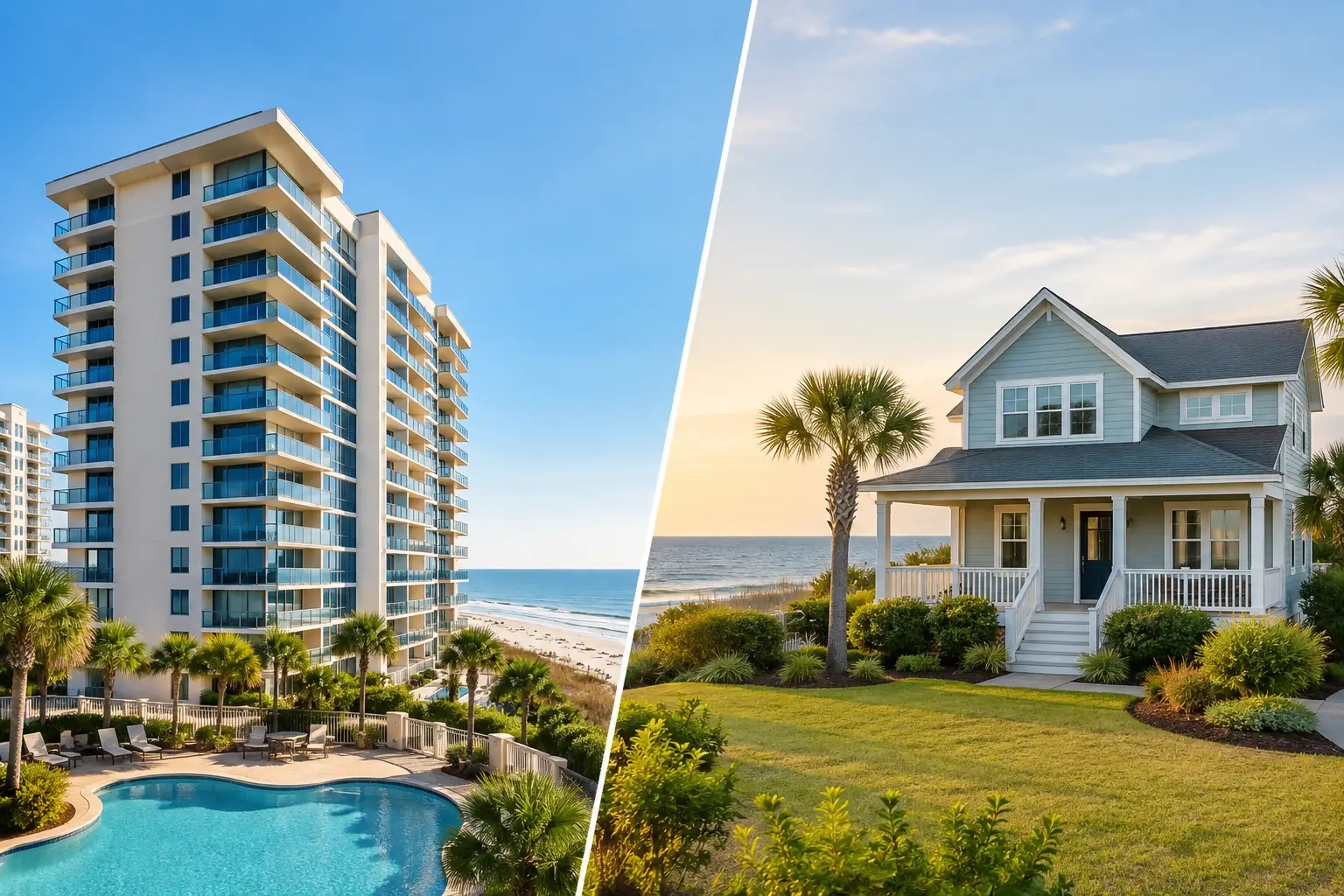
A sunrise view over the Atlantic, an easy walk to dinner, a quiet screened porch, or a backyard for visiting family – the right coastal home looks different for every buyer. When comparing a Myrtle Beach SC condo vs house, the best choice is rarely about square footage alone. It comes down to how often you will use the property, how much maintenance you want to handle, your budget beyond the purchase price, and whether rental income is part of the picture.
A condo can put you close to the beach with fewer individual chores. A house can offer breathing room, privacy, and more freedom to make the property your own. Both can be wonderful options along the Grand Strand, but they ask different things of an owner.
Myrtle Beach SC Condo vs House: Start With Your Lifestyle
For buyers who picture arriving on Friday, parking the car, and heading straight to the ocean, a condo can be especially appealing. Many condo communities offer amenities such as pools, elevators, fitness rooms, beach access, landscaping, and exterior maintenance. Instead of arranging for lawn care or worrying about a roof while you are away, you have an association responsible for much of the shared property.
That convenience is meaningful for vacation-home buyers, retirees who travel, and owners who do not want weekends filled with repair projects. Oceanfront and near-ocean condos can also provide a front-row seat to the lifestyle that brings so many people to Myrtle Beach in the first place.
A house often fits buyers who want the coast to feel more like home than a getaway. You may want a garage for beach gear, space for a dog, a garden, a private pool, or enough bedrooms to host children and grandchildren. A detached home can offer all of that, along with fewer shared walls and more control over daily routines.
There is a location trade-off. In many areas, a house with a large lot may sit farther from the ocean than a condo with a beach view. That is not a drawback if you prefer a quieter residential setting, but it is worth being honest about how much a walkable beach lifestyle matters to you.
Look Beyond the Purchase Price
A condo’s purchase price may appear more approachable than a similarly located single-family home, especially near the water. But the monthly ownership cost deserves equal attention. Condo association dues can cover valuable services, yet they can also be substantial depending on the building’s amenities, age, insurance needs, staffing, and reserves.
Before making an offer on a condo, review the association documents closely. Monthly dues are only one piece of the financial picture. Ask about what the fees cover, the building’s reserve funds, recent major repairs, pending projects, rental rules, pet policies, and any current or anticipated special assessments. An assessment is an added charge to owners for a major expense that the regular budget or reserves do not fully cover.
With a house, there may be no HOA dues at all, or there may be modest community dues for amenities and common-area maintenance. That does not mean the house is automatically less expensive to own. The owner is responsible for the roof, exterior, landscaping, HVAC systems, plumbing, pest control, driveway, and every other repair that comes with a standalone property.
A helpful way to compare properties is to estimate a full annual ownership budget, not just a mortgage payment. Include property taxes, homeowners insurance, flood insurance when applicable, HOA or condo dues, utilities, maintenance, and a reserve for repairs. If you are buying a second home, also include travel and property-management costs.
Insurance Matters More at the Coast
Coastal insurance deserves careful attention whether you choose a condo or a house. Wind coverage, deductibles, flood-zone status, elevation, building age, and distance from the coast can all affect costs. A lender may require flood insurance in certain areas, but even a property outside a required flood zone can face weather-related risk.
For condos, understand the difference between the association’s master policy and the coverage you need for your individual unit. The master policy may insure the building structure and common areas, while your policy may need to cover interior finishes, personal property, liability, loss assessments, and other details. The exact responsibility depends on the association’s governing documents.
For houses, you have more direct control over coverage choices, but you also carry responsibility for the entire structure. Older homes may have charm and a prime location, yet their roof age, electrical systems, plumbing, and construction features can influence insurability and premiums. A thorough inspection and insurance quote early in the buying process can prevent surprises later.
Rental Plans Can Change the Answer
If investment income is part of your plan, do not assume every beach property can be rented the same way. Some condo buildings are designed around short-term rentals and have onsite management, while others limit rental frequency or require longer lease terms. A house may offer strong rental appeal for larger groups, particularly if it has multiple bedrooms, outdoor space, or a pool, but local regulations and community rules still apply.
The most rentable property is not always the best property for your personal use. A high-traffic building may perform well as a vacation rental but feel busy when you want a peaceful retreat. A residential neighborhood may be ideal for full-time living but have restrictions that make short-term rentals impractical.
It also helps to be realistic about the work involved. Rental revenue can offset costs, but it comes with cleaning, repairs, linens, guest communication, management fees, occupancy swings, and wear on the home. Before relying on projected income, review comparable rental performance with a conservative eye and confirm the rules in writing.
Maintenance: Shared Responsibility or Full Control?
Condo ownership simplifies some maintenance, but it does not eliminate it. You still maintain the interior of your unit and contribute financially to the building’s larger needs through dues or assessments. Elevators, pools, roofs, parking structures, balconies, and exterior systems are expensive assets. Well-run associations plan ahead, communicate clearly, and maintain healthy reserves.
A house puts the decisions in your hands. If you want to replace the landscaping, update a porch, add storage, or choose your own service providers, that freedom can be a major advantage. The other side is that there is no association stepping in when the roof leaks or the irrigation system fails.
Buyers who enjoy home projects may see that responsibility as a benefit. Buyers who live out of state or prefer low-maintenance ownership may value the structure of condo living. Neither approach is better across the board. It is simply a question of where you want your time and money to go.
Resale Is About Fit, Location, and Condition
Both condos and houses can have strong resale appeal in the Myrtle Beach area. Location will always matter, but so will condition, layout, views, parking, amenities, rental flexibility, and the overall health of a community or neighborhood.
For condo buyers, a well-maintained building with sound finances can be just as important as the unit itself. For house buyers, a functional floor plan, updated systems, outdoor living space, and manageable maintenance can widen the future buyer pool. A home close to the beach is attractive, but buyers also notice traffic patterns, flood considerations, neighborhood character, and everyday convenience.
Avoid buying solely for a future resale story. Buy a property that works for your plans now, while keeping the next buyer in mind. That balanced approach usually leads to better decisions than chasing the trendiest address or the largest view.
Questions to Answer Before You Choose
Think through how you will use the property during an ordinary week, not only during a perfect summer vacation. Will you be here full time, several months a year, or a few long weekends? Do you want to walk to the beach, entertain a crowd, bring pets, rent to guests, or lock the door and travel without much worry?
Then consider your tolerance for shared rules. Condo communities provide structure, but that structure may include limits on pets, parking, renovations, rentals, and exterior changes. A house can offer more flexibility, although an HOA may still have guidelines. Reading the rules before falling in love with a property is always easier than discovering a restriction after closing.
The right coastal home should support the life you want to live, whether that means coffee on an oceanfront balcony or a backyard cookout after a day at the beach. Take time to compare the whole ownership experience, ask the practical questions early, and let your day-to-day priorities guide the decision.
Leave a Reply