Category: Coastal Carolina Real Estate

  • Moving to Myrtle Beach From New York? Read This

    Moving to Myrtle Beach From New York? Read This

    Thinking about leaving New York for a new life along the South Carolina coast? Moving to Myrtle Beach from New York offers the opportunity to enjoy milder winters, beautiful beaches, welcoming communities, and a different pace of life. Whether you’re planning for retirement, searching for a second home, or simply ready for a change, understanding the local housing market, neighborhoods, insurance costs, and lifestyle differences will help you make a confident decision.

    For many New Yorkers, the Grand Strand feels familiar in one key way: there is always something to do. Restaurants, golf, live entertainment, medical care, shopping, and community events are close by. The difference is that a morning walk can include salt air, sea oats, and a view that makes even a Monday feel a little lighter.

    What Changes When You Move From New York to Myrtle Beach

    The cost of living is one of the biggest reasons people consider a move south, but it should not be reduced to a single number. Housing costs can be more approachable than in many parts of New York, especially compared with New York City, Long Island, Westchester, or the Hudson Valley. A buyer may find more square footage, newer construction, or a community with amenities for the same budget.

    Still, the purchase price is only one part of the picture. Property taxes, homeowners insurance, flood insurance, HOA dues, utilities, and maintenance all deserve a close look. A condo with ocean views may have a very different monthly carrying cost than a single-family home a few miles inland. The right choice depends on whether you want a primary home, vacation place, retirement retreat, or investment property.

    South Carolina does not tax Social Security benefits, which can be meaningful for retirees. State income tax and property tax rules are different from New York’s, though, so it is wise to discuss your individual situation with a qualified tax professional before making decisions based on projected savings.

    The pace can feel different, too. Myrtle Beach is busy during visitor season, particularly around major holidays and summer weekends. Many residents enjoy the energy, while others prefer communities that are a little removed from the center of town. The good news is that the Myrtle Beach metropolitan area offers plenty of choices, from lively beachfront neighborhoods to quieter inland communities.

    Choosing the Right Myrtle Beach Area

    “Myrtle Beach” can mean many things to a relocating buyer. It may mean a high-rise condo steps from the ocean, a golf community in Carolina Forest, a home near the Intracoastal Waterway, or a relaxed coastal town south of the city. Before touring homes, think about how you expect to spend an ordinary Tuesday, not just a perfect vacation Saturday.

    If walkability, restaurants, and beach access are top priorities, Myrtle Beach, North Myrtle Beach, Surfside Beach, and Garden City Beach may deserve a close look. These areas offer a coastal feel with easy access to the water, although homes closer to the ocean can come with higher prices, larger insurance costs, and more seasonal activity.

    For buyers who want dining, boating, and a more established lowcountry atmosphere, Murrells Inlet and Pawleys Island are often appealing. Conway offers a historic downtown setting, riverfront character, and a little more distance from the beach crowds. Little River can suit buyers drawn to marinas, fishing, and a location near the North Carolina line. Longs and Loris may offer more space and a quieter rural-suburban setting, but daily drives to the beach, medical appointments, or favorite restaurants will be longer.

    There is no universal “best” neighborhood. A couple relocating for retirement may value one-level living, medical access, and low-maintenance landscaping. A family may focus on school options, commute time, bedrooms, and yard space. A second-home buyer may place lock-and-leave convenience above all else.

    Do Not Buy Based on Vacation Memories Alone

    A long weekend at the ocean is not the same as living at the coast year-round. If possible, visit during more than one season. Spend time in the area in July, when heat and traffic are at their highest, and again in winter, when the pace is quieter and the evenings can be cool.

    Drive the routes you would actually use. Visit the grocery store, a pharmacy, a beach access point, and nearby restaurants. Test the distance from a potential home to the airport, a medical provider, or family activities. Those everyday details are often what turn a pretty house into the right home.

    Weather, Storms, and Coastal Homeownership

    The weather is a major draw for New Yorkers tired of long winters. Myrtle Beach has mild winters, a long warm season, and plenty of bright days. Snow is uncommon, but summers are hot, humid, and very much part of the deal. If you love four distinct seasons and crisp fall weather lasting for months, the climate adjustment may take time.

    Hurricane season also deserves practical attention. Coastal South Carolina residents prepare rather than panic. A home’s flood zone, elevation, age, roof condition, wind coverage, and proximity to water can all affect insurance options and costs. Ask for insurance estimates early in the home search, not after you have fallen in love with a property.

    For condos and townhomes, review the association documents carefully. Find out what the HOA covers, whether there are rental restrictions, how reserves are funded, and whether special assessments have been discussed. A lower list price is not always the better value if monthly fees or upcoming building work are substantial.

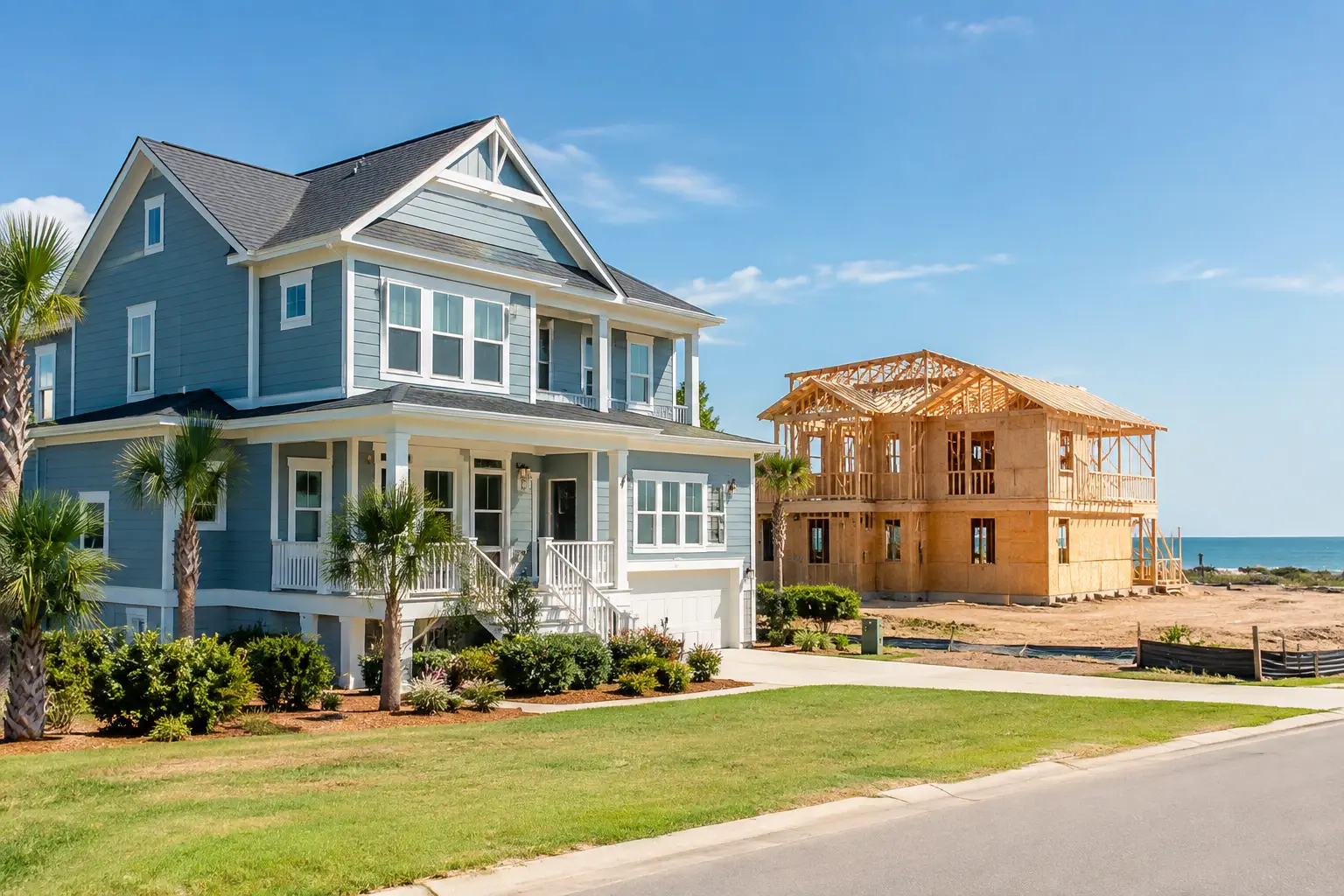
    New construction can be attractive for buyers moving from New York because it may offer modern layouts, energy-efficient features, and less immediate maintenance. On the other hand, new communities may still be under construction, and lot locations, future phases, and HOA rules need to be understood before signing a contract. Existing homes can offer mature landscaping, established neighborhoods, and a clearer sense of what the community feels like day to day.

    Plan the Move Before You List or Pack

    A move from New York to the coast is easier when the housing and moving timelines are coordinated. If you need to sell a New York home, determine whether you will sell first, buy first, or use temporary housing. Each route has trade-offs involving financing, timing, and stress level.

    Downsizing is often a practical first step. Coastal homes may have different storage, garage, and closet space than a longtime New York residence. Decide what furniture is worth transporting, especially bulky pieces that may not fit the new floor plan or match a lighter coastal style. Keep important documents, medications, valuables, and a few essentials with you rather than on the moving truck.

    If you plan to work remotely, confirm internet availability at the exact address. If you are retiring, consider how close you want to be to health care, airports, and visiting family. For those purchasing a vacation or investment home, local rental regulations and HOA policies should be reviewed before relying on rental income projections.

    A Home Search Should Feel Personal, Not Rushed

    The best relocation decisions usually start with a clear wish list and a flexible mind. Make a short list of must-haves, such as a first-floor primary bedroom, a garage, a screened porch, beach access, or a gated community. Then separate those needs from nice-to-haves. That makes it easier to compare homes honestly when the ocean view, pool, or bright new kitchen starts calling your name.

    Cyndy Otto works with buyers throughout the Myrtle Beach area and can help sort through the details that online listings cannot show: the feel of a neighborhood, the practical differences between communities, and the questions worth asking before an offer is written.

    Ready to Make Myrtle Beach Your New Home?

    Moving from New York to Myrtle Beach is an exciting opportunity, but finding the right home and community takes local knowledge.

    Cyndy Otto of Cyndy Sells the Seashore helps buyers explore Myrtle Beach, North Myrtle Beach, Murrells Inlet, Pawleys Island, and surrounding coastal communities.

    Whether you’re planning to relocate soon or just beginning to explore your options, Cyndy is ready to help you take the next step.

    Get Your FREE Myrtle Beach Relocation Guide!

    Discover helpful information about coastal living, local communities, and what to consider before purchasing your new home.

    Visit https://www.cyndysellstheseashore.com to connect with Cyndy and begin planning your move.

    Your new coastal lifestyle starts here!

  • Myrtle Beach HOA Fees for Homebuyers: What to Know

    Myrtle Beach HOA Fees for Homebuyers: What to Know

    A beach home can look perfect in the listing: sunrise views, a pool steps from the door, landscaping already handled, and no weekend spent mowing grass. Then the HOA fee appears. For many buyers, understanding Myrtle Beach HOA fees for homebuyers is the difference between finding a property that fits the budget on paper and finding one that feels comfortable to own year after year.

    HOA fees are not automatically good or bad. They simply pay for a particular set of services, amenities, insurance obligations, and long-term maintenance needs. The key is knowing what the fee covers, what it does not cover, and whether the community is financially prepared for coastal living.

    Why Myrtle Beach HOA fees vary so much

    In the Myrtle Beach area, HOA dues can range from modest monthly amounts in a small single-family neighborhood to several hundred dollars or more each month in a resort-style condominium building. That broad range makes sense once you look at what each community is responsible for.

    A neighborhood of detached homes with a shared entrance sign, small common area, and basic landscaping usually has lower dues than an oceanfront high-rise with elevators, pools, parking decks, security, fitness rooms, exterior maintenance, and master insurance. A townhome community often falls somewhere in between.

    Location matters, too. Properties closer to the ocean may face higher insurance and maintenance costs because of salt air, wind exposure, moisture, and the wear that comes with a busy vacation market. A higher fee is not necessarily a warning sign. Sometimes it reflects valuable coverage and upkeep that would otherwise become the owner’s direct responsibility.

    What HOA dues may cover

    Every association is different, so buyers should never assume two communities with similar fees offer the same value. In a condo or townhome community, regular dues may cover exterior building maintenance, roof replacement reserves, landscaping, pest control, trash service, common-area utilities, pool care, and master hazard insurance.

    In a single-family home community, dues may be more limited. They might pay for neighborhood landscaping, private road maintenance, gates, a clubhouse, or community amenities. Homeowners are usually still responsible for their own roof, exterior repairs, lawn care, and insurance.

    The most useful question is not simply, “How much are the dues?” It is, “What expenses will I personally pay in addition to the dues?” A $350 monthly condo fee that includes building insurance, water, sewer, trash, exterior maintenance, and amenities may compare favorably with a lower-fee property that leaves all of those items to the owner.

    Master insurance is worth a closer look

    For attached properties, the association’s master insurance policy can be one of the biggest pieces of the ownership puzzle. Buyers need to understand whether the policy covers the building exterior only or extends to certain interior elements. This is often described as “bare walls” coverage versus coverage that includes original fixtures or improvements.

    Your lender and insurance agent can help determine the individual policy you need, commonly called an HO-6 policy for condos. Coastal insurance deserves special attention. Wind, hail, flood, and deductibles may be handled differently, and flood insurance is generally separate from standard homeowners insurance. Never assume an HOA policy eliminates the need for your own coverage.

    The monthly fee is only one part of the cost

    When reviewing Myrtle Beach HOA fees for homebuyers, look beyond the recurring payment. Associations can charge transfer fees, capital contribution fees, working capital contributions, application fees, or move-in and move-out fees. Some are relatively small; others can be a meaningful closing expense.

    The community also may have rules that affect your budget and lifestyle. For example, an association may require a minimum lease period, limit the number of rentals each year, restrict short-term rentals, regulate pets, or require approval before making exterior changes. These details are especially important for vacation-home buyers and investors who expect rental income to offset ownership costs.

    A property that is ideal for a quiet retirement retreat may not be the best fit for an owner seeking weekly vacation rentals. Likewise, a community designed around short-term guests may feel too active for a buyer who wants a peaceful primary residence. The HOA documents help reveal what kind of ownership experience the community supports.

    Special assessments: the question buyers should ask

    A special assessment is an extra charge imposed by the association, usually for a major repair, replacement, insurance shortfall, or unexpected expense not fully covered by reserves. It can be paid all at once or spread over time, depending on the association and the project.

    Special assessments are not always evidence of poor management. A hurricane, insurance premium increase, elevator modernization, seawall repair, or urgent roof work can create costs that no reserve fund could fully anticipate. Still, they deserve careful review because they can substantially change the affordability of a purchase.

    Before making an offer, ask whether there are current special assessments, approved future assessments, pending major projects, or discussions about raising dues. Meeting minutes can be particularly revealing. They may show recurring water intrusion concerns, aging infrastructure, insurance challenges, or upcoming capital repairs that are not obvious during a pleasant afternoon showing.

    Reserve funds tell part of the story

    Reserve funds are savings set aside for predictable big-ticket needs, such as roofs, paving, elevators, siding, and pool equipment. A healthy reserve balance can reduce the chance that owners will need a large surprise payment when a major component reaches the end of its life.

    There is no single reserve balance that makes every community safe. The right amount depends on the age, size, amenities, and condition of the property. A newer low-rise building has different needs than an older oceanfront tower. What matters is whether the association has a realistic plan for maintaining what it owns.

    Documents to review before you commit

    An HOA resale package or disclosure documents can feel like a lot of reading, but this is where buyers find the details behind the fee. Review the current budget, balance sheet, recent meeting minutes, governing documents, rules and regulations, insurance information, reserve information if available, and any notices of litigation or planned repairs.

    Pay close attention to whether the operating budget depends on unusually low dues, whether delinquent owner accounts are high, and whether insurance costs have jumped sharply. You are not expected to become an association accountant, but you should understand the broad financial picture before the due diligence period ends.

    Your real estate agent can help you identify the questions to ask, while your lender, attorney, insurance professional, and tax advisor can address the parts that fall within their specialties. For buyers relocating from outside the coast, this team approach can make the process feel much less mysterious.

    How to compare two homes fairly

    When two homes are competing for your attention, calculate the full estimated monthly ownership cost for each one. Include the mortgage payment, property taxes, homeowner or condo insurance, flood insurance if needed, HOA dues, utilities, and realistic maintenance costs. If one property allows rentals, also factor in rental management, cleaning, furnishing, licensing, and vacancy risk rather than relying only on gross rental projections.

    A lower purchase price does not always mean lower ownership costs. An older condo with modest pricing and high dues may still be a smart choice if the building is well managed, the fee covers meaningful services, and its reserves are appropriate. On the other hand, a low HOA fee can be less appealing if the community has deferred maintenance or no plan for future repairs.

    A coastal home should fit more than your wish list

    The right community is not always the one with the lowest fee or the flashiest amenity package. It is the one whose costs, rules, and maintenance approach match the way you want to use the property. Whether you are considering a Myrtle Beach condo, a North Myrtle Beach getaway, or a quieter home near Murrells Inlet or Pawleys Island, take time to read the HOA story behind the listing photos.

    A little homework before an offer can protect the joy of that first beach weekend after closing. Ask direct questions, review the documents carefully, and choose a home whose association feels as comfortable as the front porch.

  • 12 Beach Towns Near Myrtle Beach to Call Home

    12 Beach Towns Near Myrtle Beach to Call Home

    A morning walk on the sand, dinner overlooking the water, and a home that feels like a true getaway can look very different from one beach community to the next. The best beach towns near Myrtle Beach are not all built for the same kind of buyer. Some offer boardwalk energy and easy access to entertainment. Others feel tucked away, residential, and wonderfully unhurried.

    For a primary home, vacation place, retirement retreat, or rental investment, the right choice usually comes down to more than distance from the ocean. Daily lifestyle, flood considerations, HOA rules, rental regulations, maintenance expectations, and the kind of neighborhood you want around you all deserve a place in the decision.

    Beach Towns Near Myrtle Beach: Find Your Coastal Fit

    Myrtle Beach

    Myrtle Beach is the natural choice for buyers who want activity close by. Restaurants, golf, shopping, attractions, medical services, and oceanfront options are all part of the appeal. It can be a practical fit for a second home that will be used often, as well as for buyers considering a property with rental potential.

    The trade-off is that popular areas can feel busy during peak visitor seasons. Buyers looking for a quieter residential setting may prefer a neighborhood slightly inland or one of the smaller communities nearby. Myrtle Beach offers plenty of variety, but it pays to look carefully at each neighborhood rather than treating the city as one experience.

    North Myrtle Beach and Little River

    North Myrtle Beach has a more relaxed feel than the central Myrtle Beach area while still offering beaches, golf, dining, and plenty to do. It is especially appealing to buyers who want a coastal home near conveniences without being in the middle of the busiest tourism corridor.

    Just north, Little River brings a different flavor. Known for its waterfront restaurants, marina lifestyle, and fishing culture, it appeals to people who picture afternoons on the Intracoastal Waterway as often as days at the beach. Some homes offer water views or boating access, while others provide more space at a price point that may be different from oceanfront communities.

    Longs and Loris

    For buyers who want to stay close to the coast but put more of the budget toward square footage, Longs and Loris are worth a look. These inland communities can offer newer homes, larger lots, and a quieter daily pace. They are often a strong match for full-time residents who want room for guests, hobbies, or a growing family.

    The beach is not outside the front door, of course. That is the trade-off. But for many buyers, a drive to the sand is well worth having a garage, yard, and home layout that better supports everyday living.

    Surfside Beach and Garden City Beach

    Surfside Beach is often described as family-friendly, with a welcoming small-town coastal character. Its residential streets, beach access, and location south of Myrtle Beach make it attractive to buyers who want a beach town feel without going too far from shopping and services.

    Garden City Beach sits just south of Surfside and offers a mix of oceanfront, inlet-side, and canal-area properties. It is a favorite for those who want a relaxed vacation atmosphere and easy access to the water. Property type matters here. An oceanfront condo, a raised beach house, and a creek-front home can each come with very different ownership costs, insurance needs, and maintenance responsibilities.

    Murrells Inlet

    Murrells Inlet is a standout for buyers who want a coastal lifestyle centered on food, boating, and natural scenery. The MarshWalk, waterfront restaurants, creeks, and nearby golf create a setting that feels lively without being overly commercial. It is a popular choice for retirees and second-home owners, but there are neighborhoods suited to a range of lifestyles.

    This is a community where proximity to the water can mean very different things. A home with a marsh view may offer a peaceful setting, while a home near restaurant and marina activity may put you closer to the action. Think about how you plan to use the home in every season, not only during a sunny vacation week.

    Pawleys Island and Georgetown

    Pawleys Island has a low-key, classic coastal personality. Buyers are drawn to its wide beaches, salt marshes, historic charm, and a pace that feels noticeably slower than the Grand Strand. It can be an especially appealing option for someone looking for a refined retreat, a retirement home, or a place where nature is part of the everyday view.

    Georgetown offers a different kind of coastal living. Its historic downtown, waterfront setting, and established neighborhoods give it character that is hard to duplicate. It may be a good match for buyers who value a sense of community, history, and boating access as much as beach proximity. The town is farther from the busiest Myrtle Beach attractions, which is either a benefit or a drawback depending on your priorities.

    North Carolina Beach Towns Near Myrtle Beach

    Crossing into Brunswick County, North Carolina opens up another lovely collection of communities. The drive north can lead to a quieter coastal rhythm, with each town offering its own version of beach life.

    Calabash, Ocean Isle Beach, and Sunset Beach

    Calabash is well known for its seafood restaurants and small-town atmosphere. It is convenient to the South Carolina line, making it a smart choice for buyers who want North Carolina ownership while remaining near the Grand Strand’s dining, healthcare, and entertainment options.

    Ocean Isle Beach offers an easygoing island feel with beach homes, condos, and nearby mainland neighborhoods. It works well for buyers who want a vacation-home setting but also need practical access to groceries, services, and golf.

    Sunset Beach is often sought out for its tranquil, natural appeal. The area has a more peaceful feel, especially for buyers who imagine early beach walks, birdwatching, and time away from crowds. Availability and property style can vary significantly between the island, the mainland, and nearby golf communities.

    Shallotte, Holden Beach, Oak Island, and Southport

    Shallotte is a practical hub for Brunswick County living. It is inland but close to several beaches, with shopping, medical services, restaurants, and a broader selection of year-round residential neighborhoods. For buyers who want coastal access without island-home upkeep, Shallotte deserves attention.

    Holden Beach has long been loved for its quiet, family-oriented atmosphere. It tends to attract buyers seeking a genuine escape from busier beach destinations. Its slower pace is the point, so it is best for those who do not need nightlife and major shopping just minutes away.

    Oak Island offers a larger residential footprint and a very livable blend of beach, boating, parks, and everyday services. There is more of a year-round community feeling here than in some smaller barrier-island towns. Southport, meanwhile, brings historic streets, waterfront views, and a charming downtown that feels special in every season. It is ideal for buyers who want coastal character without needing to live directly on the ocean.

    Look Beyond the View Before You Buy

    A beautiful water view can be the beginning of a home search, but it should not be the entire plan. Coastal properties deserve careful due diligence. Ask about flood zones, wind and flood insurance, elevation, drainage, roof age, HOA fees, rental restrictions, and whether the property has been affected by past storms.

    For condo buyers, review the association’s financial health, reserve funding, maintenance plans, and any upcoming assessments. For single-family homes, consider exterior upkeep, access during storms, and whether outdoor features like docks, pools, or bulkheads will add to future costs. These details do not take away from the joy of coastal ownership. They help protect it.

    The right beach town is the one that fits how you really want to live: busy or peaceful, oceanfront or inland, lock-and-leave simple or full of projects and personality. A thoughtful home search gives you room to enjoy the fun part – picturing your first coffee with salt air in the background – while making a choice that feels just as good long after closing.

  • Most Affordable Places to Buy a House Near Myrtle Beach

    Most Affordable Places to Buy a House Near Myrtle Beach

    A beach-area home does not have to mean a beachfront price tag. When buyers ask about the most affordable places to buy a house near Myrtle Beach, the best answer usually starts a few miles inland – or just north of the state line. That small change in location can open the door to more square footage, a larger yard, newer construction, or simply a monthly payment that feels more comfortable.

    The right affordable town depends on what you want your everyday life to look like. A retiree who wants quiet streets may shop differently than a family needing a commute to Myrtle Beach, or an investor looking for a low-maintenance property with rental potential. Here are the areas worth putting on your home search map.

    Conway: Character, Convenience, and More Home for the Money

    Conway is often one of the first places to consider for buyers who want value without giving up access to the coast. Located inland from Myrtle Beach, this historic river town has a real downtown, local restaurants, tree-lined neighborhoods, and a pace that feels more residential than resort-oriented.

    Buyers can often find a wider mix of price points here, including established homes, townhomes, and newer communities. Compared with many beachside neighborhoods, a budget may stretch further toward extra bedrooms, garage space, or a larger lot. Conway is especially appealing for people who plan to live here year-round and want stores, medical care, schools, and daily errands close by.

    The trade-off is the drive. Depending on where you live and where you are headed, reaching the beach or the center of Myrtle Beach can take longer during busy summer months. Flood history and flood insurance should also be reviewed carefully on any particular property, especially near waterways or lower-lying areas.

    Longs: New Construction at a More Manageable Price

    Longs has become a practical choice for buyers who like the clean slate of new construction but do not want to pay a premium for an address directly on the water. This growing area sits north of Myrtle Beach and inland from North Myrtle Beach, with many newer subdivisions offering single-family homes at a range of sizes and finishes.

    For buyers comparing homes, Longs can be a strong value play. Newer homes may offer energy-efficient features, modern layouts, and fewer immediate repair concerns than an older home. It can be a good fit for a primary residence, a retirement move, or a buyer who wants a newer home with room for guests.

    Still, the base price is only part of the story. Builder upgrades, lot premiums, homeowners association dues, and closing costs can change the bottom line quickly. A home that looks like a bargain in a model center deserves a careful look at what is included, what is optional, and what the completed monthly payment will be.

    Loris: A Small-Town Option for Budget-Focused Buyers

    If your priority is stretching your purchase dollars, Loris deserves a look. This small South Carolina town is farther inland and generally offers a quieter, more rural setting than the Grand Strand. Buyers may find older homes, larger parcels, and lower-priced opportunities that are harder to locate closer to the beach.

    Loris is not the choice for someone who wants to walk to restaurants or make a spontaneous evening beach trip every day. It is better suited to buyers who value space, a slower pace, and a smaller-town feel. For some households, that is exactly the appeal. For others, the drive to work, shopping, or coastal entertainment may be a deal-breaker.

    When evaluating homes in this area, look beyond cosmetics. Older properties may need updates to roofing, HVAC systems, plumbing, electrical panels, or septic systems. A thorough inspection can help distinguish a well-priced home from one that simply has deferred maintenance waiting in the wings.

    Little River: Near the Water Without the Resort Price

    Little River can be a smart middle ground for buyers who want to stay close to the coast without placing themselves in the middle of Myrtle Beach activity. Known for its waterfront setting, fishing culture, and proximity to North Myrtle Beach, it offers a more relaxed coastal lifestyle with a broad mix of housing.

    Affordability here depends heavily on the exact neighborhood. Waterfront, marina-adjacent, and golf-course properties may carry a higher price, while inland homes, condos, and older communities can offer more accessible choices. For a second home buyer, Little River may provide the coastal atmosphere they want without paying for a direct oceanfront location.

    Condo buyers should pay particular attention to monthly association fees, rental rules, insurance coverage, reserve funding, and any planned special assessments. A lower purchase price can be less affordable than it appears if the ongoing fees are high.

    Shallotte and Calabash: North Carolina Value Near the Coast

    For buyers open to crossing into North Carolina, Shallotte and Calabash deserve a serious comparison. Both offer access to Brunswick County beaches while often providing a different mix of neighborhoods, taxes, and home styles than nearby South Carolina communities.

    Shallotte is a convenient hub for shopping, dining, and healthcare, with homes ranging from established neighborhoods to newer developments. It can work well for people who want to be near Ocean Isle Beach or Holden Beach but prefer to live a little inland. Calabash, just north of the state line, has a small-town coastal character and is convenient to both North Myrtle Beach and Sunset Beach.

    Neither town is automatically less expensive than every South Carolina option. Inventory, property condition, lot size, and proximity to water matter more than a state line. But buyers who limit their search to one county can miss homes that better match their budget and lifestyle just a short drive away.

    What “Affordable” Should Include Before You Make an Offer

    A home’s list price gets the attention, but its carrying cost determines whether it truly works for your household. Before narrowing your search, compare these expenses alongside principal and interest:

    • Property taxes, which can vary by state, county, municipality, and owner-use status.
    • Homeowners insurance, including wind, flood, or other coastal coverage where applicable.
    • HOA or condo association dues, plus rules that may affect parking, pets, rentals, and exterior changes.
    • Commuting costs and time, especially if you will travel regularly to Myrtle Beach, North Myrtle Beach, or nearby employment centers.
    • Immediate repairs, furnishing needs, and utility costs for the specific home.

    Flood insurance is a particularly important conversation in coastal Carolina markets. A property does not have to be directly on the ocean to have flood considerations. Ask for the property’s flood zone, prior insurance information when available, and a clear estimate of expected coverage before you are deep into the contract process.

    How to Shop the Affordable Areas Without Settling

    Start by deciding which compromises you can happily make. You may be comfortable living 20 or 30 minutes from the sand if it means gaining a one-story home, a screened porch, or a yard for visiting grandchildren and pets. Or you may prefer a smaller condo closer to the water because beach access matters more than square footage.

    It also helps to compare homes by total monthly cost rather than by list price alone. Two homes priced similarly can have very different tax bills, insurance needs, association fees, and maintenance demands. New construction may reduce near-term repair worries, while an older home in an established neighborhood may provide better location and charm.

    The most affordable place is not always the town with the lowest listing prices. It is the place where the home, the ongoing costs, and the lifestyle all fit together comfortably. Whether that turns out to be Conway, Longs, Loris, Little River, Shallotte, or Calabash, a thoughtful comparison can help you find a home that leaves room in the budget to enjoy the coast, too.

  • Myrtle Beach Homes With Assumable Mortgages

    Myrtle Beach Homes With Assumable Mortgages

    A home with a low-rate mortgage can be one of the most compelling finds on the Grand Strand, especially when current borrowing costs are higher than the seller’s existing loan rate. Myrtle Beach homes with assumable mortgages may give a qualified buyer the chance to take over that existing loan rather than start from scratch with a brand-new mortgage. That possibility deserves a closer look, because the rate can be attractive, but the details determine whether the purchase truly works for your budget.

    What Is an Assumable Mortgage?

    An assumable mortgage is a home loan that a new buyer can take over from the seller, subject to the lender’s approval. The buyer assumes the remaining loan balance, payment schedule, interest rate, and loan terms. The loan does not reset to cover the home’s current sale price.

    For example, a seller may have a $250,000 remaining mortgage balance at 3.25 percent interest, while the home is selling for $400,000. If the loan is assumable and the buyer qualifies, the buyer could assume the $250,000 loan. The remaining $150,000, plus closing costs, must come from the buyer’s cash, a second loan, or another acceptable source of funds.

    That gap between the sales price and loan balance is the point that deserves the most attention. A low assumed rate is valuable, but it does not erase the need to finance or pay the seller’s equity.

    Which Loans Can Usually Be Assumed?

    Most assumable loans are government-backed mortgages. FHA, VA, and USDA loans may be assumable, although each program and lender has its own requirements. Conventional mortgages are generally not assumable, with limited exceptions, so a listing should never be labeled assumable without confirming the actual loan type and servicer guidelines.

    A VA loan can be especially appealing when it carries a favorable rate. However, a buyer does not have to be a veteran to assume many VA loans if the lender approves the assumption. There can be an important consequence for the seller: unless the lender grants a release of liability, the seller may remain responsible if the buyer later fails to make payments. A veteran seller may also want to understand how the assumption affects their VA loan entitlement.

    FHA assumptions usually require the buyer to meet credit, income, and debt-to-income standards. USDA assumptions may carry occupancy and location-related requirements. The lender, not the real estate listing, makes the final call on eligibility.

    Why Myrtle Beach Buyers Pay Attention to Assumable Loans

    The Myrtle Beach area attracts a wide mix of buyers: full-time residents, retirees, second-home shoppers, and buyers seeking rental opportunities. An assumable mortgage can create a real monthly-payment advantage for a buyer purchasing a primary residence, particularly when the assumed loan has a rate well below current market rates.

    The value is not just the rate. A lower interest rate can reduce the monthly principal-and-interest payment, which may improve a buyer’s overall comfort level after accounting for taxes, homeowners insurance, HOA dues, and coastal insurance considerations. In communities near the ocean, those non-mortgage housing costs can be meaningful, so a lower loan payment may offer helpful breathing room.

    Still, it depends on the price, the loan balance, and how long the buyer expects to own the property. A buyer who needs to borrow a large amount through a higher-rate second loan may find that the combined payment is less appealing than expected. A buyer with substantial cash for the equity difference may see a much stronger benefit.

    A Simple Payment Comparison Matters

    Before getting attached to the idea of an assumption, compare the full financing picture. Look at the assumed loan payment, the amount needed to close, any second financing payment, mortgage insurance if applicable, and the projected costs of owning that specific home.

    A condominium in Myrtle Beach may come with HOA dues that cover some exterior maintenance and insurance, while a single-family home in Conway or Murrells Inlet may place more insurance and maintenance responsibility directly on the owner. Neither option is automatically better. The right fit depends on how you plan to use the property and what monthly payment feels sustainable.

    The Equity Gap Is Often the Biggest Hurdle

    Assumable mortgages can make headlines because of the interest rate, but sellers often have significant equity. If a home has appreciated since the seller purchased it, the buyer must bridge the difference between the assumption balance and the agreed-upon price.

    Buyers sometimes use savings, proceeds from selling another property, a home equity line, or secondary financing. Each choice has a cost and a qualification process. Secondary financing may have a higher interest rate, and it can affect debt-to-income ratios. Cash keeps the transaction simpler, but it may reduce reserves that would otherwise be available for furnishings, repairs, or unexpected expenses after moving.

    For vacation or investment purchases, financing options can be more limited than for a primary residence. Some loan programs also have occupancy requirements that must be followed. A buyer should be clear about whether the property will be a primary home, a getaway, or a rental before building a financing plan around an assumption.

    What Buyers Should Verify Before Making an Offer

    A seller’s statement that a mortgage is assumable is a starting point, not a guarantee. The buyer should request that the seller contact the loan servicer early in the process to confirm the assumption process, estimated timeline, required forms, and current payoff or assumption balance.

    Buyers should also verify the interest rate, remaining term, monthly payment, escrow amount, loan type, and whether there are any late-payment issues or loan modifications. A low rate has less impact if only a few years remain on the loan, because the payment may be higher than expected due to the shorter remaining repayment period.

    It is also wise to ask about assumption fees and lender closing costs. These can vary. The lender will usually review the buyer’s credit, income, assets, and debts much as it would for a new loan, though the underwriting process is not identical.

    Most importantly, buyers should keep an eye on the contract timeline. Assumptions can take longer than a typical mortgage approval. The seller, buyer, real estate agents, lender, closing attorney, and any secondary lender need clear communication from the beginning.

    How Sellers Can Position an Assumable Loan Responsibly

    For sellers, an assumable mortgage can be a strong marketing feature when it is presented accurately. A buyer may be drawn to a lower rate, especially for a well-located home in Myrtle Beach, North Myrtle Beach, Surfside Beach, or Garden City Beach. But the listing should not imply that every buyer will qualify or that the transaction will close faster than usual.

    The best approach is to gather the facts before marketing the home: loan type, approximate balance, interest rate, monthly payment, servicing lender, and the lender’s instructions for requesting an assumption. Sellers should also understand whether they can be released from future liability after closing. This is particularly critical with a VA loan.

    A seller should be prepared for buyers to ask about the equity gap. In some cases, a buyer with strong cash reserves is a better match for an assumption than a buyer relying entirely on new financing. That does not mean the home is limited to one kind of buyer. It simply means the marketing and negotiation need to reflect the real financial structure of the opportunity.

    Coastal Ownership Costs Still Belong in the Conversation

    An assumable mortgage changes the financing side of a purchase, not the property’s ongoing ownership needs. Buyers should still review homeowners insurance, flood-zone information, wind and hail coverage, HOA documents, rental rules, utility costs, and maintenance expectations.

    This is especially relevant for homes near the coast. Two properties with similar prices can have very different insurance costs and community fees. A charming beach-area condo with an assumable loan may be a wonderful fit, but buyers should read the association’s financials and rules before relying on a low mortgage payment as the whole affordability story.

    A Good Opportunity Needs a Good Plan

    Assumable financing can be a meaningful advantage, not a shortcut. The right home and loan combination may help a buyer secure a payment that would be difficult to duplicate with a new mortgage. But it works best when the buyer has a realistic plan for the equity difference, enough time for lender approval, and a clear view of every cost that comes with coastal homeownership.

    If an assumable loan appears in a listing you love, treat it as an invitation to ask better questions early. With the loan details confirmed and the purchase strategy carefully mapped out, that lower-rate mortgage could be more than a nice feature. It could be the detail that helps the right beach home feel comfortably within reach.

  • New Construction Homes in Myrtle Beach SC

    New Construction Homes in Myrtle Beach SC

    A new home near the coast can feel like a fresh start: morning walks, salty air, a screened porch, and a floor plan that finally fits the way you live. But new construction homes in Myrtle Beach SC are not all the same, even when the model homes look equally polished. The community, builder, lot, contract, timeline, and long-term carrying costs can shape whether a home feels like a great fit after move-in day.

    For a primary residence, vacation place, retirement move, or investment property, the right choice starts with looking past the staged furniture. A thoughtful search considers how you want to spend your time at the beach and what ownership will realistically require.

    Start With the Community, Not Just the Model Home

    The Myrtle Beach area offers a wide range of new-home settings. You may find master-planned communities with pools, walking trails, and social calendars; quiet neighborhoods farther inland with more space; golf course communities; and smaller coastal developments with a more relaxed feel. Each has a different pace and a different cost structure.

    Before falling for a kitchen island or a dreamy primary bath, think about your daily routine. Do you want to be minutes from restaurants, entertainment, and the oceanfront? Would you rather have a larger yard in Conway, Longs, or Loris? Is a lock-and-leave community more appealing for a second home? Buyers who picture themselves actually living in the neighborhood tend to make more satisfying decisions than those who shop only by square footage.

    Location Changes More Than Your Commute

    A home closer to the water may offer the coastal lifestyle you imagined, but it can also bring different insurance considerations, flood-zone questions, rental rules, and traffic patterns during peak visitor seasons. A community farther west may provide more home for the budget and easier access to everyday errands, though it may not deliver the same walk-to-the-beach convenience.

    There is no universal best location. It depends on whether your priority is beach access, quiet surroundings, amenities, rental potential, healthcare access, or a lower-maintenance lifestyle. A clear list of must-haves and nice-to-haves keeps the search grounded.

    How to Compare New Construction Homes in Myrtle Beach SC

    Builders often present a base price that gets attention, then offer a menu of upgrades that can make the finished home feel very different from the advertised version. That is normal, but it is also where buyers need a careful side-by-side comparison.

    Ask what is included in the base price for the specific homesite you are considering. Flooring, cabinets, countertops, appliances, lighting, shower tile, screened porches, irrigation, landscaping, and garage finishes can vary widely. One builder may include a feature another treats as an upgrade, so comparing only the headline price can be misleading.

    The lot matters just as much. A premium homesite may have a water view, pond frontage, woods behind it, extra privacy, or a cul-de-sac setting. It may also cost substantially more. In some communities, the most attractive lots are released early or sell quickly, while in others a future phase may offer new options worth waiting for.

    Look at the Whole Monthly Picture

    The purchase price is only part of the budget. Review estimated property taxes, homeowners association dues, insurance, utility costs, and any community fees. If the home is in or near a flood zone, talk with an insurance professional early enough to understand potential flood insurance costs and coverage options.

    For buyers planning to rent a property, confirm the community’s rules before writing an offer. Some neighborhoods allow short-term rentals, others limit them, and some do not allow them at all. Rules about parking, pets, exterior changes, and leasing can matter even for a home you intend to use mostly for yourself.

    Builder Contracts Need a Closer Read

    A builder’s sales representative can be helpful and knowledgeable about that builder’s homes, available lots, and design selections. Their role, however, is to represent the builder. Having your own buyer representation means someone is focused on your interests during pricing discussions, contract review, inspections, walkthroughs, and closing.

    New-construction contracts are typically different from a resale contract. They may allow the builder more flexibility with completion dates, material substitutions, and design details than a buyer expects. The contract should make clear what is being built, which selections are included, how deposits are handled, and what happens if the timeline changes.

    Do not assume that a verbal promise will appear in the finished home. If a feature, credit, repair, or upgrade matters to your decision, it should be documented properly. This is especially true when buying from out of state, when it is easy to rely on photographs and conversations rather than seeing every detail firsthand.

    Plan for the Build Timeline – and Some Flexibility

    A quick-move-in home can be a good option for buyers who need a home sooner or prefer to avoid a long selection process. It may already have design choices completed, which reduces decisions but also limits personalization. A home built from the ground up offers more opportunity to choose finishes and features, but the timeline can be longer and subject to construction conditions.

    Weather, permit timing, labor availability, inspections, and supply changes can affect completion dates. In a coastal market, storms and heavy rain can add another layer of uncertainty. If you are coordinating a sale, lease ending, retirement date, or interstate move, build a little breathing room into the plan.

    Periodic visits can be valuable, especially during key construction stages. For buyers who live elsewhere, a local real estate professional can help keep communication organized and flag questions as the home progresses. Photos are useful, but they do not replace a clear understanding of what has been completed and what remains.

    Yes, New Homes Still Need Inspections

    A brand-new home should be inspected. New construction involves many trades, many materials, and many details completed on a tight schedule. A professional home inspection can identify items that deserve attention before closing, from drainage concerns and roofing details to electrical, plumbing, HVAC, and cosmetic issues.

    Many buyers choose an inspection before drywall goes up, if the builder permits it, and another inspection before closing. A final walkthrough is also your opportunity to test appliances, operate windows and doors, check fixtures, and create a punch list of unfinished or damaged items.

    Ask about the builder warranty as well. Understand the coverage periods, the process for submitting warranty requests, and who to contact after closing. Keep copies of your contract, selections, manuals, warranty information, and closing documents in one easy-to-find place.

    Choose Features That Work for Coastal Living

    The prettiest upgrade is not always the wisest one. In a beach-area home, practical details deserve real attention. Durable flooring, sensible storage for beach gear, a covered or screened outdoor area, easy-care landscaping, and quality window coverings can make everyday life more comfortable.

    If you plan to spend extended time away from the property, ask about lawn care, exterior maintenance, security options, and how the community handles common areas. For retirees, features such as a first-floor primary suite, minimal steps, wider doorways, and proximity to medical care may be more valuable than a dramatic two-story foyer.

    For an investment purchase, focus on what future renters or resale buyers will value, not simply the features that look best in a design center. A good layout, convenient location, dependable finishes, and reasonable ongoing costs usually have staying power.

    A new home should feel exciting, but it should also fit the life you are building around it. Take time to compare the details, ask direct questions, and picture an ordinary Tuesday there – not just a sunny vacation weekend. That is often where the right coastal home reveals itself.

  • Buying Myrtle Beach Homes With No HOA Today

    Buying Myrtle Beach Homes With No HOA Today

    A boat in the driveway, a fence that suits your dog, fewer rules about paint colors, or simply one less monthly bill can make myrtle beach homes with no hoa very appealing. For many buyers, especially those relocating, retiring, or purchasing a second home, that freedom feels like a breath of salt air. Still, a home without a homeowners association deserves the same careful review as any property near the coast – perhaps even more.

    The best choice is not automatically the house with an HOA or the house without one. It is the home whose rules, costs, location, and maintenance needs fit the way you plan to live.

    What “No HOA” Really Means

    In a real estate search, “no HOA” usually means there is no mandatory homeowners association collecting dues and enforcing community rules. That can be a genuine advantage, but buyers should not treat the phrase as a promise of zero restrictions or zero shared expenses.

    A property can have no HOA while still being subject to county or city ordinances, zoning requirements, building codes, setback rules, parking rules, and short-term rental regulations. Some neighborhoods also have recorded covenants or deed restrictions that remain in place even without an active association. A road maintenance agreement, drainage easement, shared driveway agreement, or voluntary neighborhood group can affect ownership as well.

    This is especially relevant around Myrtle Beach and nearby coastal communities, where a home’s location may bring flood-zone requirements, stormwater considerations, rental licensing rules, and insurance questions into the picture. “No HOA” is a valuable search filter. It is not the final step in due diligence.

    Why Buyers Look for Myrtle Beach Homes With No HOA

    The appeal is easy to understand. Without an HOA, owners often have more flexibility in how they use and personalize their property. You may have greater freedom around parking a work vehicle, storing a boat or trailer, choosing landscaping, putting up a fence, or making exterior changes. The specific freedoms depend on local rules and any recorded restrictions, but the feeling of having more control over your home is real.

    Avoiding monthly or annual association dues is another draw. HOA dues can cover meaningful services such as amenities, landscaping, roof maintenance in certain communities, insurance for common areas, and neighborhood management. If those services are not important to you, however, paying for them may not make sense.

    Buyers who value privacy also tend to prefer non-HOA neighborhoods. Older established areas, homes on larger lots, and properties outside master-planned communities may offer a less uniform look and a more individual feel. One street may have a classic brick ranch, a newer coastal cottage, a workshop, and a gardener’s impressive collection of palms. For the right buyer, that variety is part of the charm.

    The Trade-Off: More Freedom Means More Responsibility

    An HOA can be frustrating when its rules do not match your lifestyle. At the same time, associations often handle details that non-HOA owners must manage themselves. In a community without an association, there may be no one coordinating common-area care, maintaining private roads, setting appearance standards, or addressing a neighbor’s overgrown yard.

    That does not mean a non-HOA neighborhood is poorly maintained. Many are wonderfully cared for and full of long-term residents who take pride in their homes. It does mean buyers should look beyond the listing photos. Drive through the area at different times of day. Notice property upkeep, drainage, traffic, nearby commercial activity, and the general feel of the street.

    Consider what matters most to you. If a pool, gated entrance, community landscaping, and predictable neighborhood standards are high priorities, an HOA may be worth the dues. If you would rather choose your own contractor, keep your recreational equipment at home, and make decisions without an architectural review committee, a no-HOA property may be the better fit.

    Questions to Ask Before Making an Offer

    A well-priced home with no HOA can move quickly, so it helps to know what to investigate before emotions take over. Your agent can help gather property information, but buyers should also be prepared to ask direct questions and review documents carefully.

    Here are four areas that deserve attention:

    • Recorded restrictions and easements: Ask whether there are covenants, deed restrictions, utility easements, access easements, or shared-driveway agreements. These can affect fences, additions, parking, and use of the land.
    • Flood risk and insurance: Coastal South Carolina homes can have very different insurance profiles from one neighborhood to the next. Confirm the flood zone, obtain insurance quotes early, and ask about prior flood claims when available.
    • Utilities and maintenance: Find out whether the home is served by public water and sewer or has a well and septic system. Check the age and condition of the roof, HVAC, drainage features, and any private road or retaining structure.
    • Rental and business plans: If you hope to use the property as a vacation rental, confirm local rules before assuming it is permitted. No HOA does not automatically mean unrestricted short-term rentals, home businesses, or commercial vehicle parking.

    These answers can change the true cost of owning a home. A lower purchase price or the absence of HOA dues may be offset by higher insurance, a needed roof replacement, septic maintenance, or improvements to drainage and landscaping.

    Where No-HOA Options May Be Found

    No-HOA properties are often found in established neighborhoods, areas that developed before large planned communities became common, and locations farther from resort-style amenities. In the Myrtle Beach metropolitan area, buyers may find opportunities in parts of Conway, Longs, Loris, Little River, and select pockets of Myrtle Beach, North Myrtle Beach, Surfside Beach, Garden City Beach, Murrells Inlet, Georgetown, and Pawleys Island.

    Inventory shifts constantly, and each town has its own character. A no-HOA home near the beach may be harder to find and priced accordingly, while inland areas can offer more lot size, newer construction, or room for boats and RVs. Distance from the ocean also affects daily life: commute times, storm exposure, insurance costs, and how often you will actually enjoy the beach all matter.

    For buyers considering both sides of the state line, Brunswick County, North Carolina, can offer another set of options. Communities near Calabash, Shallotte, Ocean Isle Beach, Sunset Beach, and Southport have their own mix of established neighborhoods and planned developments. Comparing locations can reveal meaningful differences in taxes, insurance, property styles, and local regulations.

    A Smart Search Strategy

    Start with the lifestyle requirement behind your no-HOA search. Are you hoping to keep a boat at home? Do you need a fenced yard for pets? Are you seeking rental flexibility, a workshop, privacy, or lower recurring expenses? Knowing the reason helps narrow the search and keeps you from passing over a great property simply because it has a modest association fee.

    Then separate your non-negotiables from your preferences. A single-level home, a certain commute, a garage, a flood zone you are comfortable with, and a particular price range may matter more than the HOA status alone. It is possible to find a community with a low-cost, lightly managed HOA that gives you nearly all the freedom you want. It is also possible to find a no-HOA property with restrictions that do not work for your plans.

    Before writing an offer, review the seller disclosures, survey, tax information, and any available restrictive covenants. If the home has features such as a detached garage, dock, shed, pool, solar panels, or recent additions, make sure permits and property lines are understood. Coastal real estate rewards careful questions.

    What Sellers Should Keep in Mind

    For sellers, no HOA can be a strong feature, but it should be described accurately. Buyers respond well to clear information about freedom and flexibility, especially when a property has space for a boat, RV, garden, workshop, or pets. At the same time, disclose known easements, shared maintenance arrangements, and restrictions upfront.

    A home without an HOA often benefits from tidy curb appeal because buyers will be assessing the neighborhood’s overall maintenance on their own. Fresh landscaping, a clean driveway, repaired exterior items, and organized storage areas can help buyers picture the possibilities instead of focusing on work they may need to do.

    The right coastal home should make room for your plans, whether that means quiet mornings on the porch, a garage full of fishing gear, or a simple place to settle in for retirement. When a no-HOA property checks the practical boxes as well as the lifestyle ones, it can be a very comfortable place to call home.

  • Closing Costs for Buyers in Myrtle Beach, SC

    Closing Costs for Buyers in Myrtle Beach, SC

    That ocean-view condo or quiet home near the Intracoastal Waterway may fit your purchase price beautifully, but the number on the contract is not the whole picture. Understanding closing costs for buyers in Myrtle Beach, SC helps you set a realistic cash-to-close budget before you fall in love with a place, write an offer, and start picturing beach days from your new porch.

    Closing costs are the collection of lender, legal, insurance, government, and prepaid expenses due around the time ownership changes hands. They are separate from your down payment. The exact total varies from one purchase to the next, especially between a financed purchase, a cash purchase, a condo, and a newly built home.

    What Buyers Typically Pay at Closing

    For a financed home purchase, buyers generally see charges from the mortgage lender, the closing attorney or settlement provider, title work, insurance, and local recording offices. Some costs are true fees. Others are prepaid items or deposits that establish your escrow account for future bills.

    Your lender should provide a Loan Estimate shortly after you apply for a mortgage. This is one of the best early tools for reviewing expected closing costs. Before settlement, you will receive a Closing Disclosure that shows the final figures. Compare those documents carefully and ask about any charge you do not recognize. A good question now can save a stressful surprise at the closing table.

    Mortgage and lender fees

    If you finance your purchase, expect lender-related charges such as an application, processing, underwriting, or origination fee. You may also see a credit report fee, appraisal fee, flood determination fee, and fees for required certifications or verifications.

    Points are another item worth understanding. A discount point is an optional upfront cost used to lower your interest rate. Paying points can make sense when you plan to keep the loan long enough for monthly savings to outweigh the cost. It may be less appealing for a buyer who expects to sell, refinance, or use the property as a short-term investment within a few years.

    The appraisal is usually required by the lender to support the home’s value. It is not the same as a home inspection. An appraisal protects the lender’s collateral position, while an inspection helps you understand the home’s condition, maintenance needs, and potential repairs.

    Attorney, title, and recording costs

    South Carolina real estate closings are typically handled by an attorney. The closing attorney coordinates the settlement, reviews the title, prepares or oversees legal documents, manages funds, and records the appropriate paperwork after closing.

    Buyers may see fees for the title search, title examination, settlement services, document preparation, recording the mortgage, and recording other documents connected with the purchase. If you are using a loan, the lender will require title insurance that protects its interest in the property. An owner’s title insurance policy is also commonly available to protect the buyer’s ownership interest against certain title issues. Who pays for particular title-related items can vary by local custom and contract negotiation.

    Recording fees are set by the applicable government office and can change. The deed must be recorded, and a financed buyer will also have mortgage-related documents recorded. Your closing estimate will show the anticipated amount.

    Insurance, taxes, and escrow deposits

    Lenders generally require homeowners insurance to be in place before closing. You may need to pay the first year’s premium, or a portion of it, before settlement. Coastal property insurance deserves early attention. Depending on the home and its location, you may need to consider wind, hail, flood, or other specialized coverage in addition to a standard homeowners policy.

    Flood insurance is especially worth checking early instead of treating it as a last-week detail. A property does not have to be directly on the beach to have flood considerations, and lender requirements depend on the flood zone and loan type. Premiums, deductibles, coverage limits, and availability can affect your ongoing ownership costs as much as the closing number.

    If your mortgage includes an escrow account, the lender may collect initial deposits for property taxes and insurance. Those deposits are not simply extra fees. They give the lender a cushion to pay future tax and insurance bills when they come due. The amount can look sizable because it depends on closing date, billing cycles, insurance premiums, and lender requirements.

    Property taxes are also prorated between buyer and seller based on the contract and timing of the closing. In Horry and Georgetown Counties, a primary residence may be taxed differently from a second home, vacation home, or investment property. Buyers should make sure the intended use of the property is clear when estimating taxes and applying for any owner-occupant classification or exemption that may apply.

    Costs That Are Easy to Forget

    Not every purchase expense appears as a line item on the final settlement statement. Some are paid before closing, while others arrive shortly after you receive the keys. A well-planned budget leaves room for both.

    Home inspections, specialty inspections, survey work, repair consultations, and appraisal costs may be paid in advance. For a coastal home, it can be wise to consider inspections or evaluations related to moisture, roof condition, HVAC performance, wood-destroying organisms, seawall or dock components when applicable, and condo building details. The right choices depend on the property, not a one-size-fits-all checklist.

    For condos and homes in planned communities, ask about homeowners association transfer fees, capital contributions, document fees, application fees, and upcoming special assessments. A lower purchase price does not always mean lower total cost if a community has significant dues or deferred maintenance. Review the association documents, budget, rules, insurance information, and reserves with care.

    Utilities may require deposits or connection fees. You may also need funds for immediate projects, furnishings, window treatments, moving, or a few practical items such as a dehumidifier for a home that sits vacant part of the year. These are not closing costs in the legal sense, but they are part of becoming comfortable in your new place.

    Who Pays What Is Often Negotiable

    A common question is whether the seller can pay a buyer’s closing costs. The answer is often yes, subject to the purchase agreement and lender rules. Seller concessions can be especially useful when a buyer has saved for a down payment but prefers to preserve cash for repairs, reserves, or furnishing a second home.

    There are limits on seller-paid costs with many loan programs, and the details depend on the loan type, occupancy, down payment, and other factors. A concession cannot be used as a simple cash rebate to the buyer. It must be structured correctly and applied to allowable costs. Your lender and real estate professional can help make sure the offer language matches the financing.

    Some costs are commonly associated with the seller, including real estate commissions and, in many transactions, deed-related transfer charges. Still, local practice is not a guarantee. The contract controls the agreement. In a competitive Myrtle Beach-area market, an offer with a request for closing-cost assistance may need a thoughtful approach to remain attractive to the seller.

    How Much Should You Budget?

    There is no single percentage that accurately fits every buyer. A cash buyer can avoid loan origination, appraisal, and mortgage recording costs, but will still have attorney, title, recording, insurance, tax, and community-related expenses. A buyer using a low-down-payment loan may have a different mix of charges and escrow requirements than someone making a larger down payment.

    Rather than relying only on a broad online estimate, ask for a personalized pre-approval and a sample closing-cost worksheet tied to your likely price range and loan program. Then add a separate cushion for inspections, moving, and first-month home needs. If you are buying a vacation property or investment home, request estimates based on that use instead of assuming primary-residence tax and insurance figures apply.

    Remember that earnest money is usually not an added fee. When you close, it is generally credited toward the funds you owe, provided the transaction proceeds under the contract terms. Your final cash-to-close amount is calculated after credits, deposits, loan proceeds, seller concessions, and any prorations are applied.

    A Better Way to Prepare Before You Offer

    Start the conversation about costs before house hunting gets serious. Obtain a pre-approval, not just a quick online estimate, and ask your lender to explain the difference between your down payment, closing costs, prepaid expenses, and cash to close. That distinction makes it much easier to decide what monthly payment and upfront investment feel comfortable.

    Next, look at each property through its ownership profile. Is it a primary residence, a lock-and-leave beach retreat, a rental possibility, or a new construction purchase with builder incentives? Does it have an HOA, flood-zone considerations, or a tax classification that could change after closing? The answers shape the estimate.

    A thoughtful local agent can help you compare those details before an offer is written, rather than after your due diligence clock has started. Cyndy Otto helps buyers consider the full picture, from the home itself to the practical costs of settling into coastal life.

    The goal is not to remove every unknown from a home purchase. It is to replace guesswork with clear estimates, smart questions, and enough breathing room in your budget to enjoy the moment you get the keys.

  • Myrtle Beach Condo Rental Restrictions to Check

    Myrtle Beach Condo Rental Restrictions to Check

    A condo can look like the perfect beach investment: ocean views, easy access to the sand, and rental income that helps cover ownership costs. But Myrtle Beach condo rental restrictions can change the numbers quickly. Before falling for the balcony view, buyers should understand exactly who makes the rules, what kind of rentals are allowed, and whether those rules fit the way they plan to use the property.

    For some buyers, a building with strict rental policies is a deal-breaker. For others, it is exactly what they want – fewer rotating guests, quieter hallways, and a more residential feel. The right answer depends on whether you are buying a vacation retreat, a second home with occasional rentals, or a true income-producing property.

    Who Sets Myrtle Beach Condo Rental Restrictions?

    There is no single rulebook for every condo along the Grand Strand. Restrictions usually come from several places, and the most limiting rule is generally the one that matters.

    The condominium association’s master deed, bylaws, rules and regulations, and rental policies are often the starting point. These documents may say whether short-term rentals are permitted, establish a minimum lease length, require owner or guest registration, limit the number of occupants, or set rules for pets, parking, and amenities.

    A property may also have local zoning and business-license requirements. In Myrtle Beach and nearby coastal communities, short-term rental rules can vary by municipality and can change over time. A property that allows weekly rentals under its association documents may still require licensing, tax collection, safety compliance, or other local steps before it can be rented legally.

    Finally, financing can create its own practical restriction. A condo may technically allow rentals, but lender requirements can make a purchase harder if the project has a high percentage of investor-owned or short-term-rental units, weak insurance coverage, pending litigation, or insufficient reserves. That does not automatically make the condo a poor choice. It does mean buyers should match the building to their financing plan early.

    The Rental Rules That Matter Most Before You Buy

    The phrase “rentals allowed” is not enough. Ask for the details in writing and read the documents carefully. A few lines in a policy can make a major difference in how you use the condo and what income it may reasonably produce.

    Minimum rental periods

    Some communities permit nightly and weekly stays. Others require rentals of 30 days, 90 days, six months, or longer. A 30-day minimum usually removes the vacation-rental market from the equation, while a weekly minimum may still work well for seasonal beach demand.

    Do not assume that a condo near the ocean is automatically set up for short stays. Buildings marketed as residential, especially those away from the busiest tourism areas, may deliberately limit transient rentals to preserve a quieter owner-occupied atmosphere.

    Rental caps and waiting lists

    An association may limit the percentage of units that can be rented at one time. If the cap has been reached, a new owner may be placed on a waiting list or may be unable to rent immediately. In some communities, the restriction applies to all rentals; in others, it applies only to short-term rentals.

    This is one of the most important details for an investment buyer. A unit can have an excellent rental history under its current owner, yet a buyer may not inherit the right to continue renting without interruption. Never rely on a verbal assurance that “everybody rents.” Confirm whether the rental privilege transfers with the sale and whether a cap is currently met.

    On-site versus off-site management

    Many oceanfront resorts operate with an on-site rental program. Joining the program may give owners marketing exposure, reservation support, housekeeping, and access to a well-established guest base. The trade-off is that management fees, service charges, furnishing standards, and booking rules can reduce the owner’s flexibility.

    Other condos permit owners to choose their own property manager or handle bookings independently. That may offer more control, but it also places more responsibility on the owner for cleaning, guest communication, taxes, maintenance, and compliance. A rental estimate should account for the management arrangement required by the building, not just the nightly rate seen online.

    Owner use, guest rules, and pets

    Rental policies often affect personal enjoyment as much as income. Some buildings limit how long an owner can stay during peak rental periods if the unit is enrolled in a rental program. Others require guest passes, prohibit certain pets, restrict golf cart parking, or limit access to pools, fitness rooms, and other amenities for renters.

    These details can feel small when you are touring a sunny condo, but they shape daily ownership. If your plan includes bringing a dog, hosting family, or spending several summer weeks at the beach, put those plans next to the rules before making an offer.

    How Restrictions Affect Value and Resale

    Rental rules influence the pool of future buyers. A condo with liberal short-term rental policies may appeal to investors and buyers seeking vacation income. It may also experience more guest traffic, greater wear on common areas, and income that rises or falls with tourism, weather, and travel trends.

    A building with tighter restrictions may attract retirees, second-home owners, and buyers looking for stability and a peaceful setting. Those features can support demand from a different audience, even if they limit investor interest. Neither model is automatically better. The value is in buying the property that aligns with your goals and understanding who is likely to want it when you sell.

    Association finances matter, too. Review the current budget, reserve funding, insurance deductibles, special assessments, planned repairs, and rental-related income. Coastal buildings face ongoing maintenance needs from salt air, wind, humidity, roofs, elevators, pools, and exterior systems. A well-managed association can be a real asset, while deferred work can become expensive for owners.

    A Smart Review Process for Buyers

    Before the inspection period ends, request the full association package rather than relying on a listing description. Read the declaration, bylaws, current rules, budget, meeting minutes, insurance information, reserve information, and any rental policy or management agreement. Minutes can be especially revealing because they may show recurring concerns such as parking, noise, water intrusion, security, rental complaints, or upcoming projects.

    Then ask direct questions. Is short-term rental use currently allowed? Is there a rental cap or waiting list? Does an owner need a business license or permit? Are there transfer fees or rental registration fees? Can owners use an outside management company? Are there pending rule changes? Is the seller currently renting, and can documented rental records be provided?

    If rental income is central to the purchase, use conservative numbers. Gross bookings are not the same as net income. Include management fees, association dues, insurance, utilities, furnishing replacement, cleaning, taxes, repairs, vacancies, and any required resort or program fees. A beautiful condo can still be a poor investment if the carrying costs outrun realistic revenue.

    It is also wise to speak with your lender before narrowing the search. A lender experienced with coastal condos can identify project approval questions early, helping you avoid spending time and money on a property that will not work with your intended loan type.

    When a Restriction May Be a Good Thing

    Not every restriction is bad news. A limit on short-term rentals can protect the calm, residential character that made you love a building in the first place. Guest registration may improve security. Pet rules may keep common areas cleaner. Rental standards may help preserve the condition of the property and its furnishings.

    The key is transparency. Restrictions are frustrating when they are discovered after closing, not when they are clearly understood and factored into the offer price and ownership plan.

    A beach condo should feel like a good fit long after the first walk to the water. Whether you want rental income, a quiet coastal escape, or a little of both, take the time to make sure the rules support the life you picture there. The best ocean view is even better when there are no surprises waiting behind the association documents.

  • Myrtle Beach Property Taxes for New Residents

    Myrtle Beach Property Taxes for New Residents

    A sunny showing can make any coastal home feel like the one, but the monthly budget has to work after the beach day ends. For buyers researching Myrtle Beach property taxes for new residents, the biggest surprise is usually not that taxes exist – it is how much the bill can change based on how the home will be used. A primary residence, second home, vacation rental, and investment property can all be taxed differently, even when the homes have similar sale prices.

    South Carolina property taxes are manageable once you know what drives the number. The key is to look beyond an online estimate, ask how the property is currently classified, and confirm what will apply after your purchase. That little bit of homework can save a very unwelcome surprise when the first bill arrives.

    How Myrtle Beach Property Taxes Are Calculated

    A South Carolina property tax bill starts with the property’s assessed value, not simply its purchase price. The county assessor determines a market value for the home, then applies an assessment ratio based on the property’s use. Local millage rates are then applied to the assessed value.

    In simple terms, the calculation looks like this:

    Market value x assessment ratio x local millage rate = estimated property tax

    Millage is the collection of local tax rates set by taxing authorities. It can include Horry County, a municipality such as Myrtle Beach or North Myrtle Beach, school-related levies, fire districts, and special-purpose districts. Two homes a few streets apart may have different tax bills because they sit in different municipal or service districts.

    That is why a tax estimate should be tied to the specific address. A listing’s current tax figure is useful, but it is a snapshot of the current owner’s situation, not a promise of your future bill.

    The Assessment Ratio Makes a Big Difference

    For many buyers, the most meaningful distinction is between a home used as a legal primary residence and one that is not.

    A qualifying owner-occupied primary residence is generally assessed at 4% in South Carolina. Other residential properties, including many second homes and investment properties, are generally assessed at 6%. That difference alone can noticeably affect annual taxes.

    The 4% classification is not automatic just because a buyer intends to spend a great deal of time here. It is intended for a legal residence – the place you establish as your permanent home. If you are relocating to Myrtle Beach full-time, you will want to apply for the legal residence status through the county after closing and provide the required documentation.

    A condo used for winter escapes, a beach cottage reserved for family weekends, or a home purchased for short-term rental income may still be a wonderful fit. It simply should be budgeted as a non-primary property unless it qualifies as your legal residence.

    What New Residents Should Expect After Closing

    When ownership changes, the county may reassess the property for tax purposes. In practical terms, a home that has been owned for years may have a taxable value that does not reflect the price you just paid. A sale can trigger a review and a new value based on the transfer.

    This is one reason buyers should not rely solely on the seller’s tax bill. The previous owner may have had the 4% legal residence rate, a lower assessed value from an earlier period, or exemptions that will not transfer to a new owner.

    For example, a seller’s bill may look especially appealing because they lived in the home full-time and received benefits available to a legal resident. If you are buying that same home as a vacation property, your assessment ratio will likely be different. Conversely, a buyer moving permanently from another state may see a current second-home tax amount that comes down after qualifying for legal residence.

    The timing matters, too. Property taxes in South Carolina are typically billed later in the year and due the following January. At closing, taxes are normally prorated between buyer and seller according to the contract and closing statement. That proration handles the current tax period, but it does not guarantee that your next full bill will match the amount used at closing.

    Legal Residence Benefits Worth Understanding

    Establishing legal residence can affect more than the 4% assessment ratio. Owner-occupied legal residences also receive protections and tax treatment that do not apply in the same way to second homes and rental properties.

    South Carolina’s property tax structure includes an exemption from certain school operating taxes for qualifying owner-occupied homes. The actual savings vary by location and millage rates, so it is better to view this as a meaningful benefit rather than assume one standard dollar amount for every home.

    Some residents may also qualify for the Homestead Exemption. This is generally available to homeowners who are 65 or older, totally and permanently disabled, or legally blind, provided the home is their legal residence and other eligibility rules are met. It can reduce the taxable value of a qualifying home, but it is not something that transfers automatically with a purchase.

    If you are retiring to the Grand Strand, ask about this early. A quick conversation with the county assessor’s office can help you understand the application process, documentation, and deadlines. It is much easier to set up correctly than to untangle later.

    Location Still Matters, Even Within the Myrtle Beach Area

    Myrtle Beach is often used as shorthand for the whole coastal area, but the tax picture changes as you move from one community to another. A home inside the City of Myrtle Beach can have a different bill than a comparable property in unincorporated Horry County. The same is true for North Myrtle Beach, Conway, Little River, Surfside Beach, Garden City Beach, Murrells Inlet, and neighboring Georgetown County communities such as Pawleys Island and Georgetown.

    Municipal boundaries are only part of the story. Fire districts, special assessments, and local service areas can also matter. A newer neighborhood may have tax features that differ from an established neighborhood, while a waterfront property can have other ownership costs that deserve equal attention, such as flood insurance, wind coverage, HOA dues, or maintenance needs.

    Those costs are separate from property taxes, but they belong in the same buying conversation. A low tax bill does not automatically make one home less expensive to own than another.

    Questions to Ask Before You Make an Offer

    Before you fall in love with the porch, the view, or the short golf-cart ride to the sand, ask for the details that shape your future budget. Find out the property’s current assessed value and classification, whether the owner has legal residence status, and whether the tax figure reflects exemptions that will end at transfer.

    It is also wise to ask whether the home is within city limits, which taxing districts apply, and whether there are any special assessments. For condos and planned communities, review HOA fees separately from taxes. A community may offer amenities that make the dues worthwhile, but they should be considered alongside your projected insurance, mortgage, and tax payments.

    A local real estate professional can help you identify the right questions while you compare homes, but the assessor or tax office is the final source for current classifications, rates, and eligibility. Tax rules and millage rates can change, and the right answer is always tied to the individual property and your intended use.

    A Better Way to Budget for Your Coastal Home

    The best approach is to estimate taxes in more than one scenario. If you plan to move full-time, review the likely cost after legal residence approval. If you are still deciding whether the home will be a primary residence, second home, or rental, budget using the higher possibility until your plans are settled.

    That approach is not pessimistic – it is practical. It lets you choose a home that still feels comfortable after the numbers are real, not just attractive on a listing sheet. The right coastal home should leave room for the things that brought you here in the first place: dinner near the water, a walk on the beach, and the pleasure of calling this stretch of the Carolina coast your own.