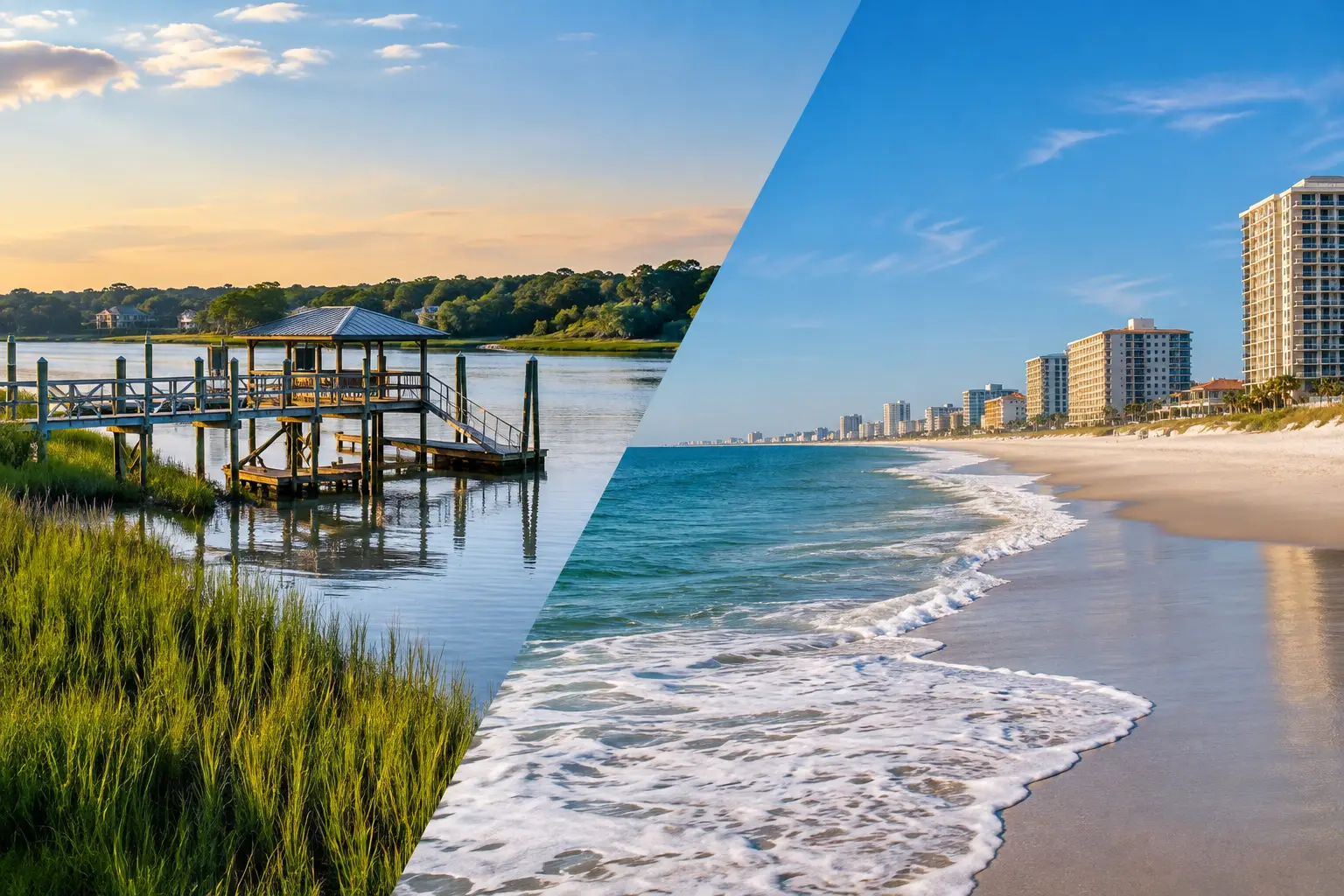
A five-minute drive can create two very different versions of coastal living. In the choice of Little River SC vs North Myrtle Beach SC, the distance is small, but the daily pace, housing options, and feeling of each community can be noticeably different. One may feel like the quiet spot you have been looking for; the other may offer the walkability, beach access, or rental energy that makes a property fit your plans.
For buyers relocating to the Grand Strand, the decision is rarely just about which town has the better view. It is about how you want an ordinary Tuesday to feel. Are you picturing coffee near the marina, a golf cart ride to the ocean, a lively dinner scene, or a home where the evenings are mostly peaceful? Both communities have their appeal, and the better choice depends on what you want from the home after closing day.
Considering Little River as your next home? Read our guide to Living in Little River, SC: Pros and Cons Before Buying a Home for a closer look at the community, lifestyle, and what buyers should consider before moving.
Little River SC vs North Myrtle Beach SC at a Glance
Little River sits at the northern edge of South Carolina, just below the North Carolina line. It is best known for its Intracoastal Waterway setting, commercial fishing heritage, seafood restaurants, charter boats, and marina life. While it is close to the beach, much of Little River feels tucked away from the busiest oceanfront activity.
North Myrtle Beach is a larger coastal city made up of distinct areas, including Cherry Grove, Ocean Drive, Crescent Beach, and Windy Hill. It offers wide beaches, oceanfront condominiums, established residential neighborhoods, golf, shopping, entertainment, and a fuller selection of services. It can feel energetic in peak season, especially near the ocean and popular attractions, but it also includes quiet residential streets.
Think of Little River as a waterfront-and-marsh community with beach access nearby. Think of North Myrtle Beach as a beach community with enough variety to accommodate many ways of living. Neither description tells the whole story, but it is a useful starting point for a home search.
Lifestyle: Quiet Waterways or an Active Beach Town?
Little River often appeals to buyers who want a slower coastal rhythm without feeling isolated. The waterfront is part of everyday life here. You may see boats leaving early for a charter, neighbors enjoying an afternoon by the water, and locals gathering for fresh seafood. It has a distinctly lived-in character rather than a resort-first feeling.
That atmosphere can be especially attractive for retirees, second-home owners, and buyers who value a more relaxed setting. It is also practical for people who enjoy boating or want to be near the Intracoastal Waterway. You can still reach North Myrtle Beach, Calabash, and many Grand Strand conveniences without making your home base directly in the center of the activity.
North Myrtle Beach provides more choices for an active day close to home. Beach walks, live music, restaurants, seasonal events, miniature golf, shopping, and golf courses are all part of the landscape. For some buyers, that convenience feels like a vacation they get to keep. For others, especially those seeking a quiet primary residence, it may feel busier than they prefer during spring and summer.
The neighborhood matters as much as the city name. A home near Main Street in North Myrtle Beach lives differently from one in a gated community farther inland. Likewise, a Little River home on or near the water has a different feel and price point than a property in a newer inland subdivision. A focused tour of the areas you are considering is more valuable than relying on broad impressions.
Home Types and Property Choices
North Myrtle Beach generally offers a broader inventory mix. Buyers can find oceanfront condos, golf course homes, townhomes, single-family houses, and communities with amenities such as pools, clubhouses, fitness centers, and planned social activities. This variety can make it easier to narrow a search around a specific lifestyle or budget.
Condominiums are a major part of the North Myrtle Beach market, particularly near the ocean. They can be appealing for second homes and investment-minded buyers because of their location and potential rental interest. Still, a condo purchase deserves careful review beyond the view from the balcony. Monthly association fees, insurance costs, rental rules, reserve funds, maintenance history, parking, elevators, and pending assessments all matter.
Little River also has condos, townhomes, and single-family homes, but its inventory often leans more toward inland neighborhoods, golf communities, and properties near marinas or the Waterway. Buyers may find more opportunity to prioritize space, a garage, a yard, or a quieter setting than they would in a beachfront location. Of course, waterfront and water-view homes can command a premium, especially when dock access or a desirable boating location is part of the package.
New construction is available in and around both areas, particularly away from the oceanfront. A new home can offer current layouts, energy-efficient features, and less immediate maintenance. But new construction is not automatically the better value. Lot location, builder allowances, closing timelines, community fees, and what is or is not included in the base price should all be clear before you decide.
Beach Access, Boating, and Outdoor Time
If putting your toes in the sand every day is your top priority, North Myrtle Beach has the obvious advantage. Its beach access points, oceanfront neighborhoods, and shoreline lifestyle are central to the community. For a buyer who wants an easy morning walk by the Atlantic or a vacation property with classic beach appeal, this may be the strongest argument for North Myrtle Beach.
Little River residents are still close to the beach, but the experience is different. You will likely drive to North Myrtle Beach, Cherry Grove, or another nearby beach access point. In exchange, Little River offers a stronger connection to boating, fishing, marsh views, and the Intracoastal Waterway. For some people, the question is not ocean versus no ocean. It is whether they would rather spend Saturday on the beach or out on a boat.
Outdoor enthusiasts should also consider practical details. Ask about boat storage, trailer parking, dock availability, community restrictions, and the distance to a public launch. If a golf cart is part of your coastal dream, confirm whether it is permitted in the specific neighborhood and on nearby roads. These small details can shape how much you actually enjoy a property.
Costs That Deserve a Closer Look
There is no single answer to which community is more affordable. Purchase prices vary by property type, proximity to water, condition, amenities, and whether a home is suited for vacation rentals. An inland house in North Myrtle Beach may be priced very differently from an oceanfront condo, just as a Little River home with Waterway frontage may cost more than a larger home farther from the water.
The ongoing costs deserve equal attention. Coastal ownership can include homeowners association dues, condominium fees, flood insurance, wind and hail coverage, property taxes, utilities, and maintenance for salt-air exposure. A lower sales price does not always mean a lower total monthly cost.
Flood zones should be reviewed property by property, not assumed based on a town name. Insurance availability and premiums can change, and lender requirements may apply even when a buyer plans to use a home seasonally. If you are considering rental income, add licensing requirements, management fees, furnishing, cleaning, occupancy patterns, and association rental policies to the conversation.
Which Location Fits Your Plans?
Little River may be the better match if you want a quieter primary home, enjoy boating and fishing, prefer a Waterway setting, or would like to be near the beach without living in the middle of a beach town. It can also suit buyers who appreciate a more local, small-community feel while remaining close to North Myrtle Beach amenities.
North Myrtle Beach may be the better fit if direct beach access, a lively coastal atmosphere, a walkable vacation feel, or a larger selection of condos and ocean-oriented properties is high on your list. It is often a natural choice for buyers seeking a second home that can also appeal to family visitors or rental guests, provided the property’s rules and numbers support that plan.
For many buyers, the answer is pleasantly less dramatic: visit both at the times you would truly use the home. Drive the route to the grocery store. Stand outside in the evening. Check the parking, traffic, noise, and distance to the water. A home that looks perfect online should also make sense for the life you want to live there.
The best coastal property is not necessarily the closest one to the sand or the one with the flashiest amenities. It is the one that makes your ordinary days feel more like the reason you moved to the shore in the first place.
Planning a Move to Little River or North Myrtle Beach?
Choosing between these two coastal communities involves more than comparing homes. Understanding the lifestyle, location, and surrounding neighborhoods can help you make the right decision.
Explore Cyndy’s Carolina Coast Relocation Guide to learn more about coastal South Carolina and North Carolina as you plan your move.
Ready to Find Your Coastal Home?
Still deciding between Little River and North Myrtle Beach?
Cyndy Otto, REALTOR®, helps buyers explore homes and communities throughout the Carolina coast. Whether you’re relocating, retiring, or searching for a second home, Cyndy can help you compare properties and find the right fit for your lifestyle.
Contact Cyndy Otto (https://www.cyndysellstheseashore.com/) today to start your coastal home search.
Leave a Reply