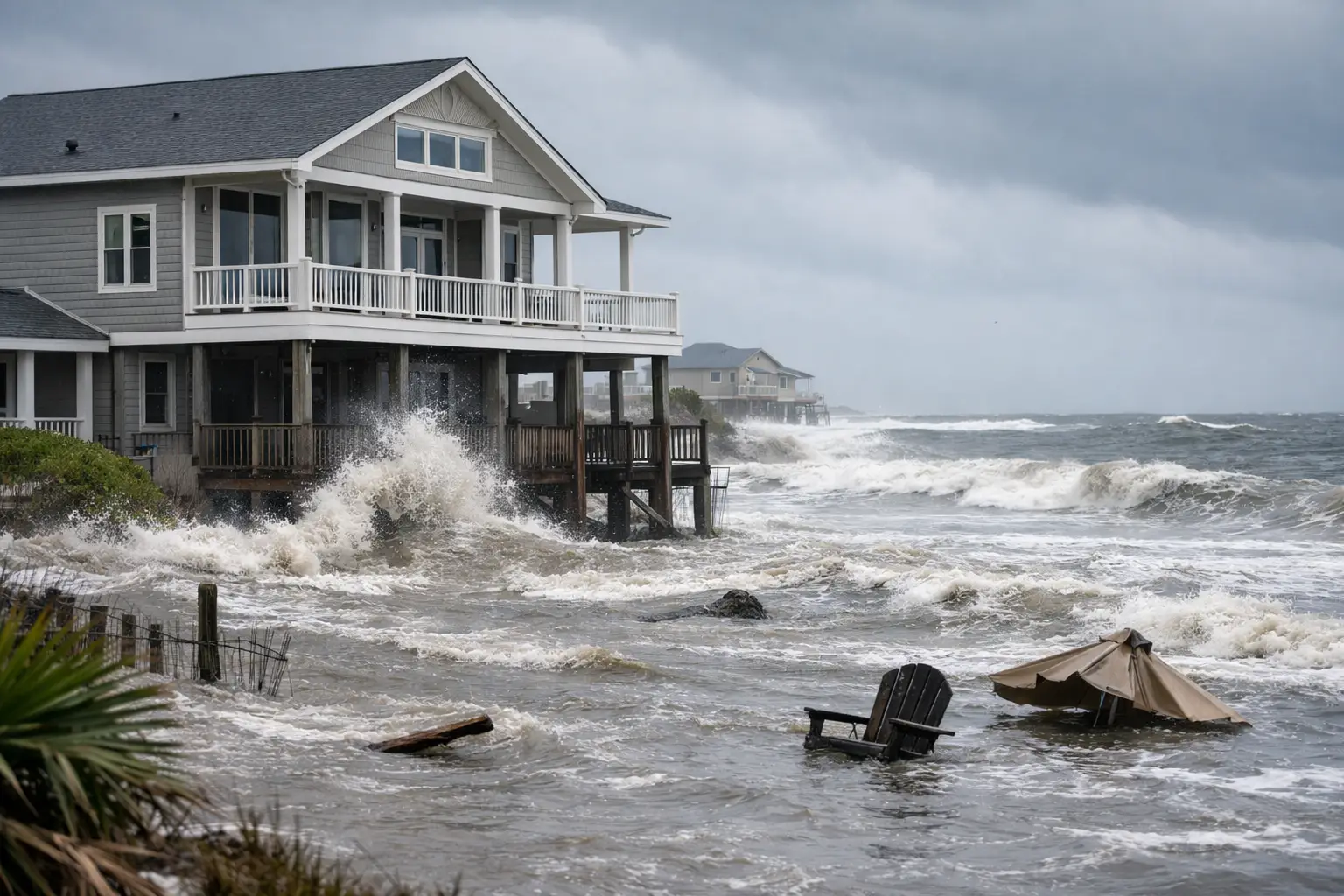
The prettiest house on the coast can come with one very unglamorous question: what will flood coverage cost me every year? If you are shopping for flood insurance coastal homes in places like Ocean Isle Beach, Sunset Beach, Myrtle Beach, or Pawleys Island, that question is not a side note. It can shape your monthly budget, your lender requirements, and even how confident you feel saying yes to a property.
That does not mean every coastal home is a bad bet. It means coastal real estate asks for a closer look. Two homes with similar price tags and similar views can carry very different flood insurance costs, and the reasons are often more practical than buyers expect.
Why flood insurance matters more near the coast
Along the Carolina coast, water risk is part of the buying conversation whether a home sits right on the ocean, near an inlet, beside a marsh, or farther inland in a low-lying area. Hurricanes get the headlines, but flood claims can also come from heavy rain, storm surge, overflowing creeks, and drainage issues. A home does not have to be oceanfront to have meaningful flood exposure.
Standard homeowners insurance usually does not cover flood damage. That is the part that surprises many buyers, especially those relocating from inland markets. They assume water damage is water damage, then find out flood losses are handled separately.
For a financed home, your lender may require flood insurance if the property falls within a designated high-risk flood zone. Even if it is not required, some owners still choose it because coastal weather has a way of reminding people that maps are useful, but not magical.
What affects flood insurance for coastal homes
Flood insurance pricing is not pulled from thin air. Several property-specific details influence the premium, and a few of them matter more than buyers first realize.
Flood zone designation
One of the first things people hear about is the flood zone. That matters, but it is only one part of the picture. A home in a higher-risk zone will often cost more to insure than one in a moderate- or lower-risk zone, but the exact premium can still vary based on construction details and elevation.
A buyer should never stop at, “It is in X zone.” The better question is, “How has that zone affected the current owner’s policy and what might it mean for me?”
Elevation and first-floor height
Elevation is a big deal for coastal property. In simple terms, insurers look closely at how high the home’s lowest floor sits compared with expected flood levels. A raised beach house may perform very differently on paper than a slab home nearby.
This is where an elevation certificate can become helpful, especially for older homes or properties with unusual site conditions. Not every transaction will lean on one, but when it exists, it can provide valuable details that help clarify risk and potential premium.
Age and construction style
Newer homes often benefit from updated building standards. That does not always mean cheap insurance, but it can help. Elevated construction, proper flood vents in enclosed areas, and compliant foundation design may all influence insurability and cost.
Older cottages and long-loved beach homes can still be wonderful purchases, but they sometimes come with more insurance complexity. Buyers may need to weigh charm against future carrying costs.
Location on the lot
A home’s address tells only part of the story. How the structure sits on its lot, the grade around it, nearby water features, and local drainage patterns can all affect flood exposure. One house in a neighborhood may have a noticeably different insurance picture than another just down the street.
What buyers should ask before making an offer
This is where a little curiosity can save a lot of stress. Before you fall too hard for the screened porch and the marsh view, ask practical questions early.
Start with whether the seller currently carries flood insurance and, if so, what the annual premium is. Ask whether the home has ever had flood damage or prior claims. Ask if an elevation certificate is available. Ask whether any recent improvements were made that could affect insurance, such as raising mechanical systems or changing enclosed lower-level space.
For buyers comparing multiple homes, it is smart to request insurance quotes before the end of your due diligence period. This is especially useful in coastal markets because premiums can shift the true monthly ownership cost more than expected. A property that looks affordable on list price alone may feel different once insurance, HOA fees, and maintenance are all lined up side by side.
Flood insurance coastal homes buyers should compare carefully
When buyers compare coastal properties, they often focus on the fun parts first – beach access, golf cart distance, rental potential, sunrise views. All fair. But flood insurance coastal homes need should be part of the comparison just like taxes and roof age.
The goal is not to scare yourself out of a good property. The goal is to compare apples to apples. If Home A is slightly more expensive but carries a much lower flood premium than Home B, the long-term math may favor Home A. If Home B has stronger rental appeal or a better location for your lifestyle, then maybe the higher insurance cost is still worth it. It depends on how you plan to use the property and how comfortable you are with the ongoing expense.
This is especially true for second homes and investment properties. Owners sometimes focus heavily on peak-season income and forget that annual carrying costs do not take a vacation.
When flood insurance is required, and when it still makes sense anyway
If a lender requires flood coverage, there is not much debate about whether you need a policy. The real question becomes what coverage amount and provider fit the home best.
But there are also homes where flood insurance is not required. That can tempt buyers to skip it. Sometimes that works out fine. Sometimes it becomes a painful gamble.
Lower-risk does not mean no-risk. Many flood claims happen outside the highest-risk zones. For a primary residence, some buyers carry coverage simply because rebuilding from uninsured flood damage would be financially disruptive. For retirees on a fixed budget, that added layer of predictability can matter. For vacation-home owners who are not always nearby during storm season, it can offer peace of mind that feels worth the cost.
Coastal lifestyle and insurance reality
Part of buying near the shore is accepting a little weather honesty. The coast offers beautiful mornings, easy weekends, and a pace many buyers have wanted for years. It also comes with wind, salt, storms, and water-related planning.
That does not take away from the lifestyle. It just means smart coastal ownership is never only about the view. It is about choosing a home you can enjoy and comfortably carry.
In Brunswick County, Horry County, and Georgetown County, buyers often look across a wide range of property types – raised beach homes, condos, golf course communities, cottages near creeks, neighborhoods a few miles inland. Each one comes with a different insurance story. Condos may handle some coverage through the association while still leaving unit owners with their own policy needs. Detached homes may offer more control but also more direct responsibility. New construction may reduce a few headaches, while older homes may offer location and character that newer builds cannot match.
A few mistakes buyers make
One common mistake is waiting too long to ask about insurance. Another is assuming the seller’s old premium will be exactly the same for the new owner. Rates can change, and individual policy details matter.
A third mistake is looking only at whether insurance is required instead of whether it is wise. Required and smart are not always the same thing. The last one is emotional buying – deciding a house is perfect before running the numbers that make ownership sustainable.
That is why local guidance helps. A real estate professional who works regularly with coastal homes can help buyers spot the right questions earlier, not after the excitement has done most of the talking.
How to shop smarter for a coastal home
Think of flood insurance as part of the home itself, not as an annoying extra. When you evaluate a property, evaluate the full ownership picture: purchase price, insurance, taxes, maintenance, and how the home fits your plans. A retirement cottage, a short-term rental, and a year-round family home may all justify different comfort levels with risk and cost.
If you are comparing several homes, keep a simple side-by-side record of expected flood premium, wind coverage, HOA dues if applicable, and any known flood history. That small step can make your decision feel much clearer.
Cyndy Otto works with buyers and sellers who are making these exact trade-offs every day, and that kind of local perspective can be especially useful when the homes all look great online but carry very different realities once insurance enters the picture.
The right coastal home is not just the one that photographs well. It is the one that still feels right after you have looked at the map, the policy, the budget, and the life you want to live there.
Leave a Reply