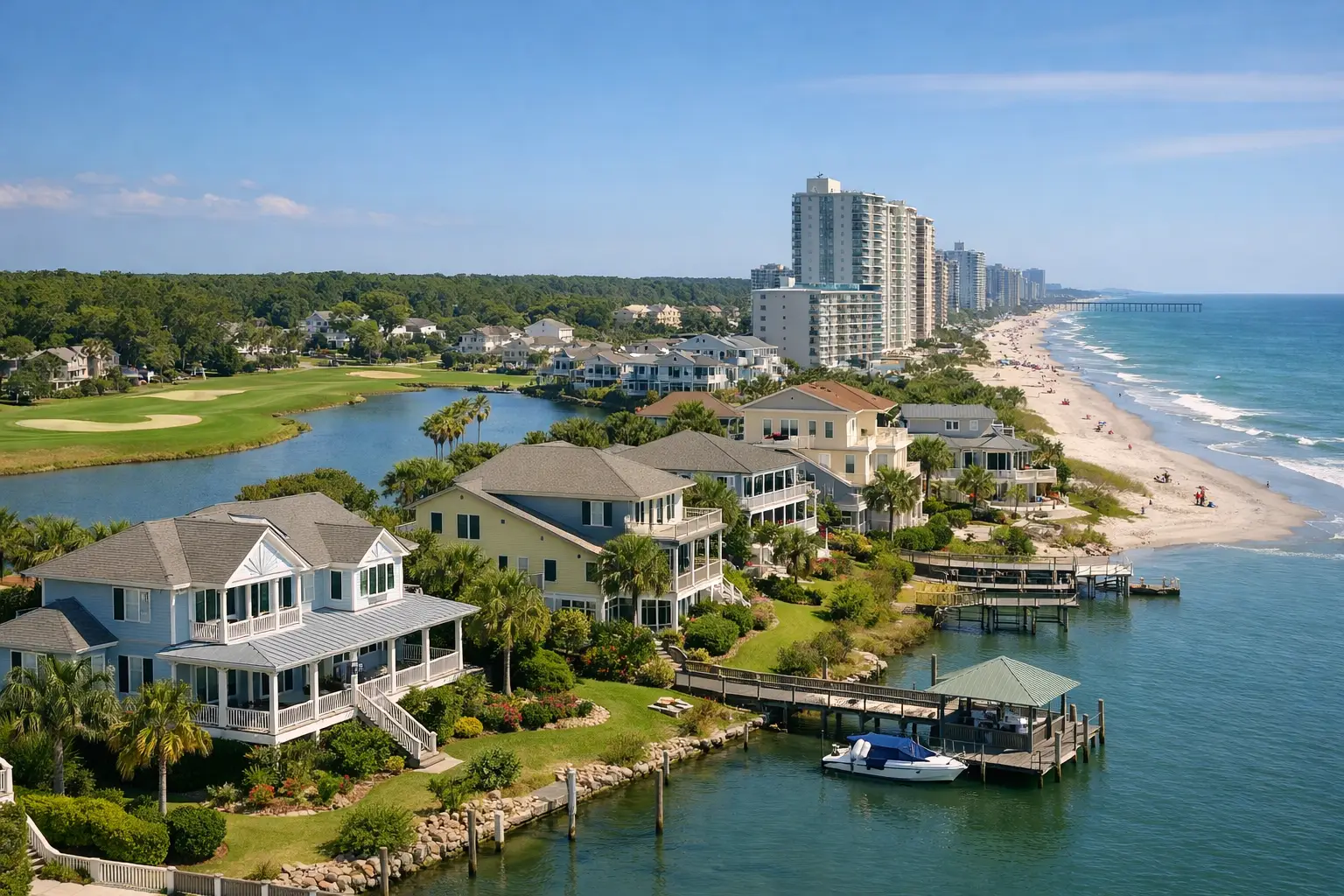
If you are searching for neighborhoods in Myrtle Beach, SC, the first thing to know is that there is no single “best” area for everyone. One buyer wants a quiet golf course street with room for guests. Another wants to be able to hop in a golf cart and get to dinner, the beach, or a community pool in minutes. That difference matters, because Myrtle Beach is really a collection of lifestyles packed into one coastal market.
For homebuyers, retirees, second-home shoppers, and investors, the smart move is to narrow the search by how you want to live day to day. Commute, traffic, HOA style, rental rules, flood considerations, and how close you want to be to the sand all shape which neighborhood will feel right long after move-in day.
How to think about neighborhoods in Myrtle Beach, SC
It helps to shop these areas the way you would shop homes – by category first, then by specific fit. Some neighborhoods are built around golf and amenities. Some are more residential and tucked away from the visitor-heavy parts of town. Others are popular because they put you near shopping, restaurants, medical care, and major roads without dropping you right into the busiest resort zones.
Price point also shifts fast from one area to the next. A home a little farther inland may offer more square footage, newer construction, and lower insurance costs than something closer to the ocean. On the other hand, buyers who value beach access or vacation-rental potential may see real value in paying more for location.
Popular residential areas around Carolina Forest
For many buyers, Carolina Forest is the first area that gets attention, and for good reason. It has a broad mix of single-family neighborhoods, townhomes, newer construction communities, schools, shopping, and convenient access to major roads. It tends to appeal to primary residents because it feels established, practical, and livable year-round.
Within the larger Carolina Forest area, neighborhoods can feel quite different from one another. Some have larger homesites and a more traditional suburban feel. Others are designed around amenities, sidewalks, and newer floor plans. If you want convenience over oceanfront proximity, this part of Myrtle Beach often rises to the top of the list.
The trade-off is that you are not right on the beach, and traffic can still be a factor during peak seasons. Still, many buyers decide the balance works well, especially if they want a full-time home instead of a vacation-oriented property.
Market Common and the appeal of walkable living
Market Common has its own personality. Buyers drawn here usually want a more connected lifestyle – think restaurants, shops, parks, fitness options, and community events close by. It offers one of the more walkable experiences in the greater Myrtle Beach area, which can be a major plus for people who want to leave the car parked more often.
Homes here often attract buyers looking for style, convenience, and a polished neighborhood setting. It can be especially appealing for second-home owners and retirees who want access to everyday amenities without feeling isolated. The beach is still close, but the real draw is the lifestyle structure built around the area.
The trade-off is that demand tends to stay strong, and that can affect both price and inventory. If a buyer wants larger lots or a more tucked-away feel, this may not be the best fit.
Grande Dunes for upscale coastal living
When buyers ask about luxury neighborhoods, Grande Dunes usually enters the conversation quickly. This area is known for higher-end homes, gated sections, golf, waterway access in some parts, and a more upscale amenity package. It appeals to buyers who want a polished coastal property with a strong neighborhood identity.
What stands out here is the range within the luxury category. Some sections feel private and estate-like, while others offer a resort-style atmosphere. Buyers who prioritize club living, architectural detail, and premium location often find this area worth a close look.
Of course, upscale buying comes with added considerations. HOA fees, club memberships in some cases, and maintenance expectations can all play a role. For the right buyer, those are part of the appeal. For others, they may feel like more structure than necessary.
The Dunes and established Myrtle Beach neighborhoods
If you prefer mature landscaping and a neighborhood with a long-standing reputation, the Dunes area is worth attention. Established neighborhoods often bring character that newer communities cannot fully replicate. Larger trees, custom homes, and proximity to both beach access and core Myrtle Beach conveniences give this part of town staying power.
Many buyers like the sense that these neighborhoods have settled into themselves. You may find a wider variety of home styles and lot sizes, which can be refreshing if newer construction communities feel too uniform. Established areas can also be attractive to buyers who want less of a planned-development atmosphere.
That said, older homes can come with maintenance realities. Updates, insurance questions, and renovation costs may become part of the buying decision. That does not make them less desirable – it just means value should be judged with clear eyes.
South Myrtle Beach and Surfside-adjacent options
Some buyers want to stay close to Myrtle Beach but lean toward the southern side for a slightly different feel. Areas near the city line heading toward Surfside Beach can offer a nice balance of access and atmosphere. You may still be close to attractions and shopping, but with pockets that feel a bit more residential and less visitor-focused.
This can be a smart lane for buyers who want beach access without necessarily being in the center of the highest-traffic zones. Depending on the neighborhood, you may also find a mix of full-time residents, second-home owners, and investment properties.
That mix matters. A street with mostly primary residences may feel very different from one with a high share of short-term rental activity. Neither is automatically better. It depends on what kind of day-to-day environment you want.
Golf course communities and gated neighborhoods
Myrtle Beach has no shortage of golf-centered communities, and they remain a major draw. For some buyers, golf is the attraction. For others, it is really about the landscaping, open views, amenity packages, and neighborhood design that often come with these communities.
Gated neighborhoods also appeal to buyers who want a certain level of privacy and consistency. These communities can offer attractive common areas, clubhouses, pools, and organized social calendars. That can be a strong fit for retirees or second-home owners who want built-in lifestyle value.
Still, it is wise to look beyond the entrance signage and pool deck. HOA rules, guest policies, rental restrictions, and fee structures can vary quite a bit. A beautiful neighborhood is only the right neighborhood if the terms fit how you plan to use the home.
What buyers should compare before choosing
A neighborhood can look perfect online and still miss the mark in person. The details that matter most are often the ones buyers do not fully feel until they tour the area at different times of day.
Pay attention to traffic patterns, especially if you will be here full-time. Look at how close the neighborhood is to grocery stores, medical care, golf, marinas, or the beach depending on your priorities. Ask about flood zones, insurance costs, and whether the community allows short-term rentals if investment potential matters to you.
It also helps to think ahead. If this is your retirement home, will the layout still work in ten years? If this is a second home, how much upkeep are you comfortable managing from a distance? If this is an investment property, does the neighborhood support the kind of rental strategy you have in mind?
For buyers comparing several areas, local guidance can save a lot of time. A neighborhood that looks similar on paper may feel completely different once you understand who tends to buy there, how homes hold value, and what everyday life is actually like. That is where experience in both existing homes and new construction really becomes useful.
The right Myrtle Beach neighborhood is not just the one with the prettiest entrance or the shortest drive to the ocean. It is the one that fits your routine, your budget, and the version of coastal living you will still enjoy after the novelty wears off.
Leave a Reply