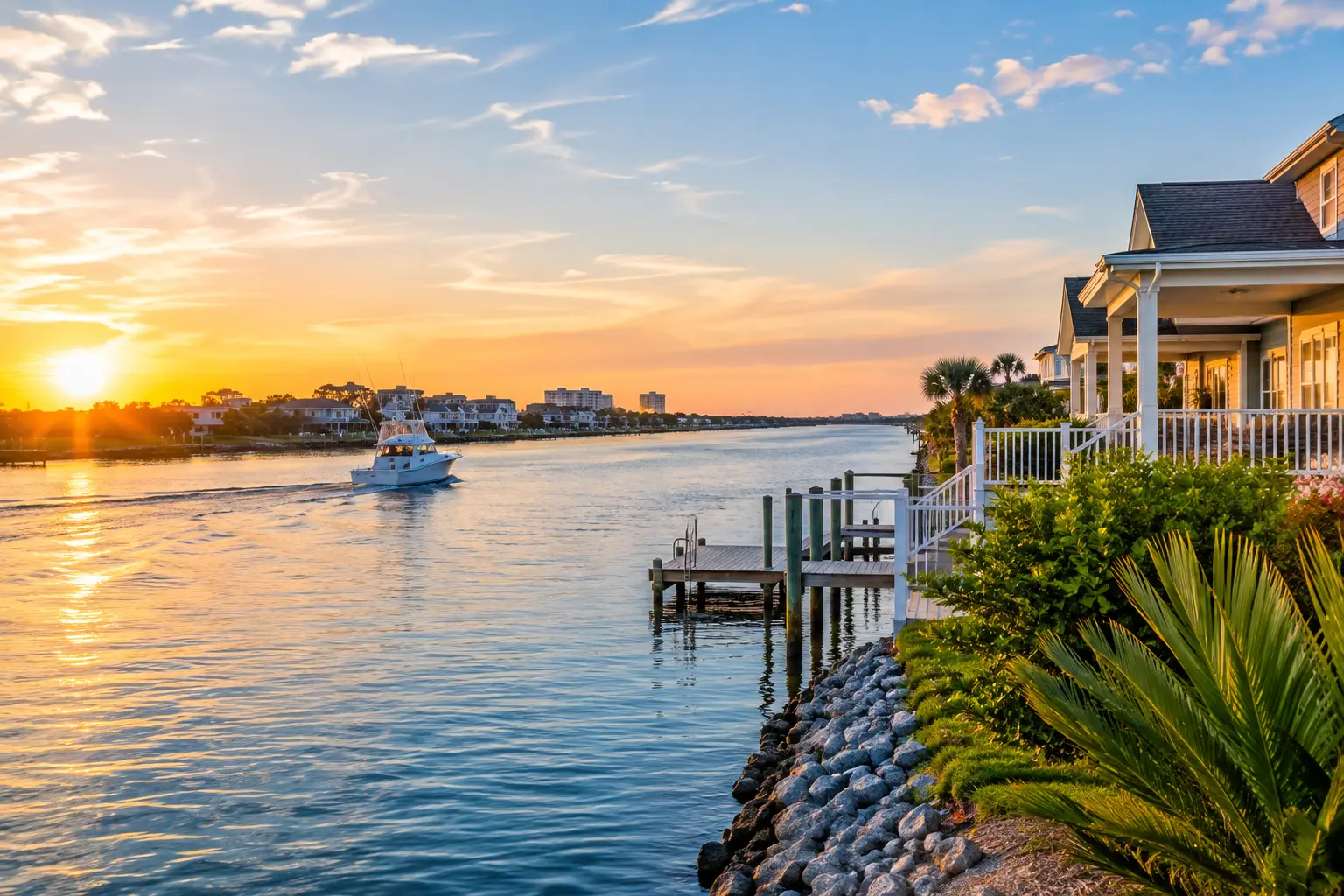
The view can change the entire feel of a home. Along the Intracoastal Waterway, a morning coffee may come with passing boats, marsh birds, and a wide stretch of sparkling water instead of another row of rooftops. For buyers considering living near the intracoastal waterway in Myrtle Beach SC, that everyday scenery is a major draw – but it is only one part of the decision.
Waterway living can be wonderfully relaxed, convenient, and full of coastal character. It can also bring practical questions about location, access, insurance, maintenance, and how close you truly want to be to the activity. The right home is not simply the one with a water view. It is the one whose setting works for the way you plan to live.
What Waterway Living Feels Like
The Intracoastal Waterway runs along the western side of the Myrtle Beach area, creating a different coastal experience from oceanfront living. Rather than the constant rhythm of beach traffic and salt air, waterway neighborhoods often feel more residential and tucked away, while still being close to restaurants, golf, shopping, medical care, and the beach.
Many homeowners enjoy watching boats move through the water, taking an evening walk near the shoreline, or spending time on a dock when the property allows it. The waterway is especially appealing to boaters, anglers, and buyers who want a scenic backdrop without being directly on the ocean.
That said, “near the waterway” can mean several different things. A home may sit directly on the water with a private dock, overlook the water from across a road or common area, or be located within a short drive of marinas and boat launches. Those distinctions affect the price, privacy, maintenance needs, and daily experience. A waterway view from a screened porch is very different from having boats and weekend activity just beyond your backyard.
Where to Look Near the Intracoastal Waterway
Waterway-adjacent options can be found throughout the greater Myrtle Beach area, including sections of Myrtle Beach, North Myrtle Beach, Little River, Carolina Forest, Socastee, and neighborhoods near the south end. Each area has its own pace and housing mix.
In Myrtle Beach proper, buyers may find established communities, condos, townhomes, and newer construction within reach of the waterway. North Myrtle Beach and Little River often appeal to those looking for a slightly quieter setting, boating access, and a more laid-back coastal feel. Communities near Carolina Forest can offer newer homes and neighborhood amenities while remaining convenient to waterway recreation and major roads.
A property does not have to be waterfront to deliver the lifestyle a buyer wants. Some buyers prefer a home a few streets away, where they can enjoy waterway access or nearby views without the premium attached to direct frontage. Others see the waterfront location as the whole point and are willing to make it a priority in their budget.
The Home Choices Are More Varied Than Many Buyers Expect
One of the pleasant surprises of the Myrtle Beach market is the variety around the waterway. A buyer may find a low-maintenance condo with a balcony view, a townhome in an amenity-rich community, a traditional single-family home on a wooded lot, or a custom waterfront home with a dock and outdoor living space.
For a vacation home, a condo or townhome can be attractive because exterior maintenance is often handled through the homeowners association. Before assuming that makes ownership simple, review the association’s fees, rental rules, reserves, insurance coverage, and any restrictions on pets, parking, boats, or trailers.
For a primary residence or retirement home, a single-family property may provide more privacy, storage, and room for guests. Buyers who own a boat should pay close attention to whether a dock is already in place, whether it conveys with the home, and what type of vessel the water depth and lift can accommodate. A beautiful waterfront lot does not automatically mean easy boating access.
The Trade-Offs Worth Thinking Through
Waterfront and water-adjacent homes deserve a little extra due diligence. This is not meant to take the fun out of the search. It is simply how a smart buyer protects both the lifestyle and the investment.
Insurance is a key conversation. Flood zone designations, wind coverage, deductibles, elevation, and prior claims can all influence annual ownership costs. Two homes that look similar online can have very different insurance profiles, so it is wise to request insurance estimates early rather than waiting until the final days of a contract.
Maintenance also matters. Moisture, humidity, wind, and salt in the coastal environment can be hard on exterior paint, decks, railings, windows, HVAC systems, and dock structures. A thorough home inspection is essential, and waterfront buyers may also need specialized inspections for seawalls, bulkheads, docks, lifts, or other marine features.
Privacy and activity levels are personal. Some people love a lively waterway scene with boats, paddleboards, and neighbors enjoying the outdoors. Others want a quieter backyard and may prefer a home set back from the shoreline. Visit at more than one time of day if possible. A calm weekday morning and a busy holiday weekend can paint very different pictures.
Buying Near the Intracoastal Waterway in Myrtle Beach
Before falling in love with the view, spend time evaluating how the property functions. Start with the basics: access to the beach, grocery stores, medical services, restaurants, golf, and the roads you will use most often. Bridges and seasonal traffic can affect a routine more than buyers expect, particularly when a property is being considered for full-time living.
Then look closely at the waterfront details. Ask whether the property has a private dock, a shared dock, deeded access, or simply a view. Confirm who is responsible for repairs and whether permits may be required for future improvements. If boating is a priority, consider water depth, tidal conditions, bridge clearance, navigation to open water, and where guests can park when they come along for the ride.
For investment buyers, rental potential should be evaluated carefully rather than assumed. Some communities permit short-term rentals, some limit them, and others do not allow them at all. Rental income can also vary based on the home’s location, amenities, seasonality, furnishing, and management costs. A lovely waterway property can be a strong addition to a portfolio, but it should fit a realistic financial plan.
A Few Smart Questions for Sellers, Too
Owners preparing to sell a waterway-area home should make the setting easy for buyers to understand. Clear information about dock rights, water access, homeowners association requirements, recent improvements, and insurance history can help a buyer feel more confident.
The view is often the feature that first catches attention, so outdoor spaces deserve care. A clean dock, well-kept deck, trimmed landscaping, and a porch staged for relaxing can help buyers picture themselves there. If the home has a waterway view but no direct access, say so plainly. The right buyer may still value that view enormously, and clear expectations build trust from the start.
Let the Lifestyle Lead the Search
Living near the waterway is not one-size-fits-all. Some buyers want a dock and a boat lift. Others want a quiet community where they can glimpse the water on an evening stroll. Some want a second home close to Myrtle Beach attractions, while others are looking for a peaceful full-time retreat with room for visiting family.
The best next step is to define what waterway living means to you before comparing properties. Think about your favorite kind of morning, how often you expect to use the water, the maintenance you are comfortable taking on, and the expenses that fit comfortably into your plan. With thoughtful guidance from a local real estate professional such as Cyndy Otto, that waterside wish list can become a practical, personal path to the right home.
Leave a Reply