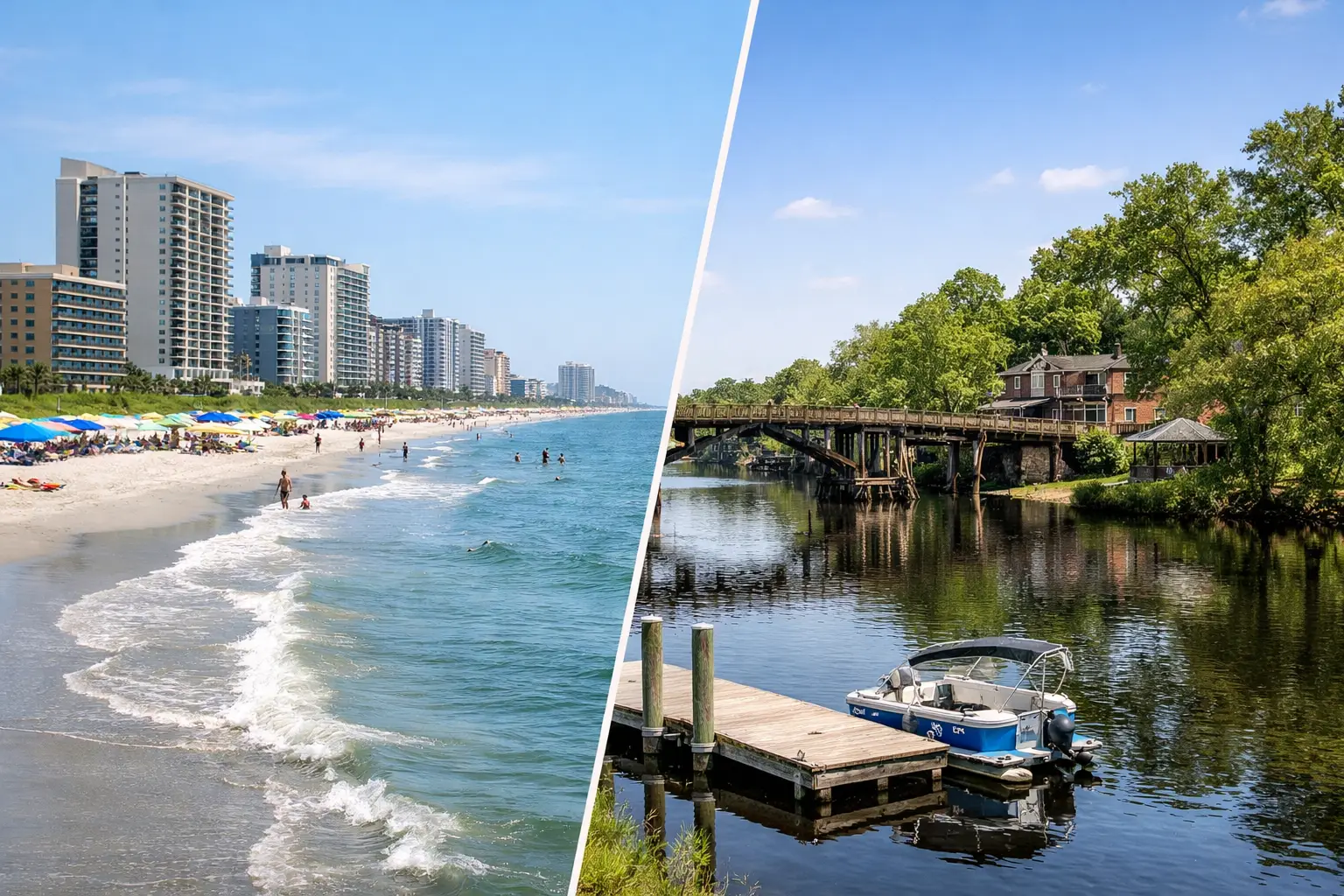
A home search can look very different depending on whether your ideal Saturday includes salty air and a waterfront dinner or a stroll through a historic downtown before heading home to a larger yard. In the North Myrtle Beach versus Conway decision, neither town is simply “better.” Each offers a distinct version of coastal South Carolina living, with different home styles, daily rhythms, price considerations, and reasons to buy.
North Myrtle Beach puts the ocean at the center of life. Conway sits inland along the Waccamaw River, offering a more traditional small-town setting with easy access to the Grand Strand. For a primary home, second home, retirement move, or rental investment, the best fit comes down to how you plan to use the property when the keys are in your hand.
North Myrtle Beach Versus Conway: The Everyday Feel
North Myrtle Beach is made up of coastal communities such as Cherry Grove, Ocean Drive, Crescent Beach, Windy Hill, and Barefoot Resort. The atmosphere is relaxed but active, particularly during the spring and summer season. The beach, golf, boating, restaurants, live music, and family attractions are close at hand, and many residents enjoy being able to walk, bike, or take a short golf cart ride to the water.
That convenience comes with the energy of a vacation destination. Traffic can increase during peak travel weeks, popular restaurants may have waits, and some neighborhoods have a stronger short-term rental presence than others. For buyers who enjoy visitors, activity, and the unmistakable feeling of living near the ocean, those are often fair trade-offs.
Conway has a slower, more residential pace. Its historic downtown, riverwalk, local restaurants, and live oak-lined streets give it a character that feels separate from the resort corridor. Coastal Carolina University also brings a college-town element, with sporting events, cultural activities, and rental demand around the campus.
Living in Conway does not mean giving up the beach. Depending on your starting point and destination, North Myrtle Beach and other Grand Strand beaches are generally a drive away rather than part of your daily view. For many people, that is exactly the appeal: enjoy the coast when you want it, then come home to a quieter setting.
Home Types and Neighborhood Choices
North Myrtle Beach offers an exceptionally broad range of residential options. Buyers can find oceanfront condos, raised beach homes, townhomes, golf course properties, homes on channels and the Intracoastal Waterway, and planned communities with pools or other amenities. A condo may make sense for a buyer who wants low-maintenance ownership and walkable beach access. A single-family home in an inland neighborhood can offer more space while keeping the beach nearby.
The details matter here. Condo buyers should review association fees, rental rules, building maintenance, insurance costs, reserve funding, and any current or planned assessments. A beautiful ocean view is valuable, but it should be considered alongside the full monthly ownership picture. For elevated homes, flood zones, wind coverage, and the age and condition of systems such as the roof and HVAC deserve close attention.
Conway tends to offer more traditional homes on larger lots, along with newer construction communities, townhomes, and historic properties near downtown. Buyers who want a front porch, garage, backyard, or room for hobbies often find more choices inland for their budget. New construction remains a meaningful part of the market in and around Conway, which can be attractive to buyers seeking modern layouts, energy-efficient features, and builder warranties.
New construction is not automatically the right answer, though. A resale home may have mature landscaping, an established neighborhood feel, and upgrades the original owner has already completed. In either town, comparing the total cost of ownership is more useful than comparing a listing price alone.
Cost, Insurance, and the Value of Location
A coastal address often carries a premium, especially for homes with water views, beach access, or strong rental potential. North Myrtle Beach buyers should expect location to influence both purchase price and recurring costs. Homeowners insurance, flood insurance, HOA dues, and maintenance can vary sharply from one property to the next, even within the same community.
Conway can provide more square footage or land for the same budget, although values depend on neighborhood, condition, proximity to downtown, and demand from both homeowners and investors. The lower initial price of an inland home may help create room in the budget for renovations, furnishings, or a larger down payment.
It is also wise to separate a home’s lifestyle value from its investment value. An oceanfront or near-ocean property can be appealing as a vacation rental, but rental income is never guaranteed. Local regulations, HOA restrictions, management costs, seasonal demand, cleaning, repairs, and vacancy periods all affect results. A property should work financially even when rental income is more modest than hoped.
Commuting, Conveniences, and Getting Around
For people working in North Myrtle Beach, Little River, Myrtle Beach, or other coastal parts of Horry County, North Myrtle Beach may reduce daily drive time. It also places residents close to medical offices, shopping, dining, marinas, golf courses, and the North Myrtle Beach Park and Sports Complex.
Conway can be an especially practical choice for people employed near Coastal Carolina University, Conway Medical Center, or businesses farther inland. It also offers access to major roads for travel toward Myrtle Beach, North Myrtle Beach, Loris, Longs, and the surrounding area. Still, commute estimates should be tested at the times you would actually travel. A drive that feels simple on a Tuesday afternoon can look different during summer weekends or holiday traffic.
For retirees, convenience may mean something different: a nearby grocery store, trusted medical care, a favorite coffee shop, or a low-maintenance neighborhood. For families, it may be school preferences, outdoor space, and the routines of work and activities. There is no one-size-fits-all definition of convenient.
Which Location Suits Your Goals?
North Myrtle Beach is often a natural fit for buyers who want to be close to the water every day, plan to welcome visiting family, or see potential in a second home that can serve as a vacation rental when permitted. It can also be a wonderful primary-home choice for residents who prefer an active coastal lifestyle and do not mind seasonal bustle.
Conway may be the stronger match for buyers who want more room, a historic small-town atmosphere, or an inland location that feels less tourism-driven. It is also worth a serious look for investors considering long-term rentals, particularly where proximity to employment centers or the university supports demand.
The most helpful comparison is not beach versus inland. It is your actual life versus the property’s real-world fit. Think about how often you will use the beach, who will visit, whether you want to manage a rental, how much outdoor maintenance you want, and what monthly costs feel comfortable. A home that looks perfect online can feel very different after a drive through the neighborhood at rush hour, a look at the surrounding streets, and a careful review of its ownership expenses.
Start With the Life You Want to Build
Before choosing between North Myrtle Beach and Conway, make a short list of your non-negotiables: daily beach access, a larger yard, rental flexibility, a shorter commute, a downtown setting, or a quiet neighborhood. Then tour homes in both areas with those priorities in mind rather than letting one attractive listing make the decision for you.
The right coastal Carolina home should make your ordinary days feel good, not just your vacation days. A knowledgeable local agent, including Cyndy Otto, can help you compare properties, neighborhoods, insurance considerations, and resale potential so your choice feels as comfortable after closing as it did the first time you stepped inside.
Leave a Reply