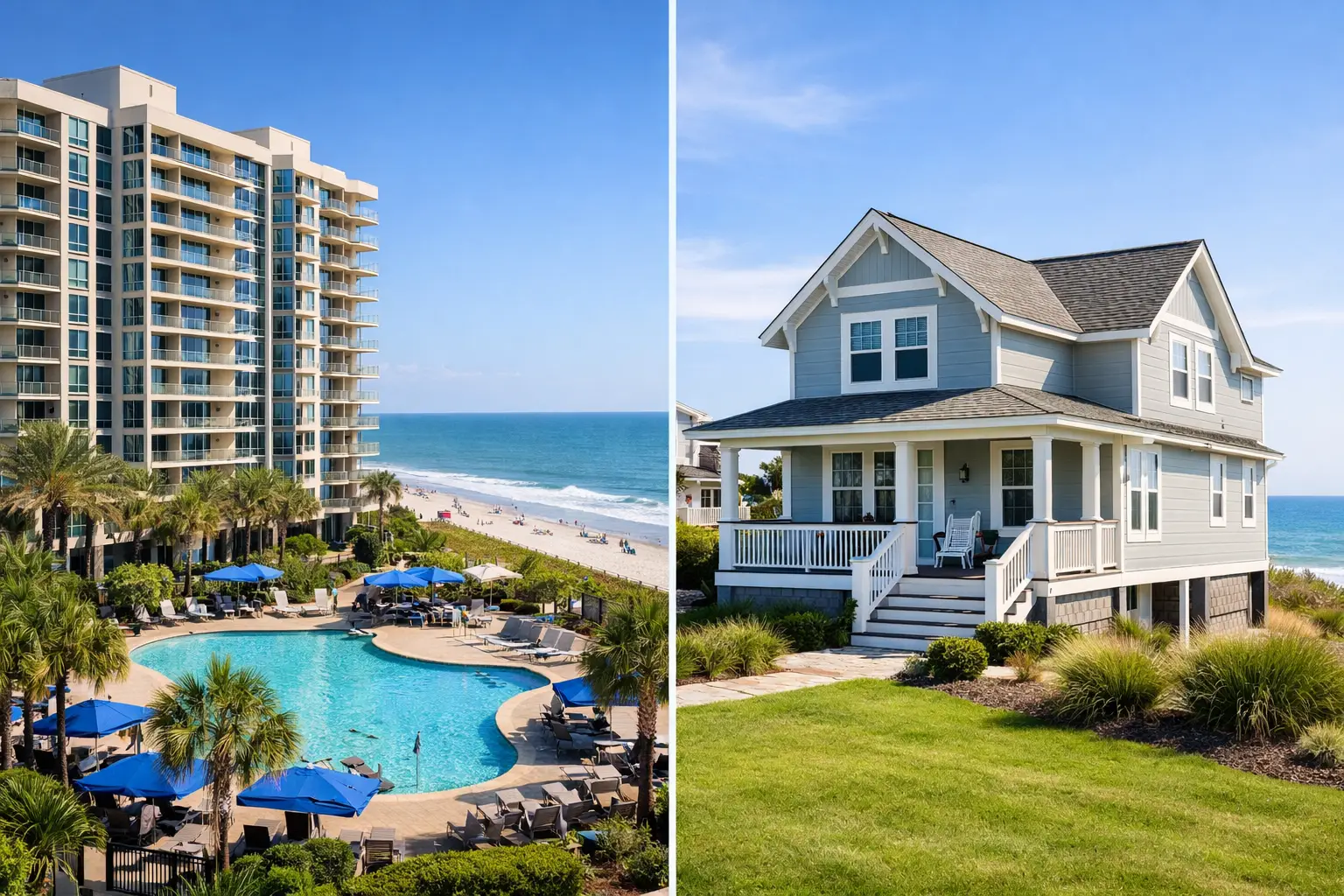
A morning walk to the ocean, dinner on the MarshWalk, or a quiet porch overlooking a fairway can all be part of coastal living. But when buyers begin weighing a condo vs house Myrtle Beach decision, the right answer usually comes down to more than the view. It comes down to how often you will be here, how much upkeep you want to handle, how you plan to use the property, and what monthly costs feel comfortable.
A condo and a single-family house can both be wonderful ways to enjoy the Grand Strand. The key is choosing the property that supports your everyday life instead of creating surprises after closing.
Condo vs House in Myrtle Beach Starts With Your Life
Before comparing square footage or community amenities, think about what a typical week at the property will look like. A buyer planning to spend long weekends at the beach has different needs from a retiree moving full-time from out of state. An investor considering short-term rentals has another set of questions altogether.
A condo often appeals to buyers who want a more lock-and-leave lifestyle. If you expect to travel, live elsewhere part of the year, or simply prefer less exterior responsibility, having an association manage building exteriors, landscaping, pools, and common areas can be a real advantage. Oceanfront and resort-style condo communities can also put the beach, pools, fitness rooms, and restaurants close at hand.
A house may be the better match if you want privacy, a yard for pets or grandchildren, a garage, extra storage, or room for visiting family. In communities from Myrtle Beach and North Myrtle Beach to Murrells Inlet, Conway, and Pawleys Island, a house can offer more flexibility in how you use the space. You may have a screened porch, a grill area, a workshop, or a driveway large enough for guests and beach gear.
Neither choice is automatically easier or more affordable. The details matter.
What You Really Pay Each Month
Purchase price gets attention first, but it is only one piece of the coastal real estate picture. Condo buyers should look carefully at monthly or quarterly homeowners association fees. Those fees may cover valuable services such as exterior insurance, water, sewer, cable, trash collection, elevators, landscaping, building maintenance, security, and amenities. Coverage varies widely from one community to the next, so it is worth reading the budget and knowing exactly what is included.
A house may have lower HOA dues, or no HOA at all, but the owner is responsible for more direct expenses. Lawn care, roof repairs, exterior painting, pest control, tree work, irrigation, pool service, and driveway maintenance can all become part of the annual budget. A newer home may reduce near-term repair concerns, while an older beach property may need more planning and a stronger maintenance reserve.
Insurance deserves special attention in either case. Coastal insurance costs can vary based on location, elevation, construction, roof age, proximity to water, and coverage needs. A condo owner generally insures the interior of the unit and personal property, while the association carries a master policy for the building. That does not mean the condo owner is insulated from every major expense. Deductibles, special assessments, and the association’s financial health all deserve a careful review.
For a house, homeowners insurance, wind and hail coverage, and flood insurance may be separate considerations. Flood zone status is important, but even homes outside a required flood zone can benefit from a thoughtful insurance conversation. The best time to understand these costs is before making an offer, not after the inspection period has started.
Maintenance: Convenience or Control?
Condo living has a clear appeal for buyers who do not want to spend Saturday mornings trimming shrubs or coordinating roof repairs. The association handles many shared responsibilities, and that can be especially comforting for second-home owners who are not nearby year-round. When a storm passes through, there is often a property management structure already in place to assess common-area needs.
The trade-off is less personal control. You may need approval to change windows, doors, flooring, exterior fixtures, or even the color of a front door. Noise, parking, pets, grills, and use of balconies are often governed by community rules. These policies protect the appearance and operation of the community, but they need to fit your lifestyle.
With a house, you make more of the decisions. Want to plant palms, build an outdoor kitchen, add a fence, or create a space for kayaks and golf carts? A house can provide that freedom, subject to local rules and any HOA covenants. The other side of that freedom is responsibility. When the HVAC system needs attention or a storm damages a fence, the call, cost, and scheduling are yours.
For many buyers, the question is simple: Would you rather pay for predictable shared maintenance, or would you rather have more control over your home and budget for repairs as they arise?
Renting the Property Changes the Equation
If rental income is part of your plan, do not assume every beach-area property can be rented the same way. Some condo buildings are designed with vacation rentals in mind and offer strong appeal through ocean views, pools, convenient beach access, and on-site amenities. Others limit rentals, require minimum lease periods, or do not permit short-term rentals at all.
Houses can also be attractive rental properties, particularly those with multiple bedrooms, private pools, outdoor living areas, or easy access to the beach. Still, rental rules vary by neighborhood, municipality, and association. A property that looks perfect online may have restrictions that do not match your income goals.
Buyers should also consider the practical side of owning a rental. Condos may offer a simpler guest experience because amenities are concentrated in one place, but elevator access, parking limits, and busy peak-season common areas can affect reviews and demand. Houses may command interest from larger families, but they can require more hands-on care between guests.
If rental use matters, review association documents, local regulations, management options, projected expenses, and realistic occupancy expectations before moving forward. Gross rental numbers are only part of the story. Net income after fees, insurance, utilities, repairs, furnishing, cleaning, and management is what matters.
Space, Privacy, and the Coastal Experience
A condo can deliver the kind of view that makes coastal living feel special every single day. Watching the sunrise from a balcony, taking an elevator down to the pool, or walking to dinner without getting in the car has real value. For buyers focused on location and convenience, a well-chosen condo can be hard to beat.
A house tends to offer more breathing room. You may have separation from neighbors, a private outdoor area, more parking, and room for bikes, fishing rods, beach chairs, and visiting relatives. Inland communities can offer larger homes and a quieter pace while still keeping beaches, golf, shopping, and dining within easy reach.
There is no universal winner. A couple downsizing from a large home may find a two-bedroom condo wonderfully freeing. A family hoping to host holidays and summer visitors may outgrow that same floor plan quickly. Think beyond the first season of ownership. Picture your life there three, five, and ten years from now.
Due Diligence Matters More at the Coast
Whether you choose a condo or a house, coastal due diligence should be thorough. For condos, review the association’s financial statements, reserve funding, meeting minutes, rules, insurance coverage, pending litigation, rental policies, and any planned assessments. Ask about recent work on roofs, elevators, siding, balconies, seawalls, and major mechanical systems.
For houses, inspections should look closely at the roof, HVAC, moisture, crawl space, windows, drainage, decks, and exterior materials. Buyers should understand lot boundaries, easements, flood considerations, HOA requirements, and any maintenance needs unique to the property. New construction can offer fresh systems and warranties, but it still benefits from careful inspection and a clear understanding of what is included.
This is where local guidance can make a meaningful difference. A property can look picture-perfect on a sunny afternoon and still have ownership costs or restrictions that deserve a closer look.
Let the Home Support the Life You Want
The best choice is not always the biggest home, the closest building to the ocean, or the lowest monthly payment. It is the property that lets you enjoy the coast with confidence. If your dream is to arrive Friday, park the car, and spend the weekend with sand between your toes, a condo may fit beautifully. If your dream includes a backyard cookout, room for family, and a place to settle in for years, a house may feel more like home.
A thoughtful conversation about your budget, plans, and preferred lifestyle can narrow the choices quickly. Cyndy Otto can help you compare the details so your next coastal address feels less like a compromise and more like the place you have been looking for.
Leave a Reply