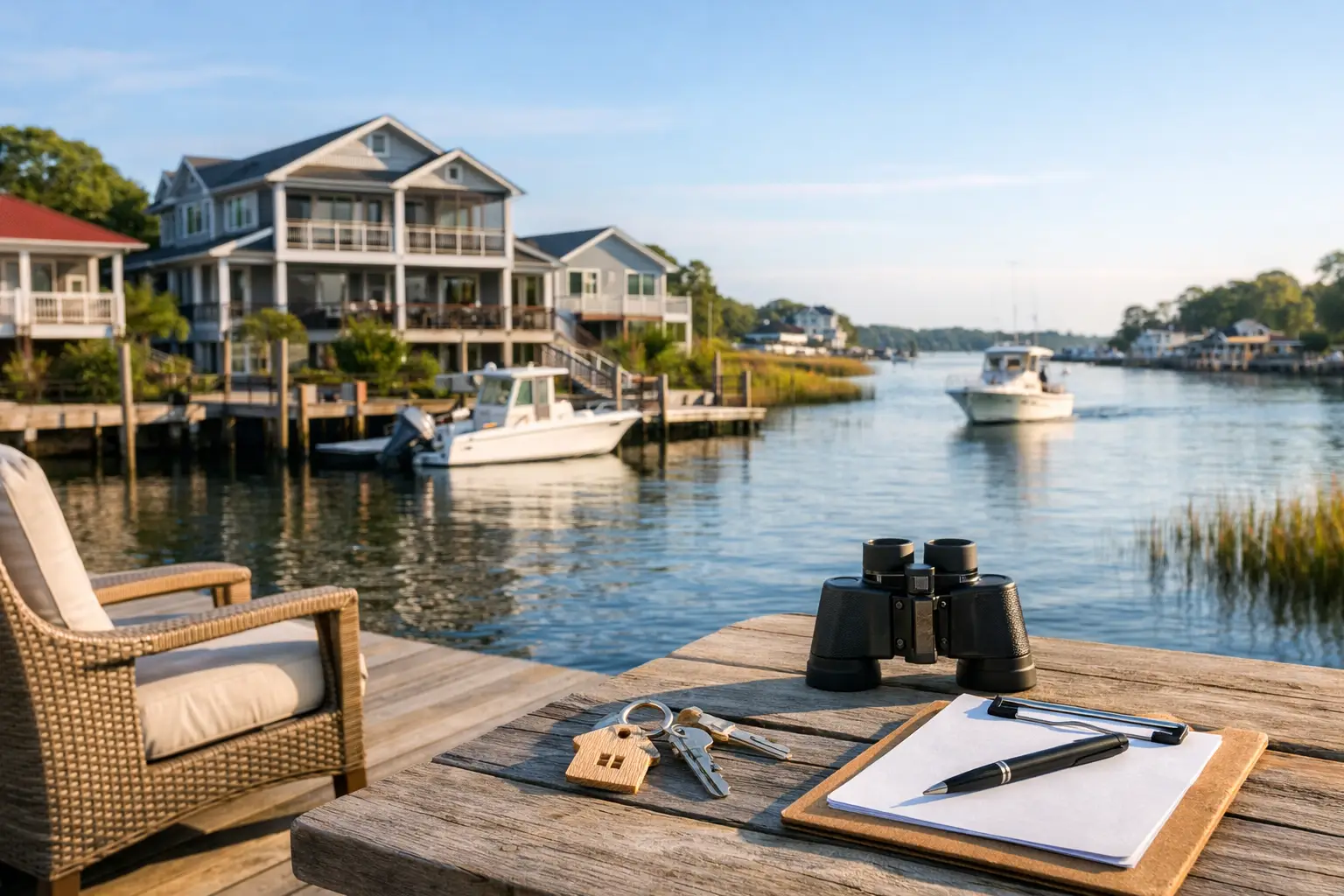
A morning view of the Intracoastal Waterway, a marsh that changes color with the tide, and quick access to the Little River waterfront are easy details to fall for. Little River waterfront homes can offer that relaxed coastal rhythm many buyers want, but the best purchase is about more than the view from the back porch. Water access, elevation, insurance, maintenance, and the definition of “waterfront” all deserve a close look before an offer is written.
Little River has its own character within the Grand Strand. It is close to North Myrtle Beach conveniences while retaining a quieter, historic fishing-village feel. For a primary home, a vacation retreat, retirement plans, or an investment property, that balance can be a real draw. The right home depends on how you want to use the water, not simply how close the water appears on a listing map.
Not All Little River Waterfront Homes Offer the Same Experience
Waterfront can describe several very different settings. A home may sit directly on the Intracoastal Waterway, border a tidal creek, overlook a marsh, face a pond, or have a distant water view. Each setting brings a different level of privacy, boating access, maintenance, and day-to-day activity.
A home along the Intracoastal Waterway often appeals to boaters who enjoy watching passing vessels and want access toward the ocean, nearby inlets, or connected coastal waterways. These locations can feel lively, particularly during busy seasons. The trade-off may be more boat traffic, wake exposure, and less privacy than a tucked-away creekfront property.
Marshfront homes can be especially peaceful. They offer wide-open skies, birdlife, and a view that changes with the tides. Still, a marsh view does not automatically mean you can add a dock or launch a boat from the property. Protected wetlands, water depth, permitting rules, and the shape of the lot can all affect what is possible.
Creekfront homes may offer a more intimate setting, but buyers should understand whether the creek is navigable at low tide. A dock that works beautifully for a kayak may not accommodate a larger boat, and a floating dock can be more practical than a fixed structure in certain tidal areas. The property is not less appealing because it has limits – it simply needs to fit the way you plan to enjoy it.
Start With Your Waterfront Wish List
Before touring homes, be clear about what waterfront living means to you. If your ideal Saturday involves taking a boat to dinner, dock condition, water depth, and access to open water should be high on the list. If you picture coffee on a screened porch while watching egrets cross the marsh, the quality of the view and backyard privacy may matter more than a boat lift.
Consider how often you will be at the home. A full-time resident may value grocery access, medical services, parking, and a layout that works in every season. A second-home buyer might prioritize a low-maintenance community, lock-and-leave convenience, or proximity to the beach and restaurants. Investors should look beyond postcard appeal to rental restrictions, management needs, carrying costs, and the kind of guests the property is likely to attract.
It also helps to decide whether you want a home with an existing dock, a community dock, or no dock at all. Existing structures can be a wonderful feature, but they should be inspected carefully. Age, condition, permits, ownership, and repair responsibility all matter. In a neighborhood with shared water access, confirm exactly what is included and whether there are waitlists, usage rules, fees, or limitations on boat size.
The Details Behind the View
Waterfront buyers should allow extra time for due diligence. A standard home inspection remains essential, but a waterfront purchase often calls for a closer look at systems and site conditions that may not be as significant on an inland property.
Flood Zones and Insurance
Flood-zone information should be reviewed early, not treated as a last-minute checkbox. A property’s flood zone can affect lender requirements, insurance availability, and the cost of ownership. Even homes that have never experienced flooding may carry flood insurance considerations based on current maps and lending guidelines.
Insurance pricing is individual to the property and buyer, so it is wise to request quotes during the due-diligence period. Factors such as elevation, foundation type, age, prior claims, roof condition, and proximity to water can all influence premiums. Do not rely on a seller’s current policy cost as a promise of what you will pay. Their coverage, carrier, and risk profile may be different from yours.
Elevation, Drainage, and the Ground Beneath the Home
Ask about the home’s elevation and how water moves across the lot after heavy rain. Look for grading that directs water away from the foundation, functioning gutters, and signs of standing water near crawl spaces or lower-level areas. In coastal communities, drainage can be just as meaningful as the water view.
For homes with crawl spaces, pay attention to moisture control, vapor barriers, insulation, and any evidence of wood damage. Salt air and humidity can be hard on exterior materials, hardware, HVAC equipment, and decks. A well-maintained waterfront home is not one that never needs attention. It is one where maintenance has been consistent and documented.
Docks, Bulkheads, and Shoreline Features
If the property includes a dock, pier, bulkhead, or boat lift, make sure those improvements are part of the conversation from the start. Confirm whether the structures belong to the property, are permitted, and are in usable condition. A dock inspection can identify concerns that a general home inspection may not fully address.
Bulkheads and retaining features are particularly important. Repairs can be substantial, and responsibility can vary depending on lot lines, neighborhood rules, and the waterway. Ask about previous repairs, the age of the structure, and whether the seller knows of any erosion or shoreline concerns.
Choose the Neighborhood, Not Just the House
A beautiful house can feel very different once you understand its surroundings. Spend time in the area at different points of the day if possible. Notice traffic patterns, nearby bridges, boat traffic, noise, lighting, and how private the outdoor spaces actually feel.
Little River offers a mix of established neighborhoods, gated communities, condos, townhomes, and single-family homes. Some buyers want an active community with amenities and social events. Others prefer a larger lot and fewer restrictions. Neither choice is automatically better, but homeowners association rules can affect everything from exterior changes and parking to short-term rentals and boat storage.
If rental income is part of the plan, review local rules and community documents before you rely on projected returns. A home that looks perfect for vacation guests may have minimum rental periods, registration requirements, or restrictions that change the numbers. Smart investment decisions begin with verified information, not a hopeful estimate.
Selling a Little River Waterfront Property
For sellers, waterfront features should be presented with care and accuracy. The view is a major selling point, but buyers also want to understand what makes the property functional. If the home has a dock, boat lift, community access, recent bulkhead work, or an elevation certificate, gathering those details before listing can help answer questions quickly.
Photography matters, especially for homes where outdoor living is part of the value. Views should be shown honestly in good light, while the listing also highlights practical features such as screened porches, outdoor showers, storage for gear, covered parking, and access points. A buyer should be able to picture both the special moments and the everyday ease of owning the home.
Pricing requires a thoughtful comparison with truly similar properties. A home two streets from the water is not the same as direct water frontage, and a marsh view may command a different response than a deep-water dock. Condition, lot orientation, access, and community amenities all shape value. The strongest strategy is one that respects the home’s distinct features without assuming every water view carries the same premium.
Let the Property Match the Life You Want
The best waterfront home is rarely the one with the longest feature list. It is the one that supports your real routine, whether that means launching a boat at sunrise, walking to local seafood spots, hosting family for a long weekend, or simply enjoying a quiet view after a busy day.
Give yourself room to ask detailed questions, inspect the features that matter, and picture the home in more than one season. With the right preparation, a waterfront purchase in Little River can feel less like a gamble on a view and more like a confident move toward the coastal life you have been imagining.
Leave a Reply