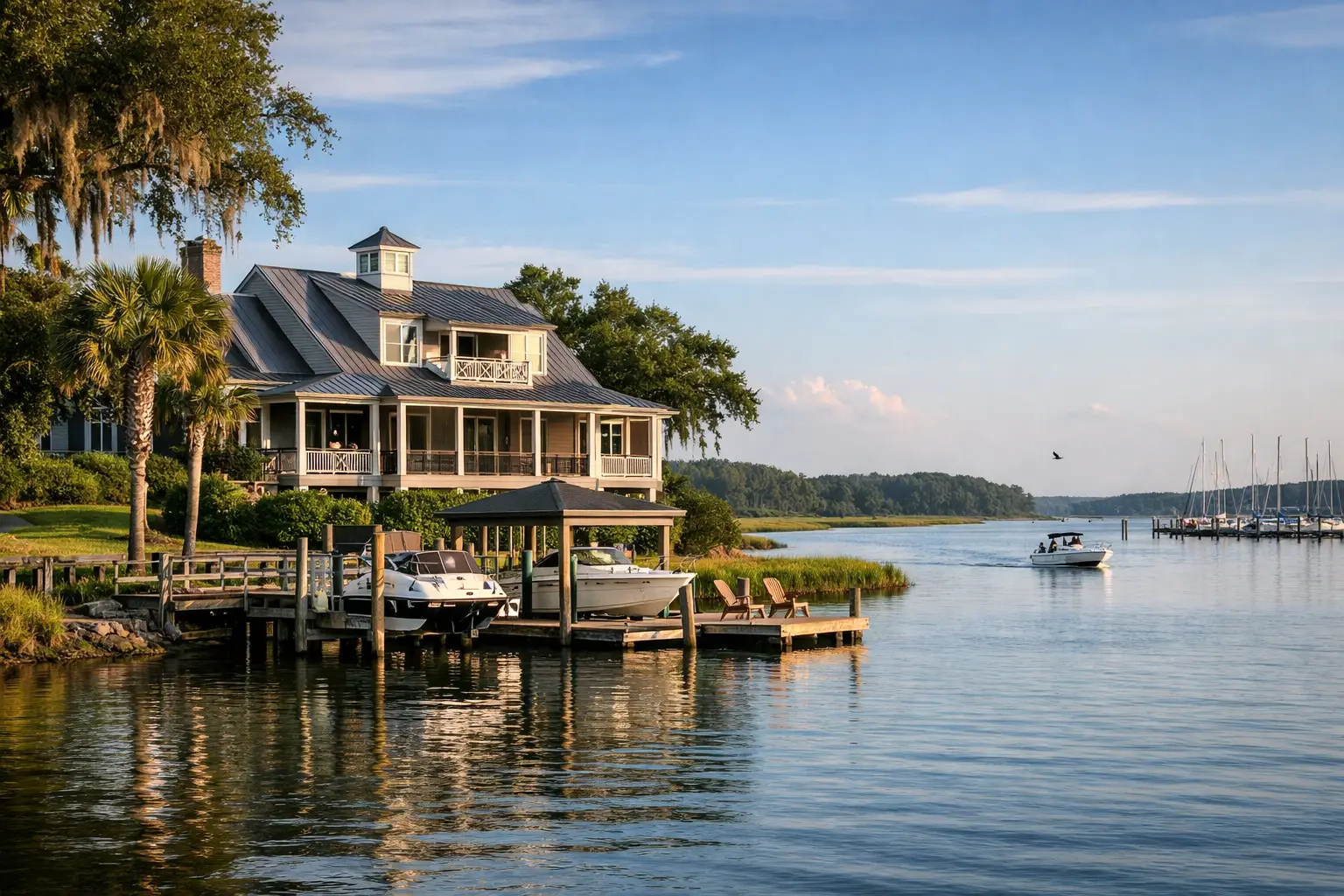
A porch view can be the reason a home feels like home. In Georgetown County, that view might mean a quiet marsh at sunset, a tidal creek with a private dock, the Waccamaw River moving past ancient oaks, or the Atlantic just beyond the dunes. Georgetown County waterfront homes offer all of those possibilities, but waterfront is not one single type of property. The details behind the view matter just as much as the view itself.
For buyers considering a primary residence, a coastal getaway, retirement home, or rental property, the best choice comes down to how you want to spend your time near the water and what level of maintenance, access, and risk feels comfortable.
Start With the Water You Want to Live Near
“Waterfront” can mean very different things from one listing to the next. A home on a broad river may offer beautiful long-range views and boating access, while a marsh-front home may provide privacy, birds, and changing tides without a place to keep a boat. Oceanfront homes bring immediate beach access and dramatic views, but they can also face more exposure to wind, salt, sand, and insurance considerations.
Along the Georgetown County coast, buyers often compare ocean and inlet settings near Pawleys Island and Litchfield Beach with creek, marsh, and river homes closer to Georgetown. Each has its own rhythm. A tidal creek can be ideal for kayaking, fishing, and smaller boats, but water depth may change substantially between high and low tide. A riverfront property may suit a boater who wants more room and deeper water, although location, tides, bridges, and dock conditions still need careful review.
Before falling in love with a photograph, ask a simple question: what do I actually want to do here? If your picture-perfect Saturday involves launching a boat from your backyard, a view alone is not enough. If you want peaceful nature watching and do not need direct water access, a marsh-front setting may offer exactly the coastal lifestyle you want with fewer dock-related responsibilities.
Look Beyond the View at Access and Rights
Water access is one of the most misunderstood parts of buying waterfront property. A property can be described as waterfront yet have no dock, no shared landing, no legal ability to add a dock, or no practical route through the marsh to open water. That does not make it less lovely, but it may make it less suitable for your plans.
When considering Georgetown County waterfront homes, look closely at whether the home has a private dock, a community dock, a boat slip, or simply water frontage. If a dock is present, confirm whether it transfers with the property and whether it is in good condition. Docks, bulkheads, seawalls, boat lifts, and walkways can be costly to repair or replace.
It also helps to understand the difference between a deeded boat slip and a slip that is assigned by an owners association. One may be part of your property rights, while the other may be subject to association rules, waiting lists, fees, or availability. A community with a marina can be a wonderful fit for active boaters, but review the rules before assuming a particular boat, trailer, or lift will be allowed.
Flood Zones, Elevation, and Insurance Deserve Real Attention
No waterfront purchase should move forward without a thoughtful discussion about flood exposure and insurance. Coastal South Carolina is beautiful precisely because water is part of daily life, but buyers need a realistic view of the financial side of that proximity.
Flood zone designations, elevation, the home’s construction, and its claims history can all affect insurance requirements and premiums. Two homes on the same street may have very different insurance costs because one is elevated, one has a newer roof, or one sits differently in relation to mapped flood areas. Do not rely on a general estimate from a listing description. Request insurance quotes for the specific property early in the process.
A current elevation certificate, when available, can be useful. So can documentation for flood mitigation improvements, roof updates, storm protection, drainage work, and previous repairs. If the home has a ground-level enclosure, storage area, or garage beneath elevated living space, make sure you understand how it is permitted and how it can be used.
This is not a reason to avoid waterfront living. It is a reason to buy with clear eyes. The right home may be worth the added cost, especially if the setting supports the lifestyle you have been planning for years. The key is building those costs into your decision before you are under contract, not after closing.
Think About Maintenance as Part of Coastal Ownership
Salt air is good for the soul and tough on materials. Oceanfront and near-ocean homes generally require more frequent attention to exterior paint, metal fixtures, HVAC equipment, windows, decks, railings, and outdoor furniture. Creek and marsh homes can also experience high humidity, salt exposure, insects, and moisture-related wear.
A thorough home inspection matters anywhere, but waterfront buyers should pay particular attention to signs of water intrusion, wood rot, deck condition, roof age, drainage, crawl space moisture, and corrosion. If there is a dock or bulkhead, specialized inspection may be worthwhile. A standard home inspection may identify visible concerns, but it may not fully evaluate marine structures.
For buyers who live elsewhere part of the year, property management or regular home checks may be a smart addition to the budget. That is especially true for vacation homes and rentals. A home that sits empty through summer storms or winter cold snaps needs someone local who can respond when an issue arises.
Choose a Location That Fits Your Everyday Life
The water is a major part of the decision, but it is not the only one. Consider how close you want to be to restaurants, grocery stores, medical care, golf, marinas, beaches, and the everyday errands that make a place comfortable year-round.
Pawleys Island and Litchfield Beach appeal to buyers who want a relaxed coastal setting with beach access and nearby conveniences. The city of Georgetown offers a different kind of waterfront character, with a historic harbor setting, river access, dining, and a strong sense of place. More private locations can offer larger lots and quiet surroundings, though they may put you farther from services.
For a rental-minded buyer, local rental rules, community restrictions, parking, and guest access can be just as influential as the view. Some communities are well suited to short-term rentals, while others are designed primarily for full-time residents or long-term owners. There is no universal best choice. It depends on whether your priority is income potential, personal use, privacy, or a combination of all three.
Questions Worth Asking Before You Make an Offer
A waterfront home deserves more than a quick showing at midday. Visit at different times if possible. Tide levels, traffic, sun exposure, boat activity, and neighborhood noise can change significantly from morning to evening and from one season to another.
Ask about the property’s flood insurance, past water events, dock permits, shoreline maintenance, HOA regulations, rental restrictions, and utility costs. Look at the condition of nearby homes and waterfront structures as well. The surrounding shoreline can offer clues about erosion, maintenance patterns, and the practical realities of living there.
If the property is on a tidal creek, ask how much water is available at low tide. If it has a boat lift, ask about its capacity and service history. If it is oceanfront or near the beach, ask about dune access, beach walkovers, and any applicable restrictions. These questions are not meant to take the fun out of shopping. They help make sure the home you choose supports the version of coastal living you have in mind.
A waterfront purchase should still feel exciting, but it should also feel well understood. With the right research and local guidance, you can spend less time wondering what comes with the view and more time enjoying the porch, the breeze, and the water that drew you here in the first place.
Leave a Reply