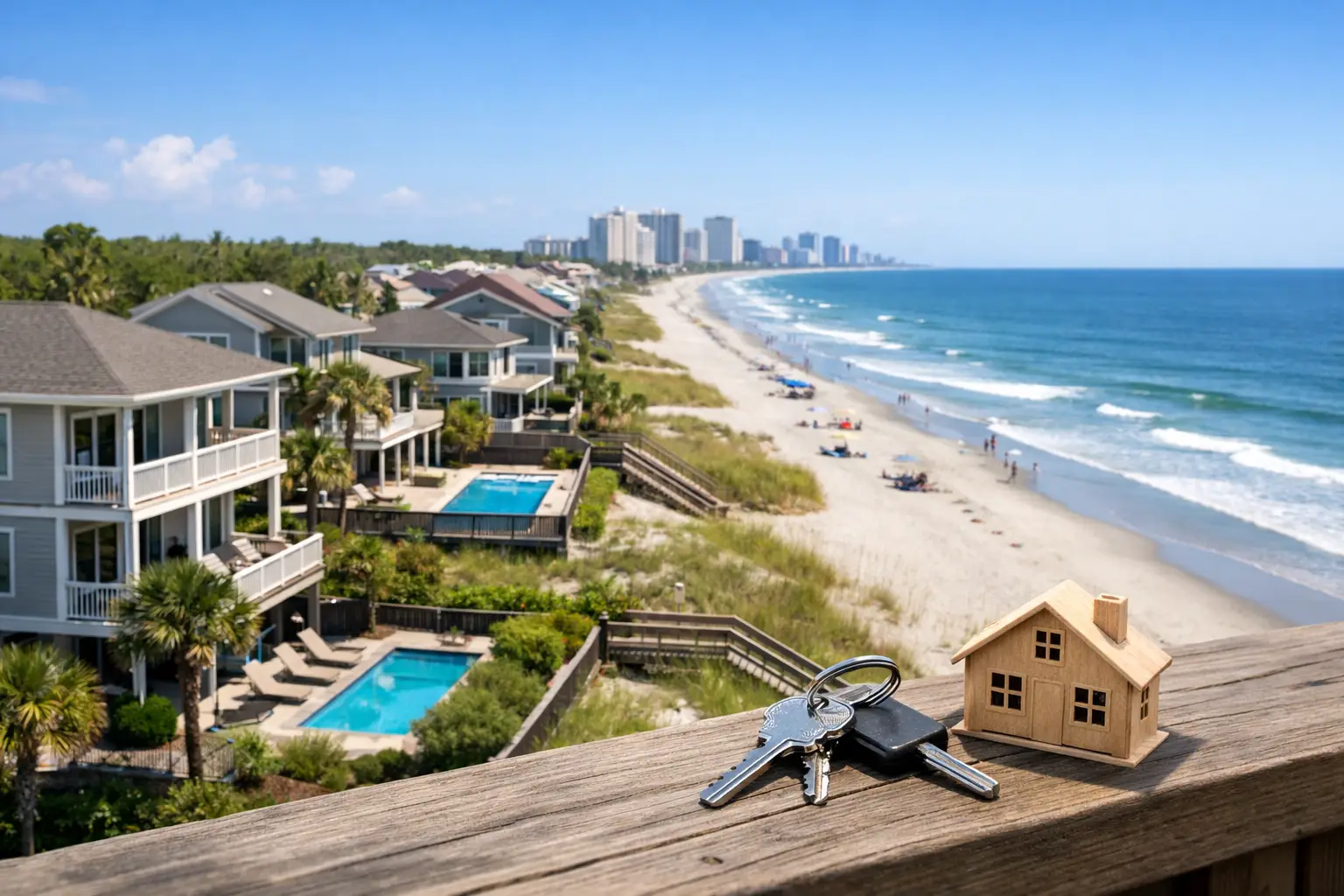
A home two miles from the beach can feel completely different from one two blocks away. In the Myrtle Beach area, that difference shows up in price, insurance, traffic patterns, rental rules, and even how often you use the property. That is why buyers looking at myrtle beach homes do best when they start with lifestyle first and square footage second.
Some buyers picture a primary residence with room for guests and a short golf cart ride to dinner. Others want a low-maintenance condo near the ocean, a retirement home with easy access to healthcare, or a property that can help produce rental income part of the year. All of those goals are reasonable, but they do not point to the same kind of home. In this market, the right fit is usually less about finding the prettiest listing and more about matching the property to how you actually plan to live.
How Myrtle Beach homes vary by location
People often use Myrtle Beach as a catch-all term, but buyers quickly learn that the broader coastal market has distinct pockets. Myrtle Beach proper offers convenience, entertainment, dining, and many established neighborhoods. North Myrtle Beach tends to appeal to buyers who want a beach-centered lifestyle with a slightly different pace and a mix of second homes, primary residences, and investment options. Surfside Beach, Garden City Beach, and Murrells Inlet each bring their own character, from family-focused streets to marsh views and waterfront dining.
Move inland a bit and the choices expand again. Carolina Forest, Conway, Longs, and Little River often attract buyers who want more house for the money, newer developments, or a quieter residential setting while staying within reach of the coast. That trade-off can make good sense. You may get a larger lot, lower price per square foot, or newer construction, but you may give up the easy beach access that felt so exciting at the beginning of the search.
This is where a lot of buyers benefit from slowing down. If you are here three weekends a year, being directly near the ocean may matter more than having an extra bedroom. If this is your year-round home, commute times, grocery access, flood zones, school options, and medical care can matter more than being able to hear the surf from the porch.
Buying for lifestyle, not just the listing photos
Beautiful photos can make almost any home feel like the one. Coastal light helps. So do fresh paint, white kitchens, and a porch with a palm tree in frame. But the better question is whether the home works on an ordinary Tuesday.
Think about where you will park during peak season, how many stairs you want to manage, whether guests will visit often, and if you want to handle yardwork. Buyers coming from out of state sometimes fall in love with elevated beach homes and only later realize the stair setup is not ideal for full-time living. Others focus on a condo for the low maintenance, then decide they want more privacy, storage, or room for hobbies.
Retirement buyers often have one set of priorities at first and a different set after they spend time in the area. Proximity to the water can still be important, but so can a first-floor primary suite, a quiet neighborhood feel, and space for family visits. Vacation-home shoppers may care more about lock-and-leave convenience, neighborhood amenities, and easy access to restaurants and entertainment.
There is no single correct answer here. The best purchase usually comes from being honest about what daily life will look like in the home, not just what the property looks like online.
The real cost of Myrtle Beach homes
Price is only the starting point. Coastal ownership comes with extra costs that should be part of the conversation early, not after you are emotionally attached to a house.
Insurance matters more near the coast than many first-time buyers expect. Depending on the property and location, you may be looking at homeowners insurance, wind coverage, and possibly flood insurance. Newer construction may help in some cases, but every property is different. A home that looks like a bargain at first glance can feel less attractive once the annual carrying costs are clear.
HOA fees are another major factor. In some communities, those fees support valuable amenities like pools, landscaping, security, and exterior maintenance. In others, the monthly number can significantly change affordability. The fee itself is not automatically good or bad. What matters is what you receive in return and whether it fits how you plan to use the property.
Maintenance deserves equal attention. Salt air, humidity, and storms are part of coastal living. They are also hard on roofs, paint, HVAC systems, decks, and exterior fixtures. Buyers who are used to inland ownership sometimes underestimate how much regular upkeep matters here.
New construction or existing home?
This is one of the most common forks in the road. New construction can be very appealing in the Myrtle Beach area because many communities offer modern floor plans, energy-efficient features, and neighborhood amenities. There is also comfort in knowing major systems and appliances are new. For buyers relocating from another state, a new home can feel simpler and more predictable.
But existing homes have their strengths too. An established home may offer a better location, mature landscaping, larger lots, or architectural details that newer neighborhoods do not always have. In some cases, you can also get a clearer picture of what the street feels like because the community is already built out.
The trade-off usually comes down to priorities. If you want customization and lower near-term maintenance, new construction may be the better fit. If you care most about being in a particular part of town or closer to the water at a certain price point, an existing home may open more doors.
Buyers should also remember that builder incentives can be attractive, but they do not replace careful review of lot placement, upgrade costs, timelines, and resale appeal. A home is more than the base price on the brochure.
Rental potential and restrictions
For some buyers, the dream is part personal getaway and part investment. That can work well, but only if you understand the rules before you buy.
Not every property is a good short-term rental candidate, and not every community allows the same use. Some neighborhoods limit rental frequency or length. Some condo buildings have rules that affect owners and guests. Financing can also vary depending on the property type and intended use.
Even when rentals are allowed, income should be approached with a clear head. A home near the beach may have strong seasonal appeal, but occupancy, management costs, cleaning fees, furnishing costs, insurance, and wear and tear all affect the numbers. A property can still be a smart purchase without being a high-performing rental. Those are two different goals, and it helps to decide which one matters more.
What helps resale later
Even if you plan to stay for years, resale matters. Buyer preferences shift, but some qualities tend to hold up well over time.
Location remains the big one. Easy access to the beach, golf, dining, healthcare, and main roads continues to matter. So does a practical floor plan. Homes with strong natural light, functional storage, usable outdoor space, and a layout that works for both everyday living and guests often appeal to a wider range of future buyers.
Condition matters too. Coastal buyers notice deferred maintenance quickly. A home that has been well cared for usually stands apart, especially when buyers are already thinking about insurance and upkeep.
If you are deciding between two similar homes, it can help to ask a simple question: if your plans changed in five years, which property would attract the broadest pool of buyers? That question often sharpens the decision.
The best search usually starts narrower
A lot of buyers begin by saying they want to be somewhere near the water between North Myrtle Beach and Pawleys Island. That is understandable, but it is also a wide net. The search usually gets easier when you narrow the field by lifestyle, budget, and use.
Instead of asking only how close a home is to the beach, ask what kind of ownership experience you want. Do you want a low-maintenance place you can lock up and leave? A full-time neighborhood with room for visiting family? A home that could support rental income? A quieter inland option with more space and lower carrying costs? Those answers do more to guide the search than broad wish lists.
For buyers who want both local knowledge and practical guidance, working with an experienced coastal agent can make the process more grounded. Someone who understands both the charm and the trade-offs of this market can help you sort through what looks good on paper and what truly fits.
The right home here is not always the flashiest one or the closest one to the sand. It is the one that still feels right after you have looked past the palm trees and thought through how you want to live.
Leave a Reply