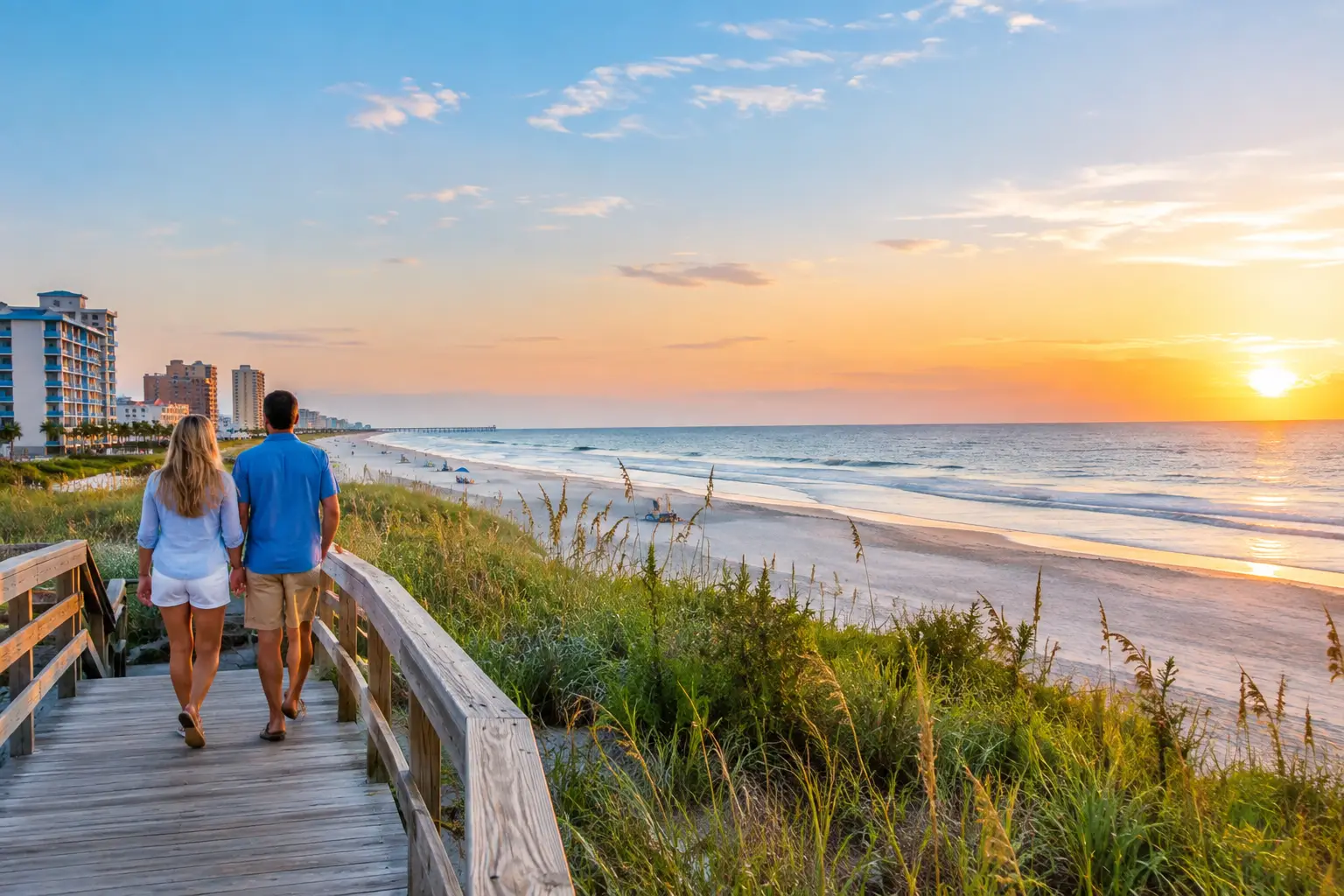
The first quiet beach walk after Labor Day tells you a lot about living in North Myrtle Beach SC. The ocean is still warm, many visitors have headed home, and locals settle back into their favorite restaurants, golf routines, school schedules, and neighborhood gatherings. This is a beach town, certainly, but it is also a real year-round community with its own pace, practical considerations, and wide range of homes.
For buyers considering a primary residence, retirement home, vacation property, or investment, North Myrtle Beach can offer an appealing mix of coastal access and everyday convenience. The right fit depends less on a postcard-perfect view and more on how you want to spend an ordinary Tuesday in January as well as a sunny Saturday in July.
What Living in North Myrtle Beach SC Is Really Like
North Myrtle Beach sits at the northern end of the Grand Strand in Horry County, close to Little River and a manageable drive from Myrtle Beach. It is known for broad beaches, family-friendly energy, golf, boating, shag dancing, and the kind of casual coastal personality that makes flip-flops feel appropriate in more places than they probably should.
The city includes distinct areas such as Cherry Grove, Ocean Drive, Crescent Beach, Windy Hill, and Barefoot Resort. Each has a different feel. Cherry Grove appeals to buyers who want marsh views, inlet access, and a relaxed beach-community atmosphere. Ocean Drive puts you near longstanding local traditions and seasonal activity. Barefoot Resort provides a golf-centered setting with a variety of condos, townhomes, and single-family options.
That variety is one reason the area works for so many lifestyles. A buyer seeking a quiet retirement setting may want a home west of Highway 17, while someone who pictures morning walks on the sand may prefer an oceanfront or east-of-17 location. Neither choice is automatically better. It comes down to budget, maintenance preferences, flood exposure, rental plans, and how much seasonal activity feels like fun rather than fuss.
A Beach Lifestyle With a Year-Round Routine
Summer is lively. Traffic increases, restaurants fill up, and beach access becomes part of daily planning. For many homeowners, that is part of the charm. Families visit, local events are plentiful, and the whole area has a vacation glow.
The quieter seasons are often what convince people to stay. Fall brings pleasant temperatures and less crowded beaches. Winter is mild compared with much of the country, though it can still bring chilly, damp days and the occasional cold snap. Spring arrives early, with golf courses, patios, and gardens coming back to life well before northern states have packed away their coats.
Residents can fill a week without making the beach the only plan. Golf, boating, fishing, live music, dining, shopping, and community events are all close by. The Intracoastal Waterway adds another layer to daily life, whether that means watching boats pass, having lunch on the water, or looking for a home with a water view.
Choosing the Right Area and Home Style
North Myrtle Beach offers more than high-rise condos along the ocean. Buyers will find single-family homes in established neighborhoods, newer construction communities, golf villas, townhomes, low-rise condos, oceanfront buildings, and properties along channels, marshes, and the Waterway.
A condo can be a practical choice for a second-home owner who wants less exterior maintenance and easy access to amenities. Still, condo ownership comes with association rules, monthly fees, insurance considerations, rental policies, and possible special assessments. Reviewing the association documents is not just paperwork. It helps you understand how the property is managed and what ownership may cost beyond the purchase price.
Single-family homes offer more privacy and often more room for guests, pets, hobbies, and outdoor living. They may also bring yard care, roof maintenance, irrigation needs, and a larger insurance commitment. New construction can reduce immediate repair concerns, but buyers should still review builder warranties, lot location, community fees, and what is included versus considered an upgrade.
For some buyers, a home just inland provides more space and value while keeping the beach a short drive away. For others, being able to walk to the ocean is worth a smaller footprint. A good home search starts by deciding which trade-off matters most.
Cost of Ownership Goes Beyond the Listing Price
Coastal ownership has expenses that deserve an honest look early in the process. Property taxes, homeowners insurance, flood insurance, wind and hail coverage, HOA dues, utilities, maintenance, and furnishings can all shape the real monthly or annual cost of a home.
Insurance deserves special attention near the coast. Coverage and premiums can vary based on a home’s age, construction, elevation, roof, location, and prior claims history. A property that seems like a great value at first glance may need insurance quotes before it can be evaluated fairly. The same is true for flood zones. Being outside a high-risk flood zone does not mean a home has no flood risk, and having coverage can still be a wise decision.
If rental income is part of the plan, approach the numbers with care. Rental demand can be strong in desirable locations, but owners should account for management fees, cleaning, repairs, furnishing costs, vacancy periods, taxes, HOA rental rules, and local regulations. A home should make sense for your own use and financial comfort, not only on the best possible rental-week projection.
Weather, Water, and Coastal Maintenance
Salt air is wonderful for the spirit and tough on building materials. Homes close to the ocean need regular attention to exterior paint, windows, doors, HVAC systems, decks, railings, and metal fixtures. This is normal coastal homeownership, not a reason to avoid it, but it should be part of the maintenance plan.
Hurricane season also calls for preparation. Longtime residents know the value of a storm plan, proper insurance, shutters or impact protection where appropriate, and keeping important documents organized. A home inspection is essential, and buyers may also benefit from specialized inspections based on the property, such as moisture, roof, pool, dock, or structural reviews.
The good news is that coastal communities are accustomed to planning for weather. The key is buying with clear expectations instead of assuming every beach property carries the same level of exposure or upkeep.
Everyday Convenience Matters
North Myrtle Beach has the services most full-time residents need, including grocery stores, medical options, pharmacies, restaurants, fitness choices, and nearby shopping. Myrtle Beach expands the selection for larger retail, entertainment, and health care needs, while Little River offers a quieter small-town option just minutes away.
Families should research school assignments directly for a specific address, since boundaries and programs can change. Retirees may place greater weight on proximity to health care, single-level living, and a neighborhood that feels active without being overly busy. Remote workers may prioritize reliable internet service, a dedicated office, and access to major roads for occasional travel.
Before writing an offer, spend time in the area at different hours. Drive the route to the grocery store, visit the beach access you would actually use, and notice traffic around the neighborhood. A home can look perfect online while the surrounding rhythm tells a different story.
Is North Myrtle Beach the Right Fit?
North Myrtle Beach is especially appealing for people who want a coastal lifestyle with options. You can choose lively oceanfront surroundings, a golf community, a tucked-away residential neighborhood, or a property near the Waterway. It is less suited to buyers seeking a completely isolated beach escape or a large urban environment with city-style walkability everywhere.
The best purchase is rarely the most dramatic view or the newest finish. It is the home that supports the life you actually want to live, with costs, location, and maintenance that feel comfortable long after closing day. If North Myrtle Beach is on your list, take the time to compare neighborhoods and ask practical questions. A knowledgeable local real estate professional, such as Cyndy Otto, can help turn those questions into a focused, confident home search.
Leave a Reply