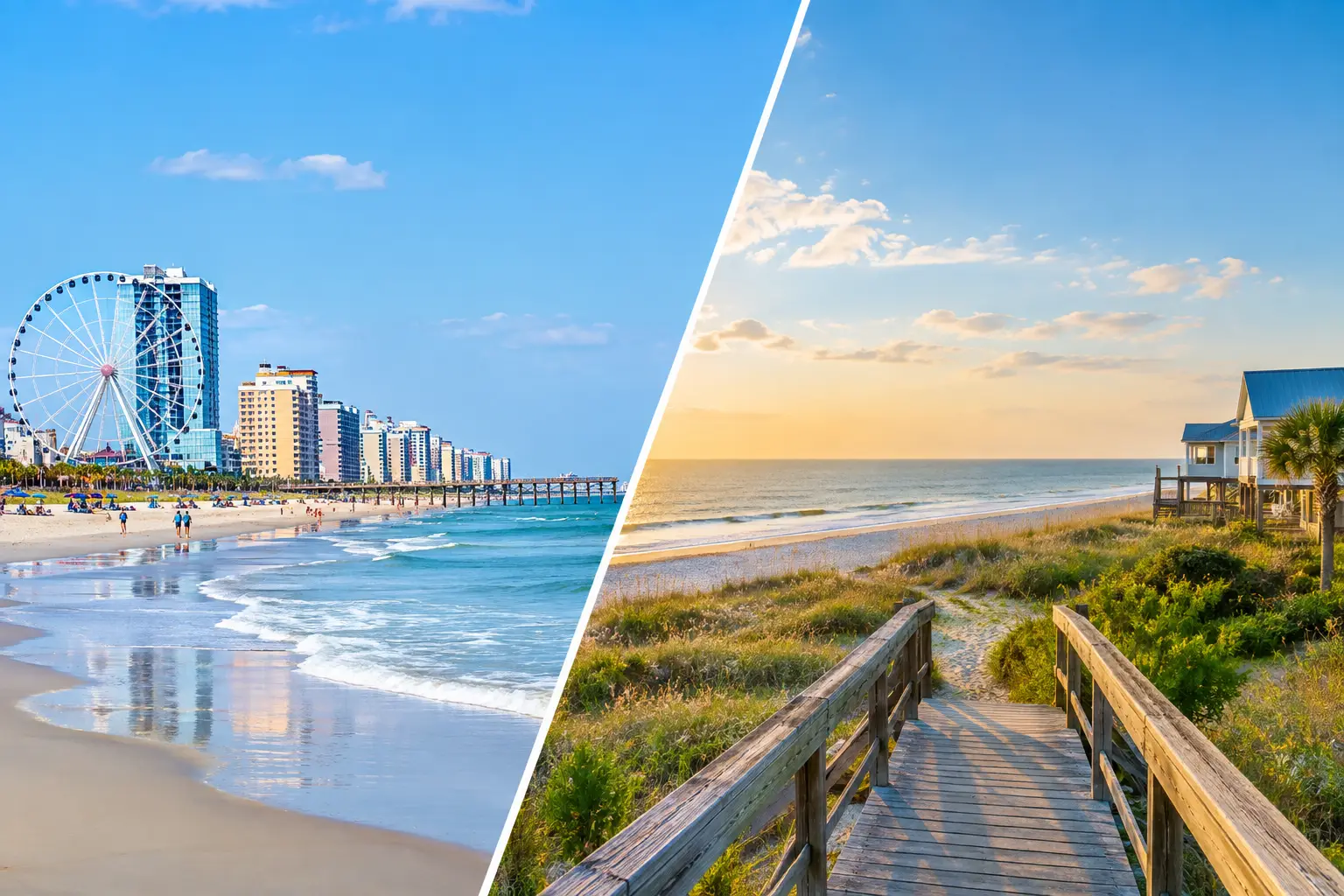
A few miles can make a meaningful difference when you are choosing a place to call home at the coast. In the conversation around Myrtle Beach vs North Myrtle Beach living, the best fit usually comes down to more than a favorite beach access or restaurant. Your ideal daily pace, preferred home style, budget, plans for visitors, and comfort with seasonal activity all matter.
Both areas offer sandy shores, golf, water views, and a wide range of residential choices. Yet they feel distinctly different once you start driving neighborhoods, visiting grocery stores, and imagining an ordinary Tuesday instead of a vacation week. The right decision is personal, and it helps to look beyond the postcard view.
Myrtle Beach vs North Myrtle Beach Living: The Daily Feel
Myrtle Beach is the larger, more energetic choice. It has a city feel in many areas, with a broader mix of entertainment, restaurants, shopping, medical services, and year-round activity. For buyers who enjoy having options nearby, this can be a real advantage. You may be close to a favorite breakfast spot, live music, a fitness center, major retail, and the beach all in the same afternoon.
That energy can also mean heavier traffic in popular corridors, especially during spring and summer. Areas near the oceanfront attractions can be lively late into the evening. Some residents love being in the middle of the action, while others prefer to visit it and return home to a quieter neighborhood.
North Myrtle Beach generally has a more relaxed, residential rhythm. It is still a well-known beach destination, but many buyers find it easier to picture everyday life there. Communities such as Cherry Grove, Ocean Drive, Crescent Beach, Windy Hill, and Barefoot Resort each have their own character, from classic beach cottages to golf-course homes and newer planned neighborhoods.
North Myrtle Beach can be especially appealing for retirees, second-home owners, and families who want coastal access without feeling surrounded by the busiest parts of the Grand Strand. That does not mean it is sleepy. There are plenty of restaurants, festivals, golf courses, shops, and seasonal events. The difference is often one of scale and atmosphere.
Beaches, Entertainment, and Weekend Plans
If beach time is your priority, both locations deliver, but the experience varies by section. Myrtle Beach offers a long shoreline with everything from active boardwalk areas to quieter residential stretches farther from the central tourist district. It is a strong fit for someone who wants the beach to be part of an active social and entertainment lifestyle.
North Myrtle Beach beaches often feel more neighborhood-oriented, particularly away from major public access points. Cherry Grove is loved for its inlet setting and fishing pier, while the other beach sections offer plenty of room for morning walks, bike rides, and family beach days. Residents often appreciate that they can choose between a peaceful beach routine and an evening out without leaving town.
For entertainment, Myrtle Beach has greater variety and volume. Theaters, attractions, shopping centers, sports venues, and dining choices are widely available. This can benefit buyers who host frequent guests or who are considering a vacation rental property in an area where short-term rentals are permitted.
North Myrtle Beach offers a more compact entertainment scene, with beach clubs, local restaurants, live music, and easy access to the attractions of the larger Grand Strand when desired. For many homeowners, that balance is just right. They can enjoy a quieter home base while knowing Myrtle Beach is a straightforward drive away.
Housing Choices and Neighborhood Character
The housing inventory across both markets is diverse. You will find oceanfront and ocean-view condominiums, raised beach homes, townhomes, golf-course properties, established single-family neighborhoods, and new construction. The best property type depends on how you plan to use it.
In Myrtle Beach, buyers may have more choices near urban conveniences and major employment centers. Areas west of Highway 17, along the Intracoastal Waterway, and in newer communities can offer a different experience than an oceanfront condo or a home near the boardwalk. A primary resident might value a garage, storage, nearby healthcare, and a neighborhood with full-time neighbors more than a rental-friendly building with direct ocean views.
North Myrtle Beach has a strong mix of coastal condominiums and single-family homes, including communities that appeal to full-time residents and second-home buyers. Barefoot Resort, for example, offers golf and resort-style amenities, while other neighborhoods provide a more traditional residential setting. Beach sections can be ideal for buyers who want to walk or bike to the ocean, though flood zones, insurance needs, parking, and rental activity should always be part of the conversation.
Do not assume one area is automatically more affordable than the other. Prices can shift significantly based on proximity to the water, building age, views, amenities, condition, rental history, and HOA structure. A condominium with a lower purchase price may have substantial monthly fees, while a single-family home may require more maintenance, insurance, and exterior upkeep. Looking at the full monthly and annual ownership picture is more useful than comparing listing prices alone.
Condos, Beach Homes, and Primary Residences
Condominiums can make sense for buyers who prefer a lock-and-leave lifestyle. Exterior maintenance, landscaping, and amenities are typically handled through the association, although the rules, financial health, reserves, rental policies, and fees deserve careful review. Oceanfront buildings may also have additional maintenance considerations because salt air is hard on structures.
A beach home offers more privacy and often more space for family and guests. It may also provide flexibility for owners who want to use the property personally and rent it at select times, subject to local and community rules. On the other hand, elevated homes, pools, docks, and coastal exposure can bring added maintenance responsibilities.
For a full-time move, it is worth considering your off-season routine. Visit on a weekday if possible. Test the drive to the grocery store, doctor, gym, airport, and the places you expect to use regularly. A home that feels perfect during a sunny Saturday showing should also work when you need to run errands in July traffic or after a rainy January week.
Traffic, Access, and Practical Convenience
Traffic is one of the clearest lifestyle differences between the two areas. Myrtle Beach generally sees more congestion near its biggest attractions, commercial zones, and main thoroughfares. Road projects and alternate routes can improve access in certain locations, but travel time is still worth testing at the hours that matter to you.
North Myrtle Beach has its own seasonal traffic patterns, particularly around beach access points and the busiest commercial areas. Still, some buyers find its layout more manageable for daily life. Proximity to Highway 31, Highway 17, and the routes toward Little River or the North Carolina line may influence which neighborhood feels most convenient.
Healthcare access, airport travel, and family connections can also shape the choice. Myrtle Beach places you closer to many medical providers and Myrtle Beach International Airport. North Myrtle Beach may appeal to those who want easier access to Little River, Calabash, and Brunswick County communities such as Sunset Beach or Ocean Isle Beach. There is no universal winner – it depends on where your life happens most often.
Investment and Rental Considerations
Both Myrtle Beach and North Myrtle Beach attract buyers interested in vacation rental income, but an investment property should be evaluated with clear eyes. Demand can be strong in desirable locations, yet rental income is not guaranteed and expenses can add up quickly. Management fees, HOA dues, insurance, utilities, furnishings, cleaning, repairs, taxes, and periods without bookings all affect the numbers.
Before purchasing, confirm the current rental rules for the specific building, neighborhood, and municipality. Restrictions can differ from one community to the next, and association rules may change. If personal use is your first priority, a property with a more residential setting may be the better choice even if its rental potential is lower.
A well-chosen coastal property can serve several goals, but it rarely serves every goal equally. The highest-income rental option may not offer the quietest personal retreat. The lowest-maintenance condo may not have the privacy needed for an extended family. Naming your top two or three priorities early makes the search much more productive.
How to Choose the Right Coastal Fit
Choose Myrtle Beach if you want a larger selection of entertainment, dining, services, and central Grand Strand convenience. It can be an excellent fit for buyers who enjoy activity, want access to city amenities, or are considering properties near major visitor attractions.
Choose North Myrtle Beach if a more relaxed coastal pace, neighborhood feel, and easy access to the northern Grand Strand sound more appealing. It is a natural match for many buyers seeking a retirement home, vacation place, or full-time residence with beach access and room to breathe.
The most useful next step is not picking a side from a map. Spend time in both places as a potential resident, not just a visitor. Drive the neighborhoods, notice the noise level, look at parking, and picture the kind of morning you want to have. That small bit of real-life perspective can turn a coastal home search into a decision that feels comfortably like yours.
Leave a Reply