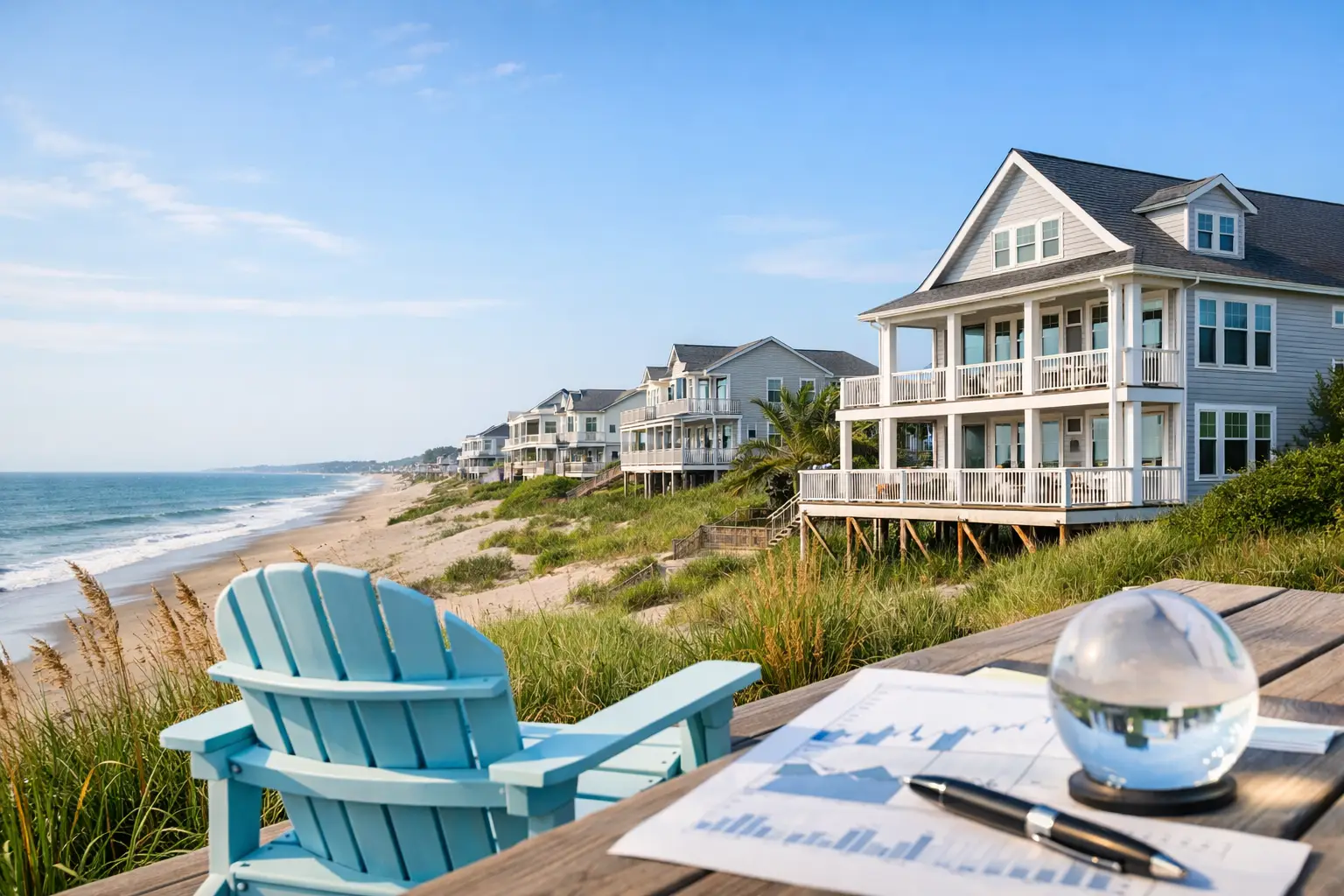
A beach home can mean coffee on a screened porch in Ocean Isle Beach, a short golf cart ride to the sand in Surfside Beach, or a quieter retirement pace near Southport. That lifestyle remains a powerful draw, but a useful beach home demand forecast requires more than watching whether a listing gets a showing. Buyers and sellers need to look at affordability, inventory, insurance, property condition, and the distinct character of each coastal community.
The outlook for coastal Carolina homes is best described as selective, not sleepy. Well-priced homes with appealing features can still attract serious attention. Properties that feel dated, carry difficult ownership costs, or enter the market above their realistic value may take longer to find the right buyer. The beach market is active, but buyers are doing more homework before they make an offer.
Beach Home Demand Forecast: What Is Driving Buyers?
Demand for homes near the coast continues to be supported by lifestyle changes that are larger than any one season. Retirees want a milder climate and access to golf, restaurants, healthcare, and recreation. Remote and hybrid workers may have more freedom to live where they want. Vacation-home shoppers are still drawn to the convenience of having a personal getaway, while investors look for locations with established rental appeal.
Brunswick County and the Myrtle Beach metropolitan area offer a wide range of price points and settings, which helps keep the buyer pool broad. Someone looking for a condo near the oceanfront has different priorities than a family searching for a newer home in Conway, Longs, Shallotte, or Loris. A buyer considering Pawleys Island may value natural surroundings and a lower-key feel, while another may prefer the energy and amenities around Myrtle Beach or North Myrtle Beach.
That variety matters because demand is rarely spread evenly across every home type. A move-in-ready primary residence in a convenient neighborhood can draw a different audience than a furnished second home with rental history. The question is not simply whether people want beach homes. It is whether a particular home fits what today’s buyer is prepared to pay for, maintain, insure, and enjoy.
Affordability will shape the pace of sales
Mortgage rates remain one of the biggest influences on demand. When financing costs rise, many buyers adjust their price range, increase their down payment, consider condos or townhomes, or postpone a purchase until their budget feels more comfortable. Cash buyers can be less affected by rates, but they still compare value carefully.
For sellers, this creates a market where pricing strategy matters from day one. A home that is priced in line with its competition may receive stronger early attention. One that starts too high can sit long enough for buyers to wonder what they are missing, even when the property itself has plenty to offer.
For buyers, the same environment can create opportunity. Fewer impulsive offers may allow more room for inspections, financing, and thoughtful negotiation. That does not mean every property will be negotiable. Homes that are clean, updated, and priced fairly can still move quickly, especially in desirable pockets near the water.
Insurance and carrying costs are part of the decision
Coastal buyers are increasingly asking detailed questions about homeowners insurance, wind and hail coverage, flood insurance, deductibles, HOA fees, and maintenance. These are not side notes. They are part of the monthly and annual cost of owning a beach home.
A property farther from the ocean may have a different insurance profile than one in a flood-prone area, but every home should be reviewed individually. Buyers should obtain insurance estimates early rather than waiting until the contract period. For a vacation or investment property, they should also consider utilities, furnishing costs, property management, and the expense of maintaining a home when they are not in town.
Sellers benefit from being prepared for these conversations. Having clear information about elevation, flood history when known, prior insurance costs, HOA documents, roof age, HVAC age, and recent improvements can make a listing easier to evaluate. Buyers do not expect a perfect home, but they appreciate fewer surprises.
Inventory Will Keep Demand Local and Property-Specific
A broad coastal market forecast can only tell part of the story. Inventory levels differ from town to town, neighborhood to neighborhood, and even street to street. Oceanfront condos, golf-course homes, new construction communities, historic cottages, and inland single-family homes do not compete in the same way.
New construction remains an attractive option for buyers who want modern layouts, energy-efficient features, and fewer immediate repair projects. Still, an existing home can offer mature landscaping, an established neighborhood, a larger lot, or a location closer to the beach. The better choice depends on how a buyer plans to use the property.
In communities such as Calabash, Sunset Beach, Holden Beach, Oak Island, Little River, Murrells Inlet, Garden City Beach, and Georgetown, local nuances can influence demand. Access to beaches, boating, dining, medical services, schools, golf, and major roads all affect how buyers see value. Even the drive time to an airport or a favorite family gathering spot may matter more than a few extra square feet.
Condition will separate standouts from slow movers
The homes likely to perform best are the ones that help buyers picture an easy first season at the coast. Fresh paint, clean outdoor spaces, well-maintained systems, neutral interiors, and clear photography can make a real difference. Beach buyers are often shopping from another state or narrowing their choices during a short visit. A property needs to communicate its value quickly.
That does not mean sellers need to renovate every room. Some buyers actively seek a home they can personalize. But the price should reflect any needed work, and known issues should be addressed honestly. A dated kitchen may be manageable. A neglected roof, unclear moisture issue, or deferred exterior maintenance can cause buyers to step back because they know coastal repairs may require extra planning.
What Buyers Should Watch in the Next 12 Months
Buyers who wait for a single perfect signal may miss homes that fit their goals. Rates can change, inventory can shift, and the most appealing property in a preferred neighborhood may not come around again soon. A more practical approach is to decide what matters most: a primary home, a vacation retreat, a retirement plan, rental potential, or a blend of all four.
Start with a complete budget that includes more than the purchase price. Then choose two or three preferred areas and identify the trade-offs you can accept. Being closer to the ocean may mean a smaller home, higher insurance, or more seasonal activity. Living a little inland may offer newer construction, more space, and easier year-round access.
It also helps to distinguish between a home you love visiting and a home you will enjoy owning. Think about storage, parking, elevator access if needed, pet rules, rental restrictions, storm preparation, and how often you expect to use the property. Those everyday details often determine whether a coastal purchase feels like a dream or a burden.
What Sellers Can Do While Demand Is Selective
Sellers do not need a red-hot market to achieve a successful sale. They need a clear plan built around their home’s strongest advantages. The first step is understanding the actual competition, including active listings, recent sales, pending homes, and properties that expired without selling.
Presentation should support the price. Coastal buyers respond to bright, tidy rooms, inviting patios and porches, and a property that feels cared for. If a home has rental history, water access, community amenities, a recent roof, or valuable improvements, those details should be easy to understand. If there are limitations, such as a smaller lot or older finishes, the price and marketing approach should acknowledge them rather than hoping buyers overlook them.
Timing can help, but it is not everything. Spring and early summer often bring more visitors and active shoppers, while fall can attract serious buyers who want to settle in before the next season. A well-positioned home can sell in any month. The key is entering the market with realistic expectations and enough flexibility to respond to feedback.
A beach home is never just a set of square-foot measurements. It is a place where people imagine changing their pace, gathering family, or finally waking up near the water. The best next step is to match that vision with the numbers, the neighborhood, and a plan that feels comfortable long after closing day.
Leave a Reply