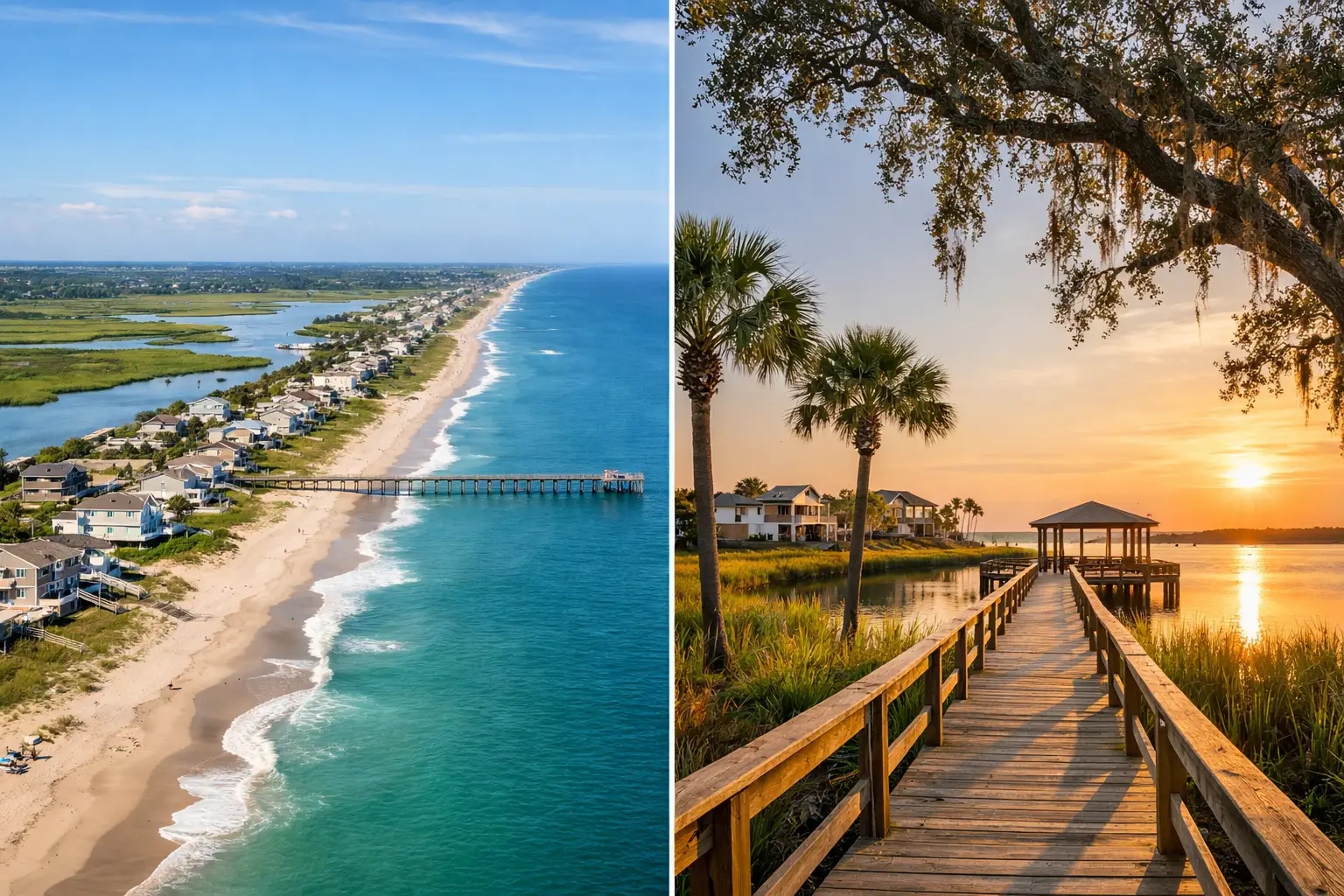
A state line can look small on a map, but when you are choosing a beach home, North Carolina versus South Carolina can feel like two very different versions of coastal life. One side may offer the quieter island rhythm you have pictured for retirement. The other may put restaurants, entertainment, golf, and a wider range of condominium communities close to your front door.
For buyers considering Brunswick County, North Carolina, or Horry and Georgetown Counties in South Carolina, the right answer is rarely about which state is simply “better.” It is about the daily life you want, the kind of property that fits your plans, and the costs that come with owning near the water.
North Carolina Versus South Carolina: The Feel of Each Coast
The Brunswick County coast often appeals to buyers who want their beach time to feel relaxed and residential. Communities such as Calabash, Ocean Isle Beach, Sunset Beach, Shallotte, Holden Beach, Oak Island, and Southport offer distinct personalities, but many share an easygoing pace. You can find waterfront cottages, newer planned communities, golf-course homes, and neighborhoods where a morning walk can include marsh views, live oaks, and salt air.
South Carolina’s Grand Strand and Waccamaw Neck offer more variety in pace and setting. Myrtle Beach and North Myrtle Beach provide active resort energy, plentiful dining, attractions, and a broad selection of condos and vacation-oriented properties. Conway, Longs, Loris, and Little River can offer more inland space while keeping the coast within reach. Farther south, Murrells Inlet, Garden City Beach, Surfside Beach, Pawleys Island, and Georgetown each bring their own mix of boating, dining, historic character, and beach access.
Neither experience is one-size-fits-all. A buyer who wants peaceful evenings and low-density beaches may feel most at home in Sunset Beach or Holden Beach. Someone who expects visiting family to want entertainment, shopping, and easy dining choices may prefer the Myrtle Beach area. The best comparison is neighborhood by neighborhood, not state against state.
Home Styles and What Your Budget May Buy
Both states offer primary residences, second homes, retirement properties, and investment opportunities. Still, the inventory can look very different depending on how close you want to be to the ocean.
In North Carolina, buyers often consider the trade-off between an island home and a mainland community. An island address can deliver beach access and coastal views, while mainland areas around Shallotte or Calabash may offer newer homes, larger lots, and a shorter drive to everyday services. Southport is especially appealing to buyers drawn to a walkable historic setting, waterfront scenery, and a town-centered lifestyle.
In South Carolina, condominium choices are often more extensive in the busier beach markets. That can make the region attractive for buyers seeking lock-and-leave convenience, rental potential, or an ocean-view vacation property. Single-family communities are plentiful as well, especially inland from the beach and in areas such as Conway, Longs, and Carolina Forest near Myrtle Beach.
Price is only the first number to examine. A lower purchase price can come with higher association dues, insurance costs, flood requirements, maintenance needs, or rental-management expenses. A newer home may reduce near-term repairs but could be located farther from the beach. An older cottage may have wonderful character and location, yet require a more careful inspection of its roof, systems, elevation, and storm history.
Taxes, Insurance, and Ownership Costs
The financial side of North Carolina versus South Carolina deserves a close look before you fall in love with a view. Property taxes, homeowners insurance, flood insurance, HOA fees, and utility costs can vary substantially by county, community, construction type, and proximity to the coast.
North Carolina is often attractive to retirees because it does not tax Social Security benefits at the state level. South Carolina also offers tax considerations that may be favorable for many retirees, but individual circumstances matter. A conversation with a qualified tax professional is the right place to compare residency, income, retirement distributions, and property-tax questions for your household.
Insurance should be reviewed early, not after the inspection period begins. Coastal properties may need separate wind, flood, or hazard coverage depending on the location and lender requirements. Elevation, roof age, construction materials, distance from water, and claims history can all affect availability and cost. Condo buyers should also understand what the master policy covers and what remains their personal responsibility inside the unit.
For an investment property, add another layer: local rental rules, HOA restrictions, licensing requirements, occupancy patterns, furnishing costs, cleaning, management, and reserves for repairs. A vacation rental can be rewarding, but it is a business decision as much as a beach decision.
Everyday Convenience Matters More Than Most Buyers Expect
A home can be beautiful on a Saturday showing and still be inconvenient for year-round living. Before choosing a town, think about the routines that will shape your weeks: medical appointments, grocery trips, airport access, school needs, commuting, boating, golf, dining, and visits from friends and family.
Brunswick County gives many residents a smaller-town coastal lifestyle while remaining within driving distance of larger services. Buyers who value a calmer home base often appreciate being near the beaches without living directly in the center of a resort corridor.
South Carolina’s coastal communities can offer more immediate access to entertainment, medical services, retail, and dining, particularly near Myrtle Beach. That convenience can be a major benefit for full-time residents and vacation-home owners alike. It can also mean more traffic during peak seasons. If peace and quiet are priorities, a home just a few miles inland or in a smaller coastal community may feel very different from an oceanfront address.
The most useful question is simple: What would Tuesday look like here? Visit at different times of day if you can. Drive the route from the property to the grocery store, beach access, favorite restaurant, and health care providers. The right location should work when it is raining, busy, and ordinary, not only when the sun is shining.
Lifestyle: Quiet Beach Days or More Activity?
This is where personal preference should lead the search. North Carolina’s southern coast often attracts buyers looking for uncrowded beach days, boating, golf, and a community feel that stays fairly low-key. South Carolina’s coast can offer all of that too, along with more choices for nightlife, shows, large-scale attractions, and resort amenities.
Golf lovers have excellent options on both sides of the border. Boaters can find marinas, inlets, rivers, and Intracoastal Waterway access throughout the region. Food lovers may be drawn to Calabash seafood, Murrells Inlet’s waterfront restaurants, Georgetown’s historic downtown, or the growing local dining options across Brunswick County.
A good real estate search makes room for these lifestyle details. A couple relocating for retirement may care most about social clubs, health care, and a one-level floor plan. A family purchasing a second home may want room for guests, easy beach parking, and rental flexibility. An investor may prioritize occupancy potential, operating costs, and association rules over a personal favorite coffee shop.
Questions to Ask Before Choosing a Side of the Line
As you compare homes, ask whether the property will be your primary residence, vacation getaway, retirement home, or rental. Then look beyond the listing photos. Confirm flood-zone information, insurance estimates, HOA documents, rental policies, utility providers, road access, and any planned development nearby.
For condos, review the association’s budget, reserves, maintenance history, special assessments, and rules for owners and guests. For single-family homes, consider the age of major systems, drainage, outdoor maintenance, and whether you want the responsibility that comes with a pool, dock, seawall, or large yard.
Working with a broker licensed in both Carolinas can make the comparison much easier because the search can follow your priorities instead of stopping at the state line. Cyndy Otto helps buyers look at the practical details along with the coastal charm, whether that means a peaceful Brunswick County home or a South Carolina property closer to the action.
The right beach home should give you more than a pretty address. It should make your favorite kind of coastal day feel easy to live, again and again.
Leave a Reply