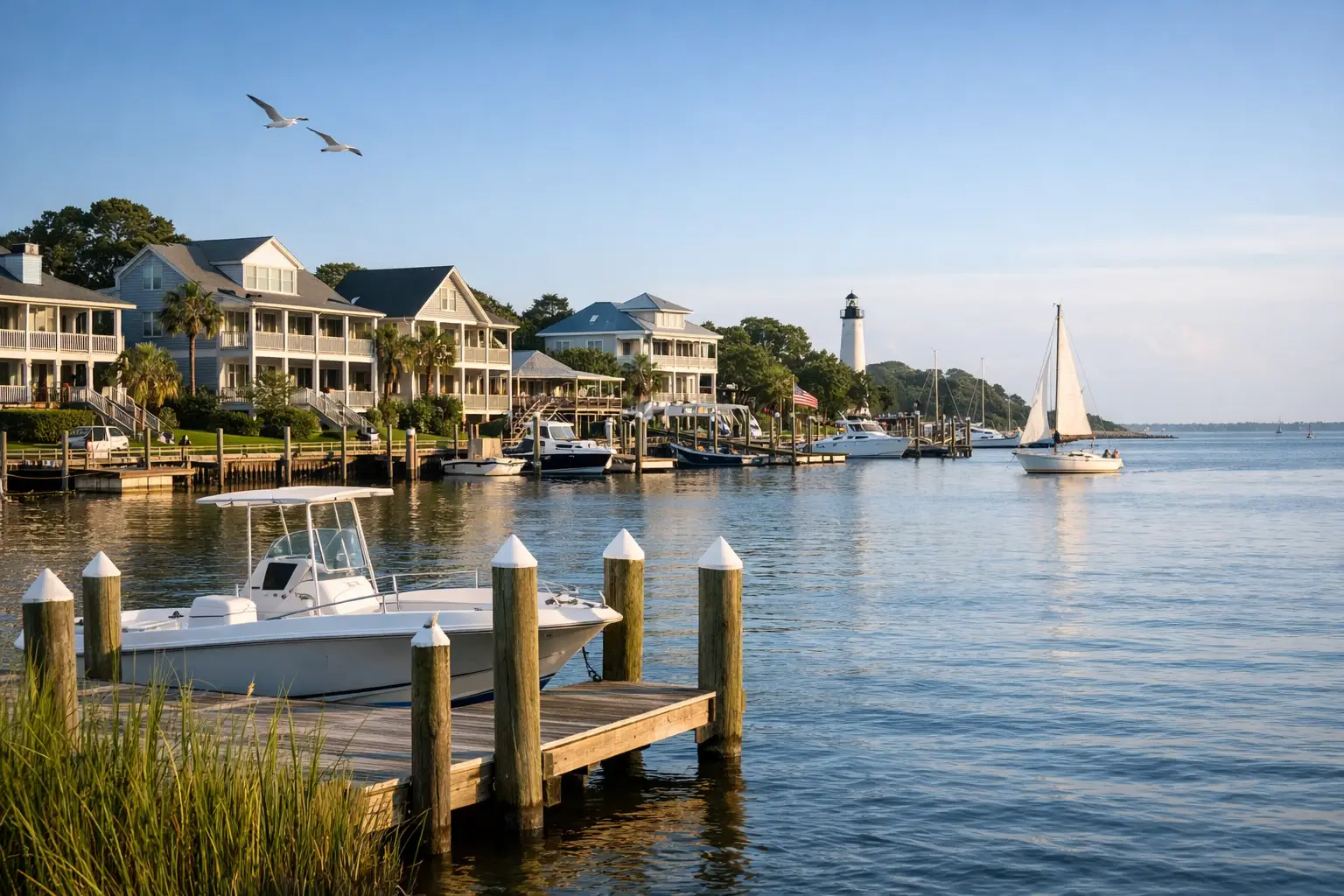
A porch facing the Cape Fear River changes the rhythm of an ordinary day. Morning coffee comes with passing boats, evening plans can include a walk downtown, and even a quick errand may feel a little more like a coastal outing. That is the appeal behind Southport waterfront homes – but the right property is about far more than a pretty view.
Southport, North Carolina, offers several versions of waterfront living. A home may sit along the Cape Fear River, look toward the Intracoastal Waterway, back up to a tidal creek or marsh, or be close enough to the water to enjoy the lifestyle without carrying a true waterfront price tag. Each setting has a different feel, set of maintenance needs, and resale story. A thoughtful search starts with deciding how you want to use the water, not simply how close you want to be to it.
What Makes Southport Waterfront Homes Different
Southport has a character that many coastal communities work hard to create but cannot quite duplicate. Its historic downtown, mature trees, walkable streets, waterfront parks, and local restaurants give it a lived-in feel. Buyers often appreciate that Southport is not only a beach destination. It is a town where people settle in for retirement, raise families, enjoy a second home, or keep a place for weekend escapes.
The waterfront itself is part of that variety. Riverfront properties can offer wide views, dramatic sunsets, and the activity of boats moving along the Cape Fear. Homes near creeks and marshes may feel quieter and more private, with changing tides, shorebirds, and a softer natural view. Intracoastal locations can be especially appealing to boaters who want convenient access to fishing, cruising, or nearby islands.
There is a trade-off in every setting. A broad river view can be spectacular, but the home may be more exposed to wind and weather. A wooded creekfront lot may feel tucked away, yet shallow water or tide changes can limit boating access. The best choice depends on whether your ideal day includes watching the water, getting out on it, or simply enjoying the coastal atmosphere.
Start With the Lifestyle, Then Compare the Property
Before touring homes, it helps to get specific about what waterfront means to you. Some buyers picture a private dock and a boat behind the house. Others want a view, room for visiting family, and an easy drive to Southport’s shops, dining, and waterfront parks. Those are very different searches.
For a primary residence, daily practicalities matter. Think about grocery runs, medical care, commuting, storage, stairs, yard upkeep, and how the neighborhood feels in every season. A vacation-home buyer may put more value on lock-and-leave convenience, proximity to attractions, and a floor plan that works for guests. An investor will also need to consider rental rules, occupancy patterns, carrying costs, and whether the property has features travelers actually seek.
Waterfront homes are often emotionally compelling, so it is useful to separate the must-haves from the nice-to-haves. A screened porch may be a must for one buyer. For another, it is deep-water access, a first-floor primary suite, or a garage large enough for beach gear and a golf cart. Clear priorities make it easier to recognize the right home when it appears.
The View Is Only Part of the Waterfront Story
A listing description may say water view, waterfront, water access, or waterway community. Those terms are not interchangeable. A water view may be visible from certain rooms or from the yard but does not mean the home has direct access. Water access may refer to a shared neighborhood dock, boat ramp, or community pier. True waterfront generally means the property borders a body of water, though the nature of that shoreline still deserves a closer look.
Ask what lies between the home and the water. Is it a bulkhead, natural marsh, common area, road, or another parcel? Is the dock private, shared, or permitted? Can it be repaired, expanded, or replaced if needed? If boating is part of the dream, confirm the water depth, bridge clearances, tide conditions, and route to open water. A dock is a wonderful feature when it fits your boat and your plans. It is less useful when access is limited at low tide or the required upkeep exceeds your comfort level.
Costs to Look at Before Falling in Love
Waterfront ownership can be deeply rewarding, but it deserves a fuller budget than an inland home. Insurance, flood exposure, wind coverage, HOA dues, dock maintenance, shoreline work, and routine exterior care can all affect the true cost of ownership.
Flood insurance is one area where buyers should avoid assumptions. A home outside a high-risk flood zone may still have flood risk, and a home in a designated zone may have insurance options that vary based on elevation, construction, claims history, and other details. Requesting current insurance information early can help you compare properties realistically. It is also wise to understand whether an existing policy may be transferable and whether coverage limits meet your needs.
Older coastal homes can hold tremendous charm, especially near historic Southport, but age brings questions worth asking. Look closely at the roof, HVAC system, windows, exterior siding, crawl space, drainage, electrical panel, and any signs of moisture intrusion. Salt air is hard on metal fixtures, outdoor equipment, railings, and fasteners. That does not make an older home a poor choice. It simply means a careful inspection and a realistic maintenance plan are part of buying well.
For properties with docks, lifts, seawalls, or bulkheads, consider specialized evaluations when appropriate. These features can be expensive to repair, and permits may affect what can be done in the future. Knowing their condition before the end of due diligence can prevent a costly surprise after closing.
Neighborhood Feel Matters as Much as Shoreline
Some buyers want to be close to the action, with downtown Southport, the marina, and waterfront dining within easy reach. Others prefer a quieter neighborhood where the setting is more residential and the evenings are peaceful. Both options exist, but they create different day-to-day experiences.
Consider visiting at more than one time of day if possible. A street can feel entirely different on a busy Saturday afternoon than it does on a weekday morning. Notice traffic, parking, street lighting, boat noise, nearby construction, and the distance to the places you will use often. If you are purchasing a second home, spend time imagining a rainy January week as well as a sunny July weekend. The right coastal home should work when the weather is ordinary, not only when it is postcard-perfect.
Buyers should also review community rules if the home is within an HOA. Restrictions on rentals, boat storage, fences, exterior changes, and landscaping can shape both your enjoyment and future flexibility. Rules are not automatically a negative. In many communities, they help protect appearance and property values. The important thing is choosing rules that fit how you intend to live.
Selling a Southport Waterfront Property
For sellers, waterfront value is often easier to see than to communicate. A strong presentation should show not only the home but also the experience: the view from the main living area, the outdoor spaces, the shoreline, any dock or water access, and the route from the property to the places buyers enjoy. Timing, lighting, and accurate descriptions matter because waterfront shoppers are looking for a feeling as much as a floor plan.
It also pays to gather practical documentation before the home goes live. Recent surveys, permits, insurance information, utility records, dock details, HOA documents, and repair receipts can answer questions before they become concerns. If a property has a particularly strong sunset view, boat slip, renovated bulkhead, or easy access to downtown, those details should be clear from the start.
Pricing needs care as well. Two homes with similar square footage can have very different market value based on view corridor, water depth, lot elevation, condition, access, and neighborhood. The water may be the headline, but buyers still compare kitchens, layouts, maintenance, and overall livability.
A Coastal Home Should Fit Your Real Life
The best waterfront purchase is not always the home with the biggest view or the longest feature list. It is the one that supports the life you want to lead, whether that means morning walks by the river, visits from grandchildren, quiet retirement days, fishing trips, or a place to gather after a day at the beach.
Take your time with the details, ask direct questions, and let the property prove it can work beyond the first impression. When the view, access, budget, and everyday comfort line up, a Southport home near the water can be much more than a beautiful address – it can become the place your favorite coastal memories begin.
Leave a Reply